The World According to French Montana
Photo gallery
6 images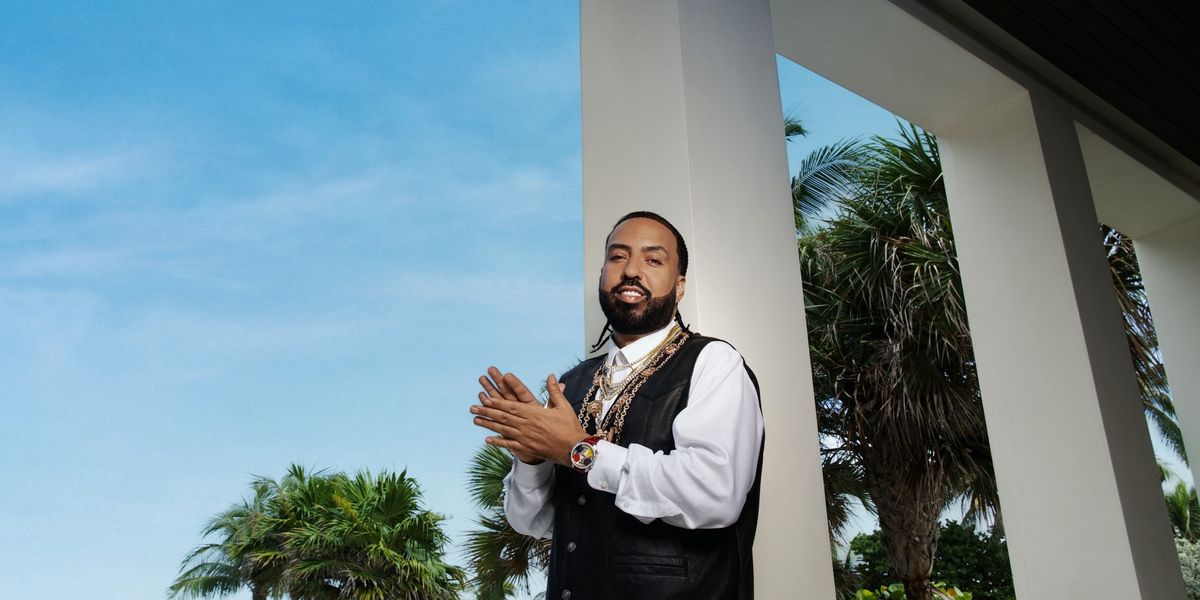

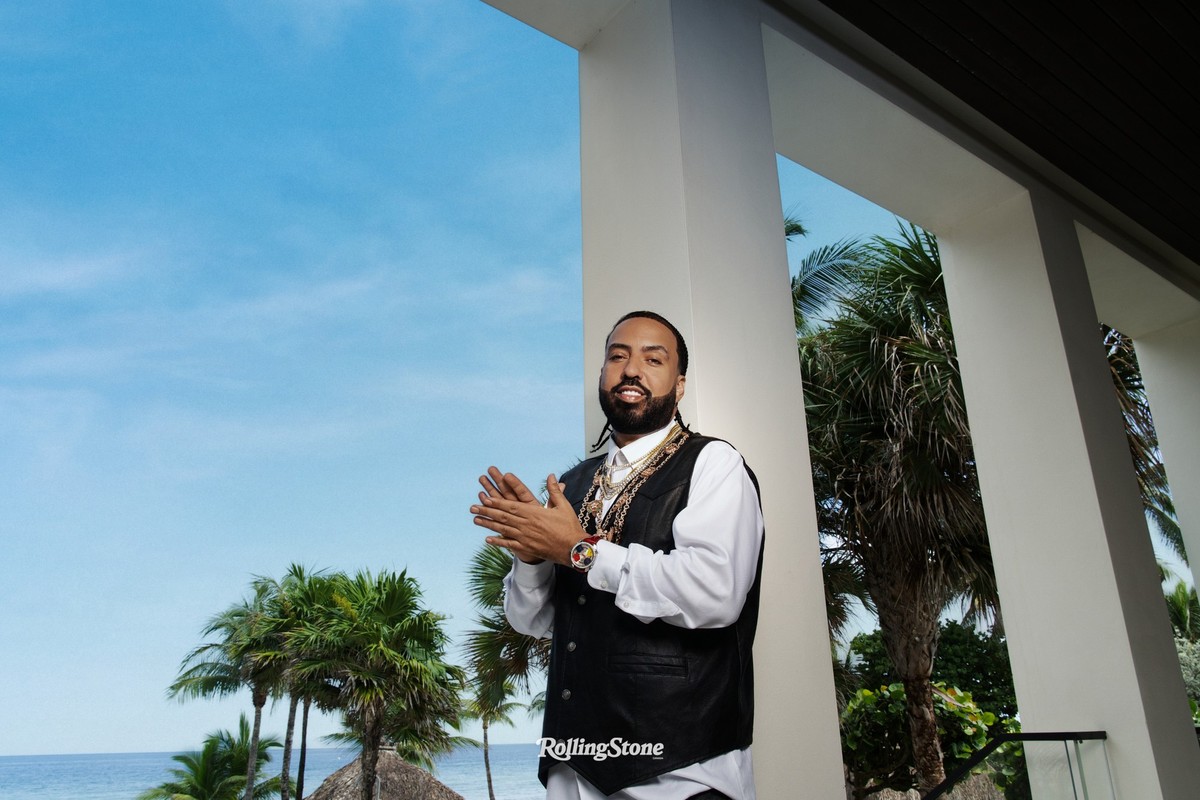
More than two decades into a career that took him from Cocaine City to global superstardom, French Montana is entering a new era on his own terms, with Max B beside him and “Unforgettable” still breaking records.
French Montana
There are several ways to tell the story of French Montana, and almost all of them involve crossing a border. Karim Kharbouch crossed the first as a teenager, leaving Morocco for the Bronx with his family and arriving in New York before he spoke much English, at an age when belonging to a new country and figuring out who you are tend to become the same exercise. Hip-hop would give him a language of his own, but his place within it was built gradually: first with a camera, documenting the world around him through the Cocaine City DVDs, and then with the mixtapes and records that eventually placed him at the centre of it. The distance between those two lives is considerable. Over the next two decades, the kid from Morocco would become French Montana, moving beyond the New York scene that raised him to build a career that seemed increasingly unconcerned with where rap was supposed to begin or end.
That instinct would eventually take him much further than the Bronx. His records have brought together artists, sounds and scenes that might otherwise have occupied entirely different corners of hip-hop, with Drake, Rick Ross, Lil Wayne, The Weeknd and others passing through a catalogue that grew increasingly international alongside its creator. By the time “Unforgettable” arrived with Swae Lee in 2017, French had already spent years moving comfortably between those worlds; the song simply travelled farther than anything before it. Nearly a decade later, it is still moving. “Unforgettable” has now been certified double Diamond in Canada, giving him an extraordinary new milestone for a record that long ago escaped the boundaries of its original release.
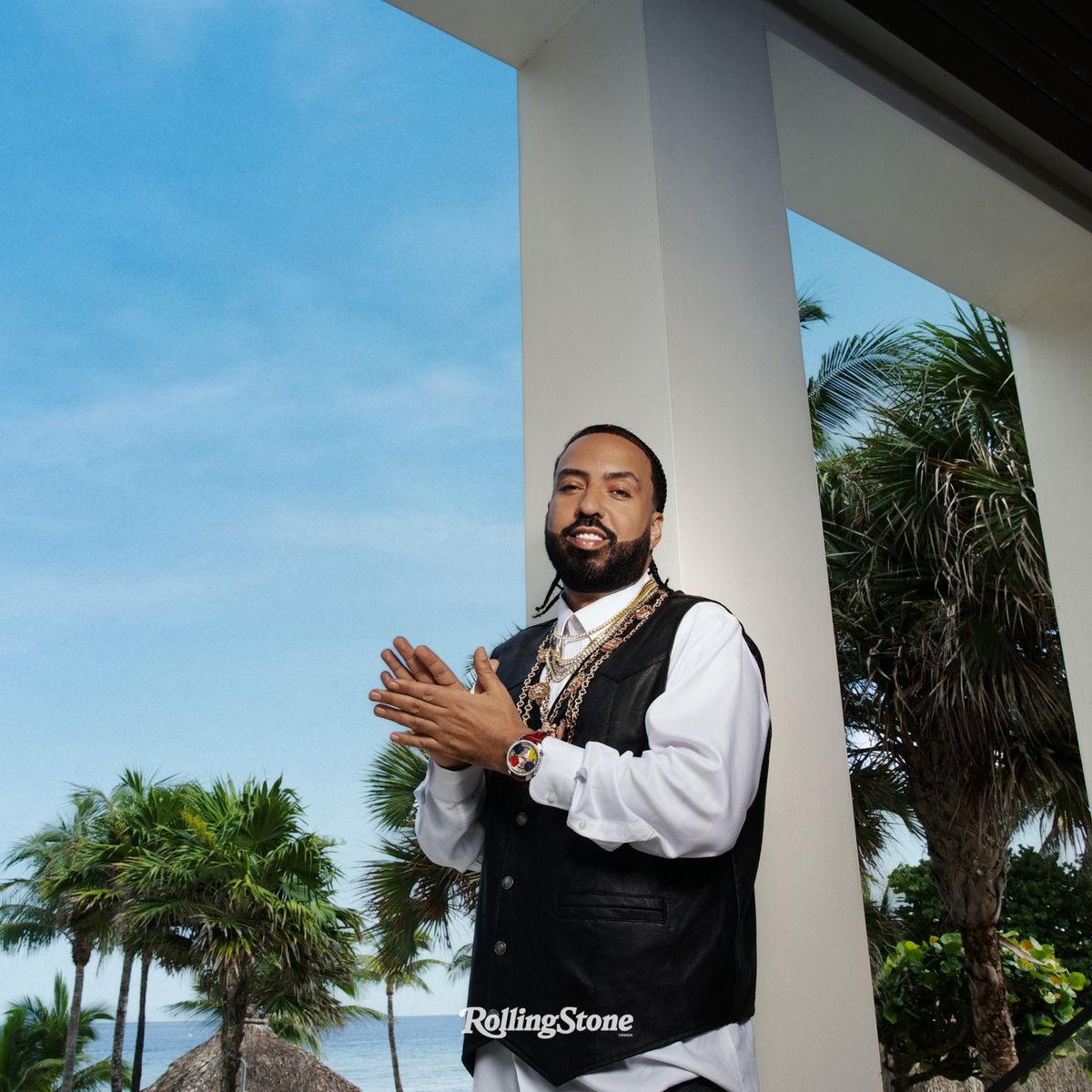
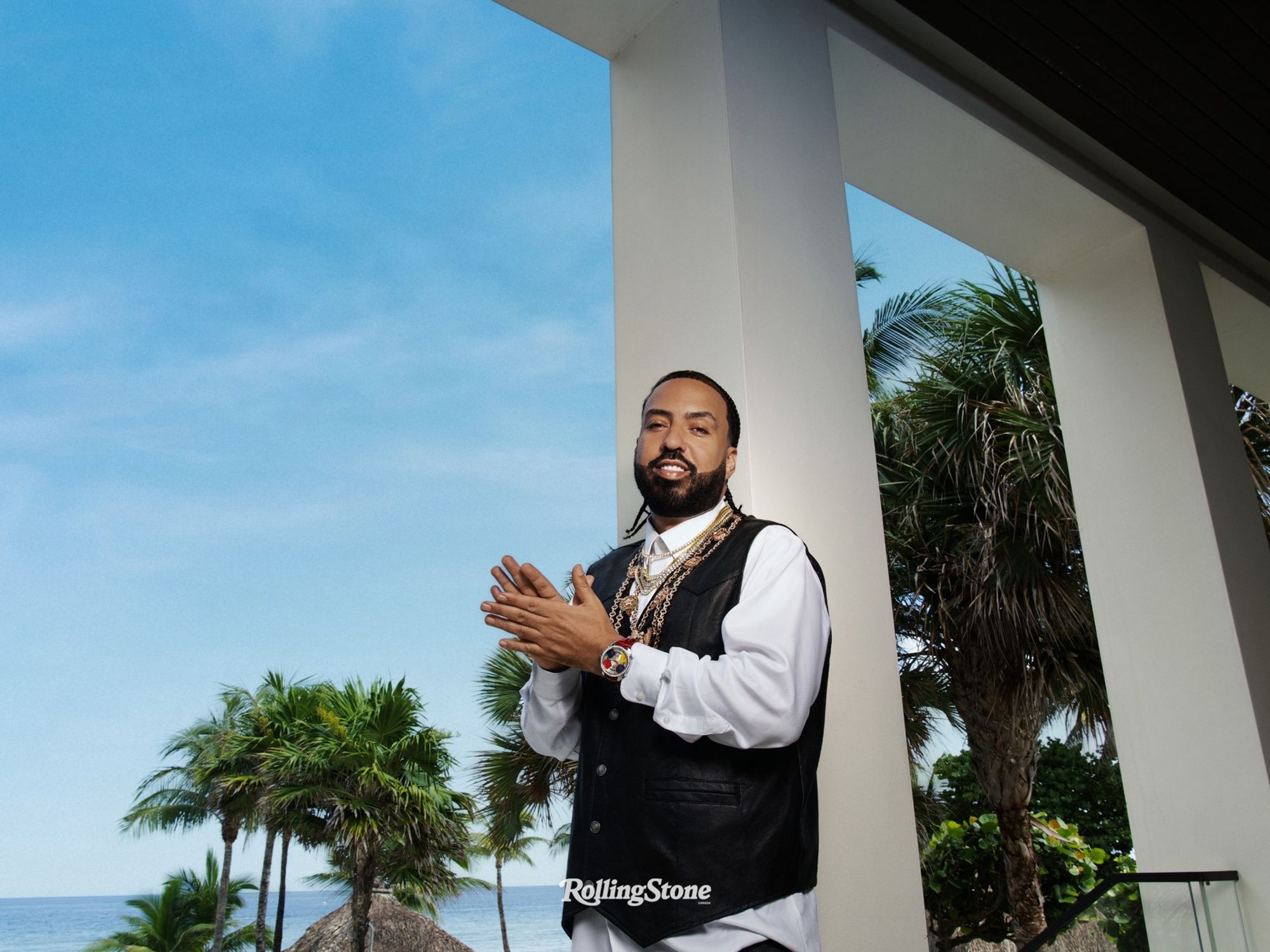
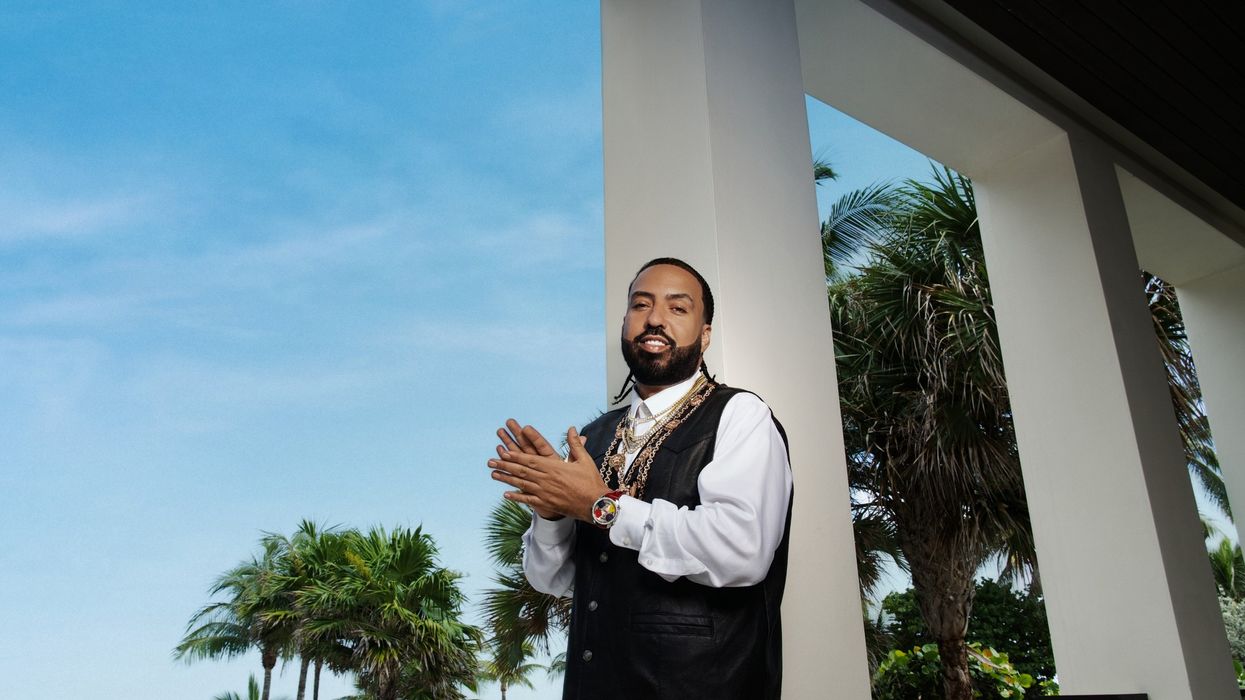
French Montana is the second rap artist to have a 2x Diamond certified single in Canada with "Unforgettable." Shot by Smith Durogene for Rolling Stone Canada
For French, however, longevity appears to have produced a curious response: the bigger the catalogue becomes, the simpler his test for adding anything to it. There is no talk of recreating the scale of “Unforgettable,” or of reverse-engineering another record capable of collecting plaques years after its release. Instead, when he enters the studio now, the question is considerably more personal. “Honestly, when I get in the studio now, I listen to records and I say, ‘Can I listen to this for the rest of my life?’”
There is plenty of new music against which to test that question, and some of it brings French back to a creative relationship that predates almost everything the wider world now associates with his career. Max B, born Charly Wingate, is the influential Harlem rapper whose loose melodies, sing-song cadences and “wavy” sensibility made him one of the most distinctive figures in New York’s late-2000s mixtape world. French and Max became close friends and collaborators during those years, arriving at each other at a moment when neither was interested in respecting many of the rules around what New York rap was supposed to sound like. Their first Coke Wave mixtape, released in 2009, would become a cult document of that era, a partnership whose significance only grew after circumstances made continuing it in person impossible.
In 2009, Max was sentenced to 75 years in prison for his role in a 2006 New Jersey robbery that resulted in a man’s death; he was not physically present during the robbery. His conviction was later vacated over a conflict of interest involving his former defence attorney, and after pleading guilty to aggravated manslaughter, he received a reduced 20-year sentence. He ultimately served 16 years, walking out of prison on Nov. 9, 2025: French’s birthday.
French MontanaShot by Smith Durogene for Rolling Stone Canada
Sixteen years is enough time for an entire career to happen. While Max was incarcerated, French went from the New York mixtape circuit to Bad Boy, released Excuse My French, and built a catalogue that travelled far beyond the city where the two had started. Yet their relationship remained visible throughout that ascent. French continued championing Max publicly, they found ways to release music together, and “Free Max B” remained a familiar refrain around the Coke Boys world. His release therefore restored something more ordinary, and perhaps more meaningful, than a musical partnership: the ability for two old friends to simply be in the same room again.
What French built during those years is worth stopping to consider. Excuse My French, his 2013 major-label debut, reached No. 4 on the Billboard 200, while 2017’s Jungle Rules climbed to No. 3. Around those albums came records including “Pop That,” “No Shopping,” “Lockjaw” and “No Stylist,” alongside collaborations that made French a recurring presence across mainstream rap. “Unforgettable” changed the scale again, becoming his first top-10 Billboard Hot 100 hit as a lead artist and eventually earning Diamond certification in the United States. By then, the rapper who had once used Cocaine City to create a platform for himself had become one of the genre’s most recognisable collaborators, capable of moving between street rap and records built for an audience far beyond it.
There is an interesting symmetry there, but French does not spend our conversation presenting his career as a carefully constructed arc. He is speaking to me from London, and his attention tends to move quickly towards whatever is happening next. New music leads to Max, Max leads to independence, New York leads to Dapper Dan, London leads to D-Block Europe, and a conversation about the World Cup eventually produces a plan for dealing with Kylian Mbappé that involves somebody stepping on his foot. Even when the subject is a record being recognised nearly a decade after its release, French seems considerably more animated by what he is making now than by explaining what he has already done.
French MontanaShot by Smith Durogene for Rolling Stone Canada
The work with Max started almost immediately after his return. French had been holding “Ever Since U Left Me (I Went Deaf)” for roughly a year and a half while waiting for Max’s release and, rather than mark the occasion with a conventional homecoming gift, decided to give him the record. “Instead of people giving people, you know, gifts and this and that, I made sure I gave him a hit record as a gift,” he says. Then comes a very French Montana flourish: not content with giving the present, he would also like credit for inventing the tradition. “It’s the first time that was ever done. And I was the first to do it. So I’m glad. I’m glad we’re setting the trend that when your friend comes home, you give him a hit record as a gift.”
It turned out to be a particularly well-chosen present. In the months since, “Ever Since U Left Me” has become the centrepiece of French and Max’s independent run, climbing to the top of U.S. rhythmic radio and earning the pair a Best Collaboration nomination at the 2026 MTV Video Music Awards, where it sits in a field alongside Clipse and Kendrick Lamar, Madonna and Sabrina Carpenter, PinkPantheress and Zara Larsson, Shakira and Burna Boy, and Teyana Taylor and Lucky Daye. The record has also travelled well beyond rap radio: it appears on the Madden NFL 27 soundtrack, while a succession of remixes has kept extending its life through the year.
Asked what it is actually like having Max around again, French’s answer is far less grand than the history behind the reunion. “Man, just a great spiritual guy,” he says. “He’s just in the best spirits all the time. He just makes me laugh. We always get work done. We’re in the zone.”
For all the historical weight attached to their reunion, that last sentence may be the most useful way of understanding it. French does not speak about Max as somebody being brought back to participate in a recreation of their mixtape years; he speaks about somebody with whom work still comes naturally. The history is there, but so is the expectation that the relationship should continue producing something new. “Ever Since U Left Me” is still being remixed, a seven-to-nine-song project French calls “the disco tape” is taking shape, Coke Boys 7: All Dogs Go to Heaven is also in the works, and there are plans to tour. For the disco project, at least, the circle is deliberately small: French says it is just him and Max.
There is another reason this period feels different. The recent projects with Max have been released independently, moving French outside the major-label structure that accompanied much of his ascent. Coming from an emerging rapper, independence can be a necessity; coming from an artist whose catalogue contains a Diamond single and albums that reached the upper end of the Billboard 200, it becomes a different kind of proposition. French already knows what the machinery can do because much of his career was built with access to it. Now he is interested in discovering what happens when he operates without it.
“It’s been the greatest thing I ever did, being independent and betting on ourselves. We’re going against the machines. It feels great.”
French MontanaShot by Smith Durogene for Rolling Stone Canada
For French, the significance is not simply ownership for ownership’s sake, but discovering that some of the opportunities artists are conditioned to associate with major-label backing have remained available without it. “It feels better to be independent, and it also shows that you can do it independently,” he says. “Because they had us believing our whole life that we can’t do it independently because we’re not going to be on enough playlists, we’re not going to get the same look. The labels began, ‘We’re not going to do this,’ but we still did it without that, and we were still able to get three Number Ones this year, and we were still able to do all our numbers. We’re still able to perform at the BET Awards. We’re still able to crack all these doors that they told us we couldn’t. So we’re proud of that.”
Those doors are increasingly visible. French and Max were nominated for Best Group at the 2026 BET Awards and performed together on the main stage, a particularly resonant return for an artist who had spent 16 years unable to share one with his closest collaborator. “Ever Since U Left Me” and “Minks in Miami,” their Rick Ross collaboration, have both reached No. 1 at Urban radio, while “Ever Since U Left Me” also topped rhythmic radio. The point is not simply that an independent release can find an audience; French is watching one move through many of the same institutions, charts and cultural spaces normally associated with major-label scale.
The important distinction is that French does not need to diminish what came before in order to make the case for what he is doing now. A major-label system helped take his music around the world; independence gives him a different kind of leverage after the audience has already been built. What seems to excite him is the discovery that the infrastructure he once worked within does not necessarily determine the limits of what happens next.
Asked what he would tell artists trying to build independently, he reduces the lesson to persistence and ownership. “Keep going. Keep going to keep building the empire independently,” he says. “There’s a great saying that says, ‘If you don’t build your own empire, somebody will use you to build theirs.’ And that’s what the labels have been doing to us.”
When I suggested adding that aspiring artists should build a good team, too. “Yes, please,” he replies. “That’s what I meant.”
It is one of the lighter exchanges in a conversation that repeatedly returns to the enormous structural changes French has watched take place around him. He began pursuing rap when street DVDs and mixtapes could create an alternative route into the industry; today, an artist can reach millions of people without either. The platforms have changed, the speed has changed and the distance between an artist and an audience has almost disappeared. French, however, is less convinced that the thing required to survive any of it has changed at all.
“I think it changed, but it’s also the same,” he says. “You know, because it doesn’t matter what decade or century you come into the game in, or what generation. There’s something that always outbeats talent if the talent doesn’t work hard, and that’s hard work.”
He returns to the point almost immediately. “Hard work and hustle don’t change.”
It is a straightforward philosophy for someone whose career has survived several eras of rap consumption, but it also helps explain the standard he now applies to the music itself. Trends are temporary by definition; a record you can still stand behind after the trend has disappeared is something else. French reaches back into his catalogue when explaining what he means. “If you play ‘Pop That’ in the club right now,” he says, “it would sound like it was just made because it’s just the way we looked at music when we made it.” He places “No Stylist” in the same category.
“Unforgettable” is now the most spectacular evidence for the argument, but French does not need to make it twice. The certification tells one story about longevity; his test in the studio tells another. What matters to him is whether a record can survive the circumstances that initially made people care about it.
French Montana is the second rap artist to have a 2x Diamond certified single in Canada with "Unforgettable."Shot by Smith Durogene for Rolling Stone Canada
The question of what survives its original moment becomes more complicated when our conversation turns to New York. The city remains “the mecca of hip-hop” in his estimation, yet he thinks the enormity of that history can work against the artists trying to emerge from it. His first analogy is basketball: imagine trying to establish yourself on the Chicago Bulls in 1996 while Michael Jordan is already playing there. “It’s so many levels you have to pass before you make it out,” he says. “And that’s why it’s so hard for us to create new superstars, because the style of hip-hop that was created in New York is not the type of hip-hop that is selling records.”
It is an intriguing assessment from an artist whose own breakthrough depended, in part, on refusing to be confined by a fixed idea of New York rap. Coke Wave arrived during a period when the city was searching for what might follow the dominant eras of crews like G-Unit and Dipset, but French and Max were hardly interested in supplying an orthodox answer. The music could be street-heavy and melodic, irreverent and aspirational, with Max’s “wavy” vocabulary helping create a world whose influence would eventually extend well beyond the tapes themselves. Years later, French appears to see a version of that same process happening to hip-hop on a much larger scale.
“It’s like people took hip-hop and took it somewhere else,” he says.
To explain it, he reaches for Dapper Dan, the Harlem designer whose reworking of luxury iconography became inseparable from hip-hop style. “It’s almost like people taking Dapper Dan’s style and bringing it into Louis Vuitton and Gucci and this and that.”
French is trying to describe what happens when something created locally becomes so culturally powerful that other places begin reshaping it themselves. New York may remain the birthplace, but birthplace and centre of gravity no longer necessarily mean the same thing. His answer is not to demand that rap retreat into an older version of itself. “But we’re bringing it back,” he says. “Me and Max B are bringing it back.”
There is another way French has described his place in New York. When Rolling Stone interviewed him in 2024, he positioned himself between generations of the city’s rappers, from Jay-Z and Nas to Fivio Foreign and Ice Spice. “I feel like I’m the bridge,” he said then. “I could jump here. I could jump there.” Two years later, that idea has expanded beyond New York.
The city itself has played a visible role in French and Max’s return. During the Knicks’ playoff run, they recruited Remy Ma for the “Big Bronx Remix” of “Ever Since U Left Me,” filming a performance near Madison Square Garden and turning the record into something of a hometown rallying cry. The remix arrived in June, followed in July by another version featuring Lil’ Kim. For two artists whose earliest work is so closely tied to a particular era of New York rap, the current run has managed to invoke that history without simply reproducing it.
He is talking about the city while sitting in London, which makes what comes next particularly apt. French is also working with British rap duo D-Block Europe on what he describes as a full-length collaborative project, an attempt to connect two scenes that have spent years moving increasingly close to one another. Transatlantic rap collaborations are hardly novel, but French is interested in extending the exchange across an entire project rather than treating it as a feature.
“We’re just fans of each other’s music, and we want to be the first artists to bridge the gap between the U.K. and America by doing a full-length album,” he says. “We will be the first ones.”
Then, more plainly: “I want to set the trend for that.”
French MontanaShot by Smith Durogene for Rolling Stone Canada
The instinct is consistent with a career in which geography has rarely functioned as a particularly useful boundary. French was born in Morocco, came of age in the Bronx and built his career in American hip-hop, but Morocco has remained part of his public and musical identity rather than simply the opening line of his biography. During the FIFA World Cup, which is underway when we speak, those different parts of his world have collided rather neatly.
French appears on “Three Nations” with 21 Savage and Natanael Cano, a record he says immediately made sense when his brother Sal brought it to him. “Once I heard ‘Three Nations,’ heard 21 Savage and heard what they did to it as far as, you know, Spanish and English and Moroccan, I was like, ‘Okay, this one fits perfect.’”
The FIFA appearance is only one part of an unusually international stretch. He has also joined French producer HUGEL and David Guetta on “Shine,” while another recent collaboration, RedOne’s “Follow Me,” places him alongside JIHYO of TWICE, Ludmilla and Adriana C. It is difficult to imagine the teenager arriving from Morocco in the Bronx predicting quite how literally the borders around his eventual career would disappear.
There is also little ambiguity about who he is supporting in the tournament. “Morocco, of course,” he tells me from London. Messi has his support too, he feels bad that Ronaldo has lost and, with Morocco preparing to face France, French has arrived at a rather less sophisticated (obviously sarcastic) tactical solution for Kylian Mbappé: “He’s gotta chill. Somebody’s gotta step on his foot.”
It is a fleeting bit of colour in a conversation that otherwise keeps widening its frame. One minute we are talking about a friend he has known since the mixtape years; the next, the future of New York rap, Britain, artificial intelligence or whether hip-hop will eventually produce billionaires as a matter of course. French tends not to treat these as entirely separate worlds.
“I think sports, entertainment, fashion, rap, it all goes together.”
What he does see as fundamentally different is the relationship between artists and the people watching them. French came up before constant access became an expectation, when not knowing everything about a musician could itself become part of the appeal. “For my generation, the generation before me, I think there was a certain mystique about artists who aren’t on social media all the time. So every time you see them, it’s special.”
He points to Dr. Dre and Kendrick Lamar, then places himself, Rick Ross and Drake at the opposite end of that spectrum. “So it’s whatever works for you.”
French MontanaShot by Smith Durogene for Rolling Stone Canada
Artificial intelligence presents another version of the same question about what technology changes and what should remain fundamentally human. French is not reflexively suspicious of it. In fact, his first analogy is almost comically mundane. “I’m not against AI at all,” he says. “AI is just like having an assistant, you know? Yeah, an assistant that doesn’t want to talk back to you, that helps you.”
If the idea originates with the creator and AI helps realise it, he sees little reason for alarm. “Because at the end of the day, it’s still your idea, and AI is just enhancing it and bringing it to reality.”
There is, however, a line. “But to have AI singing or rapping like an experienced artist who actually went through pain in their life, and that’s their way to feed their family, I’m against that,” he says. “Because we need all positions fair for every creator, every talent that’s out here sacrificing to put food on their table.”
The distinction he makes is ultimately economic as much as artistic. Technology can help make the work, in his view, but it should not erase the person whose work pays for a life. It is a concern that sits naturally beside his thoughts about independence and ownership, even if French himself does not package them into a grand theory. Again and again, the conversation returns to who gets to control the work, who gets to profit from it and what becomes possible when artists have more leverage over both.
That becomes particularly clear when he looks at hip-hop itself. The genre is only a little over half a century old, and the people who established its foundations did not initially participate in anything resembling the enormous economy it would eventually create. French believes the next generation will. “From all the people that paved the way, now artists are soon to become billionaires,” he says, pointing to Jay-Z as an existing example. “In the near future, it’s about to be the new norm for artists to be billionaires.”
For French, the trajectory is largely a function of time. “I think it’s only a matter of time before people will be able to make billions off hip-hop alone.”
It is easy to understand why money and ownership occupy space in French Montana’s worldview. His own career began with the necessity of creating a platform when one was not waiting for him. Cocaine City was not simply an aesthetic choice; it gave an aspiring rapper a way to put himself into the same conversation he was documenting. Years later, the circumstances are almost absurdly different: the audience exists, the catalogue exists, one of its defining records is still collecting extraordinary certifications, and the question is no longer how to enter the machine but how much of it he wants around him.
After a conversation that has moved through ownership, billionaires, double-Diamond records and the machinery required to make global hits, I ask him what success actually means to him. His answer strips almost all of that away.
“The idea of success is being free, waking up and loving what you’re doing, making sure your mother and your father are great, that they never need for nothing. That’s it.”
French MontanaShot by Smith Durogene for Rolling Stone Canada
Freedom is an interesting destination for French Montana at this particular point in his life, but it does not need to become a grand metaphor for everything that preceded it. His music is independent now. One of his oldest friends and collaborators is able to sit beside him in a studio again. The catalogue is large enough that a song released almost a decade ago can still produce a career milestone, yet his standard for whatever comes next remains remarkably private: can he live with the record himself? More than 20 years into a career spent watching both his own circumstances and hip-hop itself change dramatically, the ambition has not disappeared; it has simply become more personal.
“I’m still doing what I love,” he says. “And I’m only getting great at it, and I’m even more passionate about it. I think I was blessed by Allah to be able to do what I love.”
Big Sean
The first time Big Sean appeared on television, he wasn't promoting a record, celebrating a charting single or introducing himself to the world. He was just another teenager on a school trip to Toronto when someone from MuchMusic asked whether anyone in the group had a hidden talent. One classmate volunteered to recite the alphabet when Sean raised his hand and said that he rapped. Minutes later, he found himself performing live on television for the first time.
"I ended up rapping on MuchOnDemand. It was my first time being on live television, rapping, and it was unexpected," he recalls. "Some people were like, 'I think one of my classmates burped the ABCs or something,' and I was like, 'I rap.'"
At the time, it was simply another school trip. There was no reason to believe that Toronto would become a recurring part of Sean's story, yet the city has a habit of reappearing at pivotal moments in his career. Less than a decade after that impromptu television debut, he was back at MuchMusic premiering his own music videos as one of hip-hop's brightest young stars. Earlier this month, he returned again, performing at adidas' Home of Soccer during the FIFA World Cup festivities, almost twenty years after first arriving as a teenager who'd volunteered to rap because no one else would.
"I always have fun in Toronto," he says. "There's such a relationship between Toronto and Detroit in so many ways. So many people have family in Toronto and go to Toronto. I've always had a relationship with Toronto early on since, like, eighth grade. This is the first time I went out there on a class trip. It's cool. I get a sense of love. It's kind of like going to see your cousins when I go to Toronto."
Big SeanBig Sean photographed by Lane Dorsey in Toronto in July, 2026. Phoebe Philo coat, Mayer suit and VSP Consignment Gucci shoes.
For much of his career, Toronto and Detroit (Sean’s home city) have shared more than proximity. The two cities have long exchanged artists, audiences and influences, and Sean's own journey has unfolded alongside that relationship. He came of age during the final years of music television, built a following through blogs and mixtapes before streaming permanently altered the industry, and has somehow remained relevant through every shift that followed.
"I kind of caught a very special moment in culture before things completely shifted to digital," he says. "I even got to go see TRL with Kanye [West], one of the last episodes of that. I got to be on 106 & Park a few times before that ended too. I kind of caught a very special moment in culture before everything shifted to the internet."
Few artists have experienced as many different versions of the music business from the inside. Sean remembers a time when television premieres could transform a career overnight, when mixtapes travelled through blogs and forums instead of playlists, and when success was measured very differently. Yet, despite everything that's changed around him, the biggest shift hasn't been the industry itself; it's been time.
"I've given my whole life to this," he says. "I'm one step away from being a childhood star."
He signed his first record deal at eighteen, young enough for music to define almost every chapter of his adult life, but old enough, he says, to experience a childhood before fame arrived. It's something he has come to appreciate more with age, particularly after watching friends and collaborators who entered the spotlight far earlier than he did.
"I still got to protect some of my innocence," he tells Rolling Stone Canada. "When I was talking to Justin Bieber, he's given his whole life. A lot of people's childhoods, in some ways, got robbed a little bit. They had to live a more grown-up life at such an early age of managing a career and performing. So I am blessed to have gotten in when I got in. Obviously, I still feel like I have so much more to do as well. That's another beautiful part of it. Life just keeps evolving."
Big Sean Big Sean photographed by Lane Dorsey in Toronto in July, 2026. Phoebe Philo coat, Mayer suit and VSP Consignment Gucci shoes.
If the first half of Sean's career was defined by momentum, the next seems to be shaped by perspective. New music is finally on the horizon after a relatively quiet stretch, but when I ask what's occupying him most these days, it isn't the first thing that comes to mind.
"The most exciting thing happening in my life right now is... the music I'm making, is one of the things I'm most excited about because I'm kind of getting fed up with not having new music out," he says, laughing as he catches himself. "And then the most exciting thing, singular thing, is my three-and-a-half-year-old. Big boy. That's my son and also my other sun, S-U-N, because I feel like my world revolves around him just like the Earth revolves around the sun."
Music may still be the centre of Sean’s career, but it no longer sits alone at the centre of his life. Over the next several minutes, the conversation drifts naturally away from albums and performances to the everyday moments that now shape his routine. His son, he explains, has an ever-changing list of fascinations. At the moment it's volcanoes. Before that it was planets and space. Garbage trucks have become another obsession and, somewhere between all of that, he's developed into an unexpectedly gifted little athlete.
"He's amazing. He's into music, but he's into a lot of things. He's multifaceted and multi-interested in things. He really loves volcanoes right now. He's into garbage trucks and space and planets. He's a very good athlete as well. Since he was one, he started walking pretty early, and he's been on a trampoline since then, so his dexterity and his balance are really, really good. He can run real fast.”
There isn't much distinction between the way Sean talks about his son and the way he's spoken about music throughout our conversation. Both are animated by the same sense of joy.
"I'm not one of these check-in-once-a-month type dads," he adds. "I'm like a daily dad. I cook for my son. He got me being like a real chef now because he only eats yummy food, so I make sure I make the best food I can for him to his liking. I dedicate a lot of time, so it's taught me to be more intentional with my schedule."
Becoming a father hasn't simply changed Sean's life; it has changed the way he thinks about making music too. Ask whether parenthood has found its way into the studio and he isn't talking about writing songs for his son or consciously approaching records differently. Instead, he describes it as another chapter of life to draw from, one that has given him a deeper well of experience every time he sits down to write.
"I think it helps the music. I think the music is a reflection of life. If you don't have life to reflect on, then what are you really talking about? I feel like the more life I live, the more experiences I have, the more I have to say."
The music he's preparing to release next reflects that outlook. Rather than framing it as a reinvention or the beginning of another chapter, he speaks about it with the confidence of someone who no longer feels compelled to chase expectations, choosing instead to make records that honestly reflect where he is today. "What you can expect is just me applying everything that I've learned thus far, and also just expressing myself and having fun. I think you'll get a sense of where I'm at in my life when you hear it, and you'll also get a sense of tiebacks to where I'm from and also tiebacks to my upbringing."
Rather than comparing the record to his most recent work, Sean also finds himself thinking much further back, to the freedom he felt when he first started making music.
"I [also] feel like the music that I've been making lately kind of reminds me of some of my earlier work,” he says. “It's a lot of fun. There are still levels of consciousness to it because I've always been that, too. Even in songs that were turned up, I always put a level of consciousness to it too. But it's just free and fun." It's a subtle distinction, but an important one. Sean isn't trying to recreate an earlier version of himself. If anything, he's rediscovering the mindset that first made making music exciting.
That same outlook extends to the people he chooses to work with. When asked who has been inspiring him lately and the conversation quickly expands beyond his own music, becoming less about guest appearances than the relationships that continue to shape the way he works.
For someone whose catalogue spans collaborations with everyone from Eminem, Post Malone and JAY-Z to Pharrell, Calvin Harris, Ariana Grande and Justin Bieber, Sean has never approached music as though it exists within neatly defined boundaries. Rap has always been the foundation, but curiosity has shaped almost everything else. He speaks about collaborators less in terms of profile than possibility, drawn to artists who push him creatively rather than simply expanding his reach.
"Throughout my career, I’ve gotten to collaborate with a lot of incredible people," he says proudly. "I've gotten to collaborate with Calvin Harris and Katy Perry and Pharrell. I've gotten to collaborate with Justin Bieber. I've gotten to collaborate with Nas and Jay-Z and Eminem and obviously Kanye [West]. I've touched quite a few different sides of music, and that's something that I'm proud of because it never once felt forced or weird for me."
That same curiosity continues to shape the music he's making now. Rather than rattling off the biggest names in his phonebook, he begins talking about the people whose work has genuinely inspired him. Inflo is one of the first names he mentions, followed by Cleo Sol, two artists he's admired for years and still hopes to work with. "They're incredible," he says simply, before turning to another long-time collaborator.
The conversation soon shifts to Kehlani, whose collaboration with Sean on "Lights On" grew out of his work with the album's executive producer, Khris Riddick-Tynes. "I've known Kehlani for a long time, so it was great that we made that happen," he says. "I've also been working with her executive producer Khris Riddick-Tynes, who basically helped craft that whole Kehlani album."
See on Instagram
Then comes Leon Thomas.
The change in tone is immediate. Sean has known Thomas since long before the singer emerged as one of R&B's most exciting new voices, working with him first as a producer before eventually becoming collaborators. Listening to him describe Thomas' recent rise feels less like hearing one artist praise another than watching someone celebrate a friend finally getting the recognition they always believed was coming. "I've worked with Leon for years now, just as a producer," he says. "I'm so proud of him because he's just taking off. I remember when 'MUTT' came out, I texted him straight away. I was like, 'Bro, this one is hitting different.' We collabed on the 'Vibes Don't Lie' remix and 'Party Favors' off his album, and we've got more music coming too."
That same sense of authenticity carried into one of his most talked-about moments this year, when he made a surprise appearance during Justin Bieber's Coachella set, reuniting with the pop star years after the pair first collaborated. Midway through the performance, Sean paused to speak directly to both Bieber and the crowd, delivering an impromptu message about resilience, faith and the importance of looking after one another. The speech quickly spread across social media, with fans praising its sincerity and Bieber later calling it "beautiful."
Sean smiles as he remembers what happened afterwards. Bieber told him, "Bro, you was dropping so many bars." It's a friendship he speaks about with genuine warmth. Beyond the iconic Coachella moment and conversations, he also speaks warmly about watching Justin and Hailey step into parenthood while continuing to live under an extraordinary level of public attention.
"I'm happy for him," Sean says. "I'm happy for Hailey. I'm happy they're raising their family and doing their thing. It's beautiful to see."
See on Instagram
Big Sean has watched the music industry reinvent itself several times over. Rather than debating whether one era was better than another, he's more interested in how artists are navigating the one they're in now. "What excites me the most is that hip-hop [and the music industry] is in a different place," he says. "I wouldn't say weird. It's just in a different place because, for the first time, everything is accessible to the same degree and with that comes a lot of traffic."
Rather than speaking in broad industry terms, he reaches for a recent conversation that perfectly illustrates the point. One of his hairstylists had been talking about how much she loved Kehlani's music, so naturally he asked what she thought of the singer's latest album. The response caught him off guard. She hadn't listened to it because she hadn't even realised it had been released.
"You can be a fan of somebody who has such a big album promotional run and still not see it because life is happening," he says. "There's just a lot of traffic on the internet."
Sean doesn't see the shift as a good thing or a bad one. Just a different one. The battle isn't for access anymore; it's for attention. Even so, he believes artists today have more freedom than ever before. "I feel like there is an audience for everyone. People can be themselves and play to their audience instead of having to play to an algorithm. They don't have to play to having a hit record anymore. They don't have to play to having a number one song on the radio,” he says. “You just have to play to whatever satisfies you, and people can attach to that."
It's a perspective shaped by years in the industry. Long before platinum records and Grammy nominations, Sean had already built a fiercely loyal following through his Finally Famous mixtapes, often filling venues before record executives fully understood what was happening. Toronto was one of the first places where that support became impossible to ignore.
"I remember when I was doing my mixtapes and I put out Finally Famous Volume 3: Big. I had a meet and greet in Toronto and it was so packed there were thousands of people outside. Then I walked in and there were thousands of people inside. That brought me to tears because it was such a big difference from what it used to be for me."
Even now, it's one of the few stories he tells with genuine disbelief, as though that version of his career still catches him off guard.
But again, for Sean, it felt like a breakthrough, but the label saw it differently. "They were like, 'That's cool, but we still need a hit record because we're invested in you. These mixtapes are cool, but we're not making any money off DatPiff and LiveMixtapes.'"
That hit eventually arrived with "My Last," the Chris Brown-assisted single that became the commercial breakthrough his label had been waiting for. Bigger milestones followed. This week, his 2014 anthem "I Don't F**k With You," featuring E-40, was certified Diamond by the RIAA, becoming one of the biggest-selling singles of his career. Looking back, there's no bitterness in the story. It simply reflects a different set of expectations. Sean's generation was measured by radio and commercial hits. Today's artists, meanwhile, are navigating streams, engagement and algorithms that shift by the day.
That perspective also explains why Sean talks about younger artists with genuine excitement rather than competitiveness. Whether it's Leon Thomas finding his moment or producers like Khris Riddick-Tynes shaping records behind the scenes, he speaks about their success as though there's room for everyone.
Big SeanBig Sean photographed by Lane Dorsey in Toronto in July, 2026. Jacket and jeans by Re-pull, shoes by Balenciaga.
That instinct to create opportunities for other people eventually pulls the conversation back to Detroit, the city that has remained the constant throughout every stage of his career. Because for all the places music has taken him, it's home that continues to shape where he invests his time, his energy and, increasingly, his legacy.
Detroit has never been something Sean wears as part of his identity, pretty much because it's woven into the decisions he makes. Over the last few years, that commitment has become increasingly visible, whether through the Sean Anderson Foundation, community initiatives across the city or his expanding role with the Detroit Pistons (a professional basketball team based in Detroit, Michigan), where he now serves as Creative Director of Global Experience. It's a position that formalises a relationship years in the making, but one he still speaks about with the excitement of a lifelong fan.
"I used to wait outside Pistons games in the freezing cold hoping to catch Rip Hamilton walking into the arena," he says, laughing. "Just hoping to get an autograph." Years later, he's helping shape the experience around the team he once waited outside to meet. "It's a dream come true," he says. "To represent Detroit in that way... it's crazy."
The role goes well beyond appearances or ambassadorial duties. Earlier this year, Sean helped launch Creatives Across Continents, an initiative inviting artists and designers to create original work inspired by Detroit basketball. It's exactly the kind of project that sits at the intersection of everything he's become interested in over the years, bringing together music, sports, fashion, visual art and the city that continues to inspire all three.
The Pistons, however, are only one part of a much broader commitment to Detroit. Through the Sean Anderson Foundation, education has become a particular focus, with scholarship programmes, school partnerships and community initiatives designed to give young people access to opportunities that simply weren't available when he was growing up. Last year, alongside Usher, he helped launch the Detroit Entertainment Innovation Incubator at the Boys & Girls Club inside Michigan Central, a creative hub equipped with recording studios, podcast facilities, filmmaking resources and production technology that introduces students to careers far beyond the spotlight. "You don't have to be the rapper," he says. "You can be the engineer. You can be the producer. You can direct videos. You can write. There are so many different jobs in this business."
For Sean, the point has never been creating more stars. It's making sure young people know there are countless ways to build a career in music and entertainment. "I got suspended for selling CDs in school," he says, laughing. "Now there's a recording studio in that same school." He laughs at the irony. Years after getting into trouble for selling CDs, the same school now has a studio where students can create their own.
Recognition has followed along the way. Detroit has honoured him with a key to the city. There's a street bearing his name, murals celebrating his career and an official Big Sean Day. Yet those milestones seem to matter less to him than what they represent. Growing up, he remembers people questioning whether he was really from Detroit because he was born in California before moving to Michigan as an infant.
"People tell me that all the time, 'He isn't from Detroit for real. He was born in Santa Monica,'" he says with a laugh. "But I moved to Detroit when I was one month old. I had my first piece of food in Detroit. I probably opened my eyes for real for the first time in Detroit. Everything I know is Detroit."
The criticism barely registers anymore. "People are gonna say whatever they want to say," he says. "I can't even give the energy into correcting people because I have a whole mission that I'm trying to accomplish."
The answer comes without hesitation. For Sean, Detroit has never been about where he was born. It's where he grew up, where he found music and where, years later, he's chosen to invest so much of what that music has given him.
Big SeanBig Sean photographed by Lane Dorsey in Toronto in July, 2026. Jacket by Fear of God (Harry Rosen).
For all the different roles Sean occupies today, rapper, author, creative director, entrepreneur, mentor, they all seem to stem from the same instinct. He's no longer interested in creating simply for the sake of creating. Whatever he chooses to pursue has to feel like it adds something, whether that's to his own life or someone else's. Music remains at the centre of everything, but it no longer has to carry the full weight of who he is.
That philosophy eventually found its way onto the page. In 2025, Sean released Go Higher, his first book and a New York Times bestseller. Years in the making, it drew on journals, observations and personal experiences he'd been collecting long before the idea became a finished manuscript. Rather than a memoir, Sean describes it as "a book of strategy" and "a book of alignment," one he hopes can help people who feel stuck, uncertain or in need of direction.
Getting it finished, however, took a push of its own and that came during a conversation with global bestselling author and award-winning podcaster, Jay Shetty.
Sean remembers talking about the people he admired most and the conversations he always believed there would be time to have. Nipsey Hussle. Kobe Bryant, other friends and peers whose deaths had forced him to confront how quickly life can change. "I always wanted to," he recalls telling Shetty about writing a book, "but maybe just later on."
That’s when Shetty stopped him, and said, "Man, you just sat up here and talked to me about how you were supposed to hang out more with Nipsey Hussle, how you were supposed to get in the studio with Kobe and all of these things and friends you've lost. Bro, you never know. You can't count on time always being there. You have to do it. If you have the opportunity and you have the vision and foresight to do it, then you need to do it right now."
"It really struck me to the core," Sean says. "I got on it. He linked me with his publishers and we made it happen." Today, Sean sees Go Higher as another way of sharing the lessons that have helped shape his own life, something practical that people can return to whenever they need it most. "I wrote the whole book myself. I had people helping me organise it, but it's a book of strategy. It's a book of alignment. It's for people who feel stuck in any way or feel like they don't know what's next for them. It's a very useful tool to get ahead."
Finishing the book wasn't an endpoint so much as another chapter. New music is finally on the horizon, but it's only one part of a growing list of creative pursuits. "I'm excited to be the authentic me," he says. "To give new music, some of the other projects I've been working on."
That list also includes CTRL + ALT + DELETE: A Blog Era Celebration, the one-day event Sean will perform at alongside Miguel at the F&M Bank Amphitheater in Long Beach, California, this September. Bringing together fellow blog-era pioneers and longtime peers including Dom Kennedy, Curren$y, Casey Veggies, The Cool Kids, Pac Div, Chip Tha Ripper, U-N-I and Max B, the event reflects the creative community Sean has grown alongside over the years.
Another project, however, is one he can only hint at for now.
"There's a show that hasn't been announced yet, so I won't give too many details, but it's on a big network. I'm one of the main characters doing voice acting." For someone who grew up immersed in anime and animation, it's another unexpected chapter in a career that has continually expanded beyond music. "I'm a huge anime fan. I'm a huge animation fan as well," he says. "So that's a dream come true."
Big SeanPhotographed by Lane Dorsey for Rolling Stone Canada. Jacket and jeans by VSP Consignmen (Valentino).
It's hard to imagine the teenage Sean who first volunteered to rap on live television in Toronto mapping out a career quite like this. Music remains at its centre, but over the years it has become the foundation for something much broader: books, philanthropy, creative direction, community work, entrepreneurship, festivals and soon, television. None of it feels like reinvention for the sake of staying relevant. Instead, each new chapter has grown naturally from wherever his curiosity has taken him.
That's also why Sean is reluctant to pretend there's a formula for longevity. "One thing I do recognize is that everyone's story is different," he says. "Do what works for you."
It's advice he's lived by himself. Rather than following someone else's blueprint, the 38-year-old rapper has spent nearly two decades following his own instincts, allowing each chapter to unfold on its own terms. "Take advantage of every opportunity you have," he continues. "Don't be lazy with it. We have so many things at our fingertips now."
Then he distils it all into one final thought.
"My advice is to take advice with a grain of salt," he says. "Follow your intuition."
Meet the 25 artists redefining Canada's musical landscape. From breakthrough voices to genre-defying innovators, these are the creators shaping the future of music in Canada and beyond.
Parazar
Rolling Stone Canada and YouTube Canada are proud to support local creatives.
The traditional trajectory of a music career used to be relatively linear. An artist would build momentum in their hometown, expand nationally, and, with enough industry support, eventually attempt to reach audiences abroad. Today, the internet has largely erased those barriers. Artists can break through and find a global audience at any time from anywhere, opening doors to the industry for anyone to reach for stardom. A song made in Montréal can resonate just as quickly in Algiers, Hanoi, or Brussels as it does locally.
Few platforms have played a bigger role in that transformation than YouTube. Over the past twenty years, it has evolved from a simple video-hosting website into a central pillar of the modern music ecosystem. For Canadian artists, its function extends far beyond distribution. It acts simultaneously as a production hub, an educational resource, an archive, and a direct link to global audiences.
To better understand that evolution, we spoke with Montreal rapper Parazar, whose growing international audience reflects the increasingly borderless nature of online music discovery, as well as Gabriel Obadia, Head of Music at YouTube Canada, about how the platform continues to reshape the relationship between artists, audiences, and visibility.
“Oh my God, when you told me that, I immediately remembered the original logo. The brown logo, the little TV,” says Parazar with a laugh when I ask if she remembered YouTube’s original logo. Like many other creators, she first discovered it as a viewer before seeing it as a space for creation and distribution.
Over twenty years, YouTube has evolved and so has the way we use it. There are more ways than ever for fans to discover, engage and participate with music, changing how listeners become fans. At the center of it all, music videos are still the medium for fans to enter an artist’s world and become superfans. “I’ve always believed that, in terms of music, it’s extremely important to keep the concept of music videos and visuals,” she says.
For Parazar, video acts as both a promotional tool and an extension of the musical work itself. “A music video is kind of like the cover of a book. When you open a story, it gives you the image. It gives you the whole visual meaning.”
Obadia sees this evolution as part of a broader shift in how audiences engage with music online. “Back in the day, you had a handful of programmers planning out a few hours of music videos a day," he says. "Digital platforms have instead put that power in the hands of music fans from around the world, and given artists new ways to express their creativity.”
That logic shapes how music is experienced. “Your song won’t feel the same live, it won’t feel the same in the video, and it won’t feel the same in your car,” Parazar adds. YouTube becomes a space where these different interpretations coexist and where a visual translation of music becomes possible.
One of the most important opportunities for artists now is to be discovered by fans all around the world. This direct access to an international audience is crucial.
Parazar has experienced this with her audience abroad. “What we notice in certain countries like Algeria is that people are always on YouTube. They really go to YouTube to listen to music,” she explains. That interest is measurable: as of October 2025, global hours of French language watch time grew over 20% year-over-year. And in just the first half of 2025, viewers globally watched more than 9.5 billion hours of French language content.
For Obadia, that global reach is central to YouTube’s role in Canada’s music ecosystem. “What motivates me most about the future of Canada’s music industry is the rapid rise of diverse genres from artists here at home,” he says, pointing to the growth of French Canadian and Arabic hip-hop, Afrobeats, and Punjabi pop. “Artists like Parazar are proving that local sounds have deep global resonance.”
Because of YouTube’s scale, he argues, artists are increasingly able to speak directly to fans without intermediaries. “A bilingual track from Montréal blending French and Arabic can instantly find a dedicated fan base in North Africa or Europe without having to go through traditional industry gatekeepers.”
In this context, the platform acts as a primary access point to music. It allows geographically distant scenes to connect without relying on the usual structures of the industry. As Gabriel Obadia notes, it gives ‘’artists the ultimate ability to reach fans anywhere on the planet, no matter how niche their music might seem locally’’
Beyond distribution, YouTube also plays a role in artists’ development. Tutorials, technical demonstrations, and archives contribute to an accessible knowledge economy.
Parazar highlights this in her own practice. “I’ve learned so many things from the tutorials on YouTube, how to record myself, how to use Logic Pro, and everything else.” The platform becomes both a workspace and a space for visibility.
Obadia describes YouTube as “the world’s biggest library,” where artists can learn everything from beat-making techniques to video editing workflows. He also points to tools like YouTube Analytics, which allow artists to better understand their audiences and build sustainable careers independently.“We want to make sure emerging artists have a ladder to climb on their own terms,” he says.
It also serves as an active archive. To prepare for performances, Parazar revisits past footage and live recordings. “I’ll do research and look at old concert footage. I get inspired by a song or something from the show we’re putting together.”
The arrival of Shorts reflects current habits of rapid consumption. Without replacing long-form content, they coexist with it and create multiple entry points to creative work.
For Parazar, this evolution fits naturally into current practices. “Shorts on YouTube are a different format, but it’s the same kind of content that finds an audience.”
Obadia rejects the idea that short-form and long-form formats are competing with one another. “We see both formats as complementary tools for artists. Shorts act as an incredible discovery engine,” he says. “They are a low-barrier way for new artists to grow an audience and test concepts.” At the same time, he argues that long-form music videos remain essential because they “immerse fans into an artist’s creative world.”
In twenty years, YouTube has established itself as a structuring space for creation around the world. It has helped redefine access to production, distribution, and learning. For local artists like Parazar, it serves as a working tool, a showcase, and a bridge to audiences beyond traditional circuits. In that environment, artists are no longer limited by the size of their local scene. A single upload could be the spark that crosses borders, finds its community, and resonates with the world.