Deeply Unpopular President’s Midterm Pitch: ‘I’m on the Ballot’
Photo gallery
6 images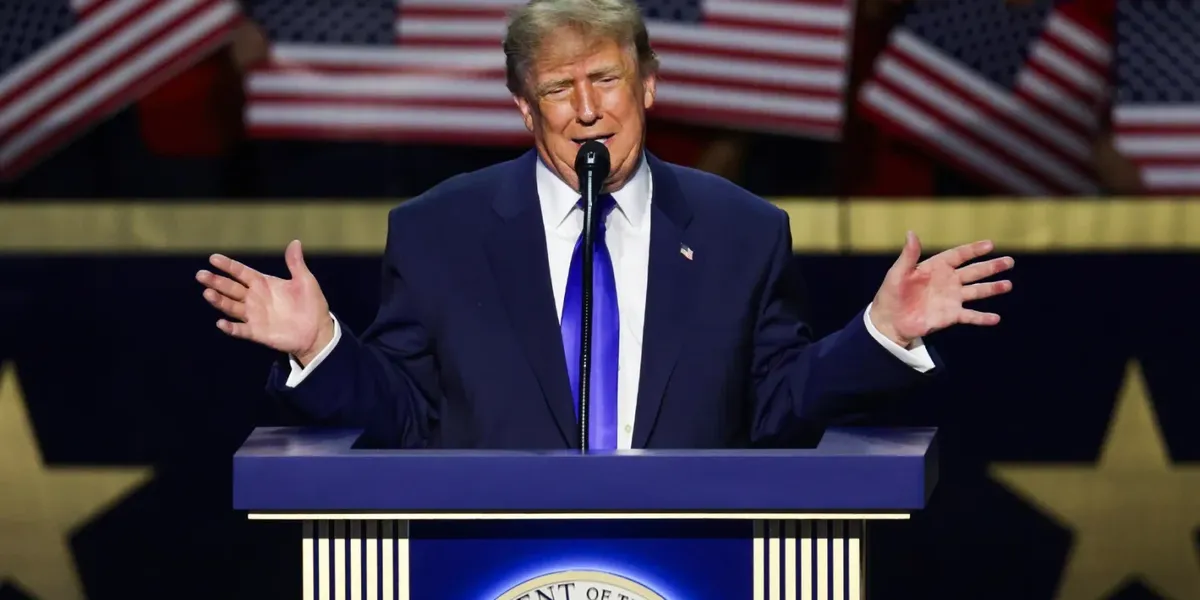
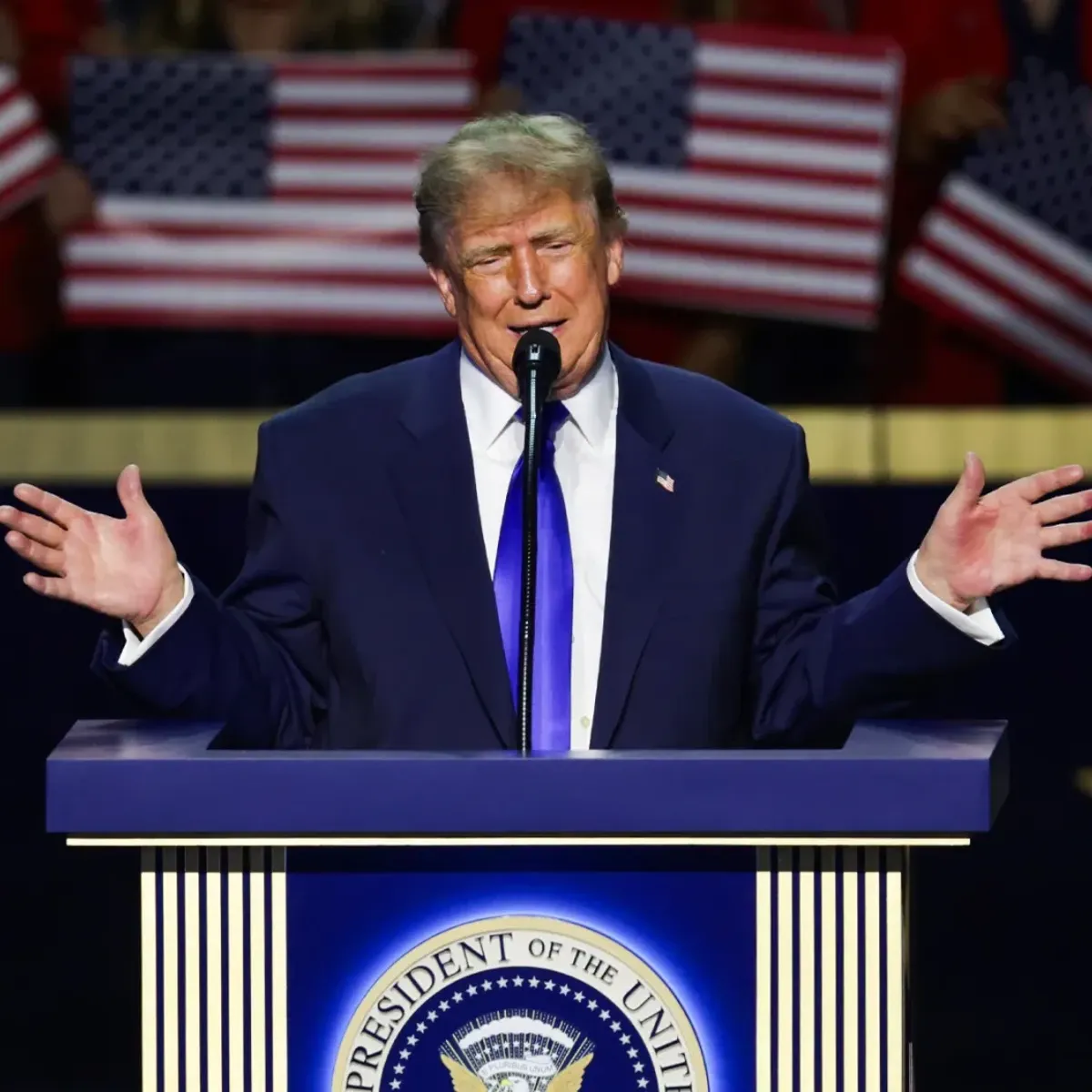
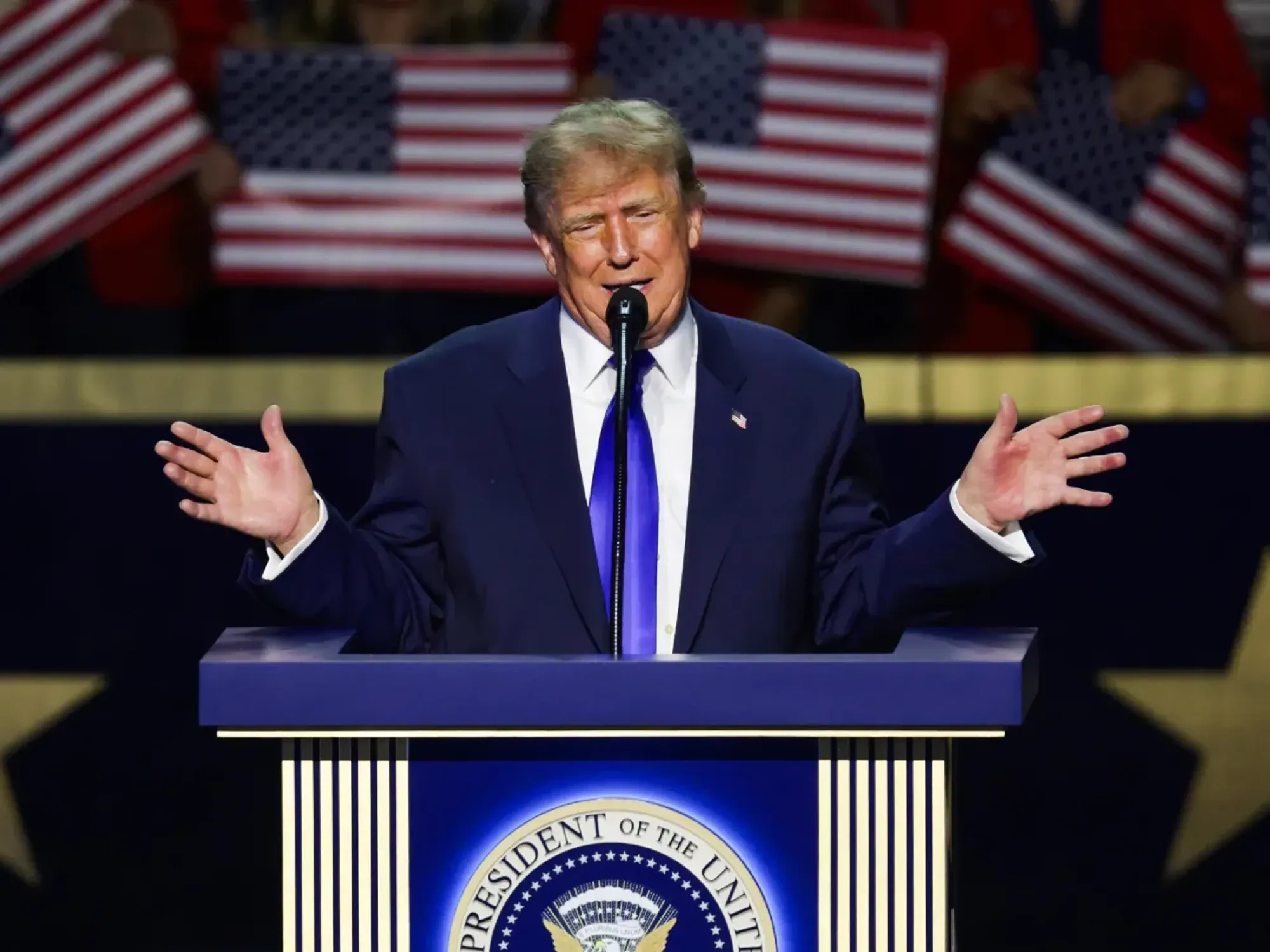

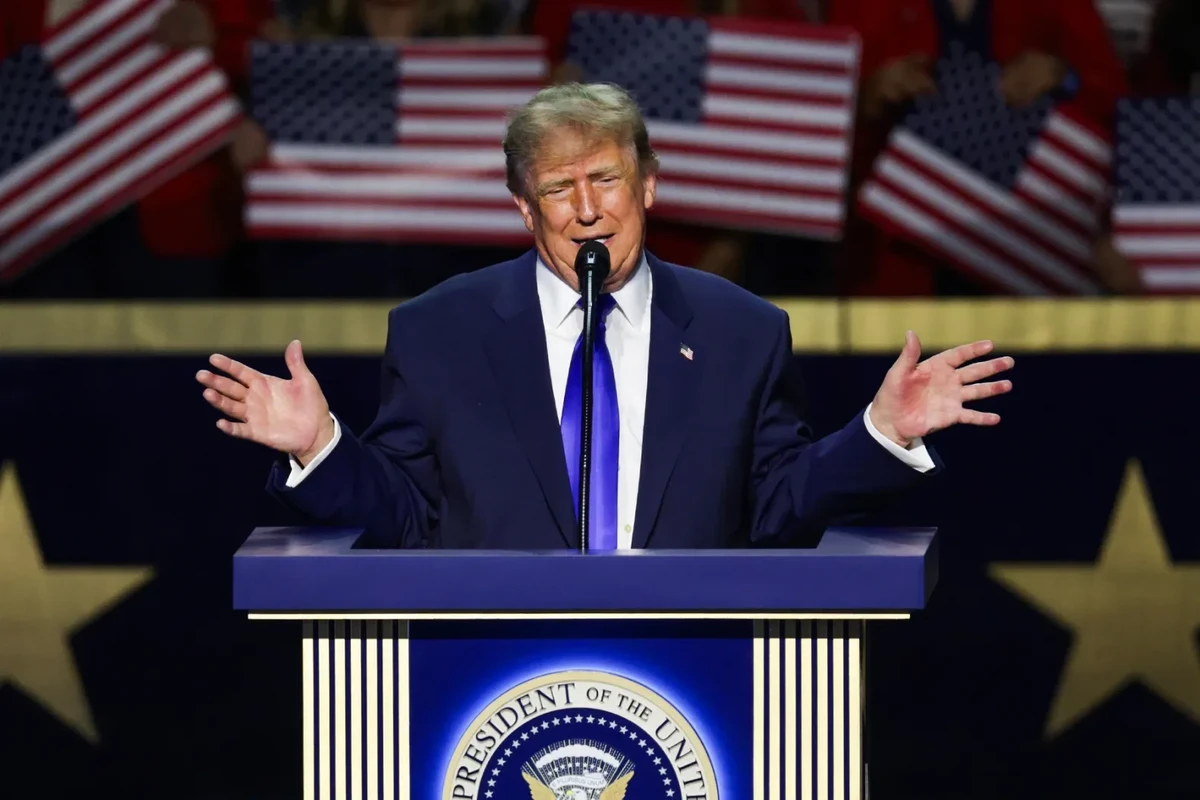
Trump implored voters to imagine that he is on the ballot this November, even his biggest fans worry it might backfire
Donald Trump speaks on stage on the first day of the 2026 Republican National Convention at the American Airlines Center on Sept. 9, 2026 in Dallas, Texas.
Not a single ballot will be cast for Donald Trump in the 2026 election, but the president is top of mind for Republican candidates facing electoral tests in November. Day one of the 2026 Republican convention — the first ever held during a midterm election year — kicked off in Dallas on Wednesday. The event ostensibly serves to give Republicans the first word in the final sprint towards Election Day, where polls predict that despite coordinated attempts at gerrymandering, voter disenfranchisement, and intimidation, the party is expected to take on heavy losses as voters revolt against the last two years of Trump’s chaotic governance.
Under those rosy prospects, what could help more than a massive, televised production placing the historically unpopular president at the center of the party’s electoral strategy? Gallery images of Trump decorated the hallways along the suite and media levels. His face is plastered on every access badge. The official merch store was abundant in Trump’s signature MAGA hats, “Trump Was Right About Everything†hats, and large stacks of Eric Trump’s book Under Siege. Fox News set up a broadcast center facing the stage, where a revolving door of GOP notables sat for interviews and panels. And yet, as the hour of Trump’ s keynote address arrived, large swaths of the arena remained empty. American flags had been taped to seats in balcony sections, perhaps in an attempt to trick the eye into seeing occupancy where there was none.
The floor was grouped by state delegation despite there being no candidate to nominate. Attendees sang along with Lee Greenwood’s “God Bless the U.S.A.†as the president took the stage. Behind him, a large screen began to glitch out, ripping through hours of footage in milliseconds while chromatic neon blocks interpolated through the video. Someone eventually pulled the plug on the visual metaphor.
Those who attend a national party convention are usually devotees of their respective party. In this year 2026, devotees to the Republican Party tend also to be devotees to Trump. In the arena, no one gets louder cheers than the president, but even this cohort of attendees are nervous about the party’s prospects.
“I’m cautiously optimistic,†Ken Miller, an older gentleman in a MAGA hat, dress shirt, and vest who had accompanied his son to the conference, tells me as we chat in the main concourse. Miller had moved to Texas from Alaska just about a year ago, and was not exactly bursting with confidence over Attorney General Ken Paxton’s performance as the Republican Senate nominee. “Some people are better at messaging than others,†he explained, referencing Paxton’s Democratic opponent James Talarico, who has so far maintained a slight lead in the polls. “Some people are highly sophisticated in the new ways of messaging, and sometimes Republicans act a little bit like they’re behind.â€
“I think he’s basically a good attorney general,†Miller adds of Paxton, “but he’s got baggage†and “needs to be†a little more inspiring if he’s going to go the distance.
Paxton may not be oozing charisma, but effective messaging is a tall task for any MAGA Republican, considering Trump’s tanking approval numbers. Candidates are well aware of the difficulty, so much so that plenty of embattled Republicans facing narrow races skipped the event, seemingly fearful that too close of an association with the ever-unpolular president would become an anvil to their own prospects. Maine Senator Susan Collins, Alaska Senator Dan Sullivan, and Michigan Rep. Tom Barrett are just some of the notable names ditching Dallas.
Trump claimed earlier on Wednesday that the only reason Republicans in competitive races skipped the event was because there was “no room†for them. It was more likely related to the fact that his polling is hovering in the mid to low 30s, around “Nixon is about to resign†levels. Nevertheless, he thinks he’s the key to midterm success. “I’m asking you to pretend that I’m on the ballot. I’m on the ballot,†Trump implored attendees and viewers alike. He spoke for over 90 minutes. (The original schedule circulated by organizers estimated his remarks would only take 45.)The prospect of a midterm underperformance was very clearly on his mind.
“For some reason, when a president wins — even if he’s really a good president or a great president, there aren’t too many of them — they don’t win the midterms, and nobody quite knows why,†he mused. “A president, Democrat or Republican, almost never wins the midterms. We’ve got to change that because we have something going that’s so good we can’t let that string be broken.â€
In an attempt to stave off what feels like an almost inevitable electoral walloping, the president is re-upping his offer to pay Americans to keep him and his party in power. This time offering a $5,000 tariff “dividend†to every adult if Republicans manage to hold both the House and the Senate. He has previously offered payouts of $5,000 from the “savings†generated by DOGE (it cost more money than it saved), $2,000 tariff dividends (that never materialized), and other similar bonuses around the $1,000 mark.
It stinks of desperation, of a party that cannot agree on anything besides the need to appease a petulant president, even at the risk of their own electoral success. The midterm conference was not a carefully managed event curated to the tastes and concerns of the independents and moderates who have become skeptical of the party’s extremist policies, but a culture war bonanza intended to reignite the appetites of 2024’s electorate. The terrors of undocumented migrants, the threat of transgender ideology, the looming menace of sharia-law-Hasan-Piker-communism were the focus in Dallas, while the affordability crisis, which the president has deemed fake, was blamed on Biden or written off altogether.
“We’re concerned that they’re not listening to the common man,†Mary, a tall, graying woman from Tennessee told me in the convention merch shop. “Because when I have to go and [help] buy a house for my child, and both her and her husband are working, that’s bullshit. … It’s like we’re arguing about the curtains, the dishes, the furniture, and all the while our foundation is just crumbling.â€
Lindsay Clancy and her defense attorney, Kevin Reddington.
Lindsay Clancy’s lawyer asked President Donald Trump to consider pardoning the Massachusetts mother whose murder trial for the deaths of her three children recently ended in a mistrial.
Kevin Reddington, Clancy’s defense attorney, addressed Trump at the end of an interview on Good Morning America Tuesday, Sept. 8. Asked what was next for Clancy, Reddington mentioned Trump and the comments he made about the case last week after the jury was unable to reach a unanimous verdict and the mistrial was declared.
“I’d like to say that, perhaps, Donald Trump, who felt compelled to speak out about this case, may very well,†Reddington began, before stopping himself and stating plainly: “Mr. President, I hope that you would consider this young lady, the type of person she is, what she’s been through, and consider a pardon.â€
When Trump was asked about the trial last week, he admitted to following the case because “it’s on television so much.†He went on to say Clancy “did a horrible, horrible thing,†and, “There’ll be a price. It’s going to be mental institution or jail or something, but I guess they’re going to go through another trial. It’s too bad.†(When reached for comment, the White House referred back to Trump’s previous statement.)
During the highly watched trial, prosecutors accused Clancy of “meticulously†planning the murders of her three children, Cora, five, Dawson, three, and Callan, eight months, after growing unhappy with her life. Her defense, however, argued that Clancy killed her children after suffering a postpartum psychotic break. They claimed Clancy heard a commanding male voice in her head when she strangled her children with exercise bands, then tried slashing her own throat and wrists before jumping out a second-story window of her home. (The fall left Clancy paralyzed from the waist down.)
The jury spent a week deliberating the case but ultimately told the judge they could not reach a unanimous verdict, with one holdout. On GMA, Redding said he believed that 11 jurors were in favor of delivering a verdict of “not guilty by reason of insanity,†and he reiterated his frustration with the lone holdout juror for not applying “the law of reasonable doubt as presented by the judge.â€
While Reddington made his pardon appeal to Trump, he also spoke about the possibility of striking a plea deal with prosecutor Timothy Cruz. “I’m willing to listen to Tim,†Reddington said, adding: “I hope, however, that after seeing through this trial, and seeing the evidence that was presented from the government, as well as from the defense, that he would revisit that reissue and hopefully we’d be able to work something out that would be acceptable to both sides.â€
Trump has escalated his conflict with one of the USA's staunchest allies.
Lake Ontario has a new name, at least in the eyes of the American President.
Donald Trump signed an executive order earlier this afternoon directing the U.S. government to call the Great Lake “Lake America,†int he latest, bizarre chapter to the increasingly strange relationship between Canada and its southern neighbour.
The change applies to the U.S. federal government, meaning American maps, documents and geographic databases will be updated. It does not, however, give Trump the power to tell Canada what to call a lake that has been sitting between Ontario and New York for thousands of years. The name 'Ontario' comes from an Indigenous Iroquoian term for the lake, recorded by French explorers in the 1640s and later adapted into its present form. The name eventually gave its name to the province of Ontario, when it joined Confederation in 1867.
The (very petty) renaming comes in the middle of an escalating trade war between Ottawa and Washington, with Trump having repeatedly turned his attention toward Canada and its relationship with the United States. Earlier this week, Canadian Prime Minister Mark Carney announced new retaliatory tariffs as Trump and Republicans continue to threaten Canadian businesses and the country’s sovereignty (though he stressed he ‘loves French-Canadians’). He also seems particularly mad at Ontario Prime Minister Doug Ford, who has repeatedly lashed out at Trump. Ford has already dismissed the idea of the renaming, while federal officials have made clear that Canada will continue using the name Lake Ontario.
The White House says the new name recognizes the lake’s importance to American history, commerce and national interests. The fact that the lake is shared with Canada appears to have been left out of the equation.
This isn’t the first time Trump has made geographic renaming part of his political tactics. Earlier this year, he ordered the U.S. government to use “Gulf of America†in place of the Gulf of Mexico. That decision similarly applied to U.S. federal usage, but has failed to persuade Mexico, or the rest of the world, to adopt it.
LOS ANGELES - 1978: Country singer Dolly Parton poses for a portrait session in 1978 in Los Angeles, California. (Photo by Harry Langdon/Getty Images)
Presidents across party lines celebrated Dolly Parton on Tuesday following her death, speaking to the country icon’s ability to transcend politics through her work that often spoke louder than words.
On Tuesday, former Presidents Bill Clinton, Barack Obama, and George Bush each paid tribute to Parton, while President Donald Trump ordered that flags be flown at half-staff for the next week to honor “one of the greatest Country singers, and far beyond, EVER.â€
In their statements, the former presidents praised both Parton’s music and philanthropic endeavors. In 2020, Parton donated $1 million to Vanderbilt University, which helped fund coronavirus research and Moderna’s Covid-19 vaccine. The legendary singer also famously founded the Imagination Library, established in honor of her father Robert Lee Parton Sr., which distributes books to children in multiple countries.
In a statement posted on social media, Obama highlighted Parton’s humble roots, colossal impact in music and Hollywood, and her philanthropic work. “It’s hard to imagine many people having a bigger impact than Dolly Parton. Born in a one-room cabin, she earned 11 Grammys and an Emmy, built a business empire, helped millions of kids learn to read, and — as if that wasn’t enough — helped accelerate the research that led to the Moderna COVID vaccine,†Obama wrote. “What a life. Michelle and I are thinking of Dolly’s family and her many, many fans.â€
See on Instagram
“Dolly Parton was one of a kind—a great songwriter and performer who told the stories of everyday Americans with honesty, humility, and heart,†wrote Clinton in another tribute. “She rose high from her East Tennessee roots and never forgot where she came from. And she always believed in giving back, especially in her efforts to promote literacy. Hillary and I were big fans and first saw her in 1974, and will always be grateful for the music and the memories.â€
Bush and former first lady Laura Bush also joined fans in mourning Parton’s death. “We loved her music and her style. She was a great entertainer and even greater person,†wrote the former president. “We respected her work to promote literacy, advance health, and strengthen communities. Dolly was a talented and hardworking American who will be missed.â€
Rather than taking a hard line on politics, Parton chose to shine a light on her values through both her work and own endeavors. The icon, a beloved supporter of the LGBTQ community, wrote and sang the Oscar-nominated song “Travelin’ Thru†from Transamerica, a 2005 movie about a transgender woman and her son. In 2017, Parton collaborated with her goddaughter, Miley Cyrus, to record “Rainbowland,†a hopeful tribute imagining a world of complete inclusivity and equality.
When speaking to Rolling Stone about the track the year it released, Parton called the song “one of those things we felt like the world needed a little message right now.†She continued, “If we could just do a little better, try a little harder, try to get along a little better, we could live in Rainbowland. If nothing else, if we tried a little harder at least we’d be a little more colorful than it is right now, a little brighter, a little shinier out there.â€
Trump has escalated his conflict with one of the country's staunchest allies.
In the absence of a coherent political strategy, threaten something ridiculous. Such has been the strategy of the Trump administration in virtually every major foreign policy and economic decision of his second term. As relations with Canada — our northern ally and major trade partner — collapse into a trade war spurred by the American president’s tariff threats, things have once again escalated into the absurd.
On Tuesday morning, President Donald Trump took to Truth Social to goad Canada, writing that “the United States is giving serious consideration to changing the name of Lake Ontario to Lake America in that we don’t expect to be doing much business with Ontario any longer.â€
The threat mirrors Trump’s claims that he holds the authority to rename major global geographical features at will. Notably the president has attempted to rebrand the Gulf of Mexico as the “Gulf of America,†It’s all a part of a larger imperialist impulse on Trump’s part. The president has floated invading and annexing Greenland, Venezuela, and Canada, claiming he will make each the “51st state.â€
“Over the last 10 years, the United States lost, on average, 60 Billion Dollars a year with Canada. No more,†he added in a subsequent post — which misrepresented the annual import/export differential between Canada and the United States as a “loss†and not an exchange of goods.
Americans can count the death of North American free trade among the many casualties of the second Trump administration. Earlier this month, Trump threatened to level punishing, 50 percent tariffs on over $20 billion of Canadian imports. Canadian Prime Minister Mark Carney has threatened dollar-for-dollar retaliatory tariffs.
“In recent days, the United States proposed new terms that were uneconomic, unfair, and undermined the net benefits for Canada and called into question the reliability of any deal,†Carney said on Sunday. “In short, they asked too much and they offered too little. You’re at war when you get attacked. We got attacked.â€
Canadian goods account for approximately 10-15 percent of all U.S. imports, and is the nation’s second biggest trade partner by volume after Mexico. With costs for everyday goods continuing to rise, and an affordability crisis threatening Republicans’ unified party hold on Congress after the midterms, a trade war with a historic ally comes off as wholly idiotic. Maine Senator Susan Colling, a Republican facing a tough reelection bid in a state that borders Canada, said in a recent interview that “imposing new tariffs on Canada is a mistake.â€
In a post on social media, she warned that continuing down this path “will increase costs for Maine families, as most businesses will have no choice but to pass on the tariffs to their customers through higher prices.â€
Ontario Premier Doug Ford has threatened to cut off energy exports to the United States from Ontario, telling reporters on Monday that “everything is on the table,†and that Americans “won’t get a grain of sand†out of the province that powers millions of homes in the United States if things continue to spiral.
As for the American president, he had some choice words.
Trump can “â€kiss my ass.â€
Donald Trump in the Oval Office in August 2026.
President Donald Trump told the Department of Justice to settle its antitrust suit with Live Nation after meeting with CEO Michael Rapino in the Oval Office in late February, The Wall Street Journal reports.
The new story digs into the lobbying efforts and behind-the-scenes maneuvering that preceded Live Nation’s surprise settlement with the DOJ in early March, just one week into the company’s federal antitrust trial. While some co-plaintiff states signed onto that deal, many continued with the case, and a jury ultimately found Live Nation liable for operating as a monopoly in April.
The Wall Street Journal previously reported that the settlement was reached after a meeting at the White House on March 5 attended by Rapino, the company’s lawyers, and DOJ officials (including former Attorney General Pam Bondi). But Rapino had also met with Trump a few weeks earlier.
According to the report, Rapino’s Feb. 27 meeting at the Oval Office primarily centered around Trump’s efforts to overhaul the Kennedy Center, and the president’s desire to enlist Live Nation to handle the venue’s operations. But during the meeting, the president also asked Rapino why the company hadn’t settled its antitrust case with the DOJ yet. After, Trump reportedly directed the DOJ to strike a deal.
Reps for Live Nation did not immediately return requests for comment. Lauren Bis, a White House spokesperson, said, “Unlike Joe Biden, President Trump has not weaponized the Department of Justice against his political foes or used it to help his friends. The Department is focused on restoring law and order and keeping Americans safe.â€
The DOJ’s settlement with Live Nation has drawn significant criticism, both for how the deal was reached, and the terms it contains. While it did force some concessions from Live Nation on key issues involving its amphitheater business and Ticketmaster’s exclusivity contracts, many claimed it did not go far enough to address the company’s alleged monopoly over the live entertainment industry. For instance, the plaintiff states are currently seeking to force Live Nation to divest from Ticketmaster following their victory in court.
Dan Wall, Live Nation’s executive vice president of corporate and regulatory affairs, touted the terms of the deal in a new statement shared with the WSJ. “Our critics are comparing this settlement to the irrational hope of breaking up Live Nation and Ticketmaster,†Wall said. “For the actual claims in this case, the DOJ and settling states got as much or more as they could have expected to win in court.â€
He also defended Live Nation’s actions as it worked to reach a settlement with the DOJ: “The only reason we went above the Antitrust Division to senior DOJ leadership is because no one there would speak to us. When you’ve been unable to get a meeting for six months, you have every right to try something else.â€
Live Nation made significant efforts to lobby the DOJ and Trump administration into dropping, or settling, the antitrust. The company worked closely with many people close to the president, including Kellyanne Conway and MAGA influencer-lawyer Mike Davis (who previously helped lobby the DOJ to drop its challenge to a $14 billion merger between Hewlett Packard and Juniper Networks). And Trump involved himself reportedly after hearing about the case from prominent people.
According to the WSJ, Live Nation’s efforts also included hiring top law firm Sullivan & Cromwell to lead its settlement talks. The Sullivan & Cromwell team reportedly included two antitrust experts, but also a lawyer named James McDonald, who had little antitrust experience, but was representing Trump in his criminal cases in New York. (In July, Trump appointed McDonald to lead the U.S. attorney’s office for the Southern District of New York.)
Additionally, two top political appointees at DOJ reportedly had an influence over an early set of proposed settlements. One pushed the lawyers at the antitrust division to remove language forcing Live Nation to sell Ticketmaster from a draft response; he and the other appointee also reportedly echoed talking points Live Nation had unsuccessfully tried in court.
As for the case itself, it’s now in the remedies phase, during which Judge Arun Subramanian will decide what kind of punishment Live Nation will receive. Subramanian also has to review and approve the DOJ’s settlement with Live Nation, and decide whether it was reached in the public interest. In a July letter to the judge, the plaintiff states said said they had “significant concerns†that it was not in the public interest, and asked the DOJ to share new details about how the settlement was reached.