Netflix Rolls Out Trump-in-Catering-Truck Doc Faster Than President Can Order McDonald’s
Photo gallery
6 images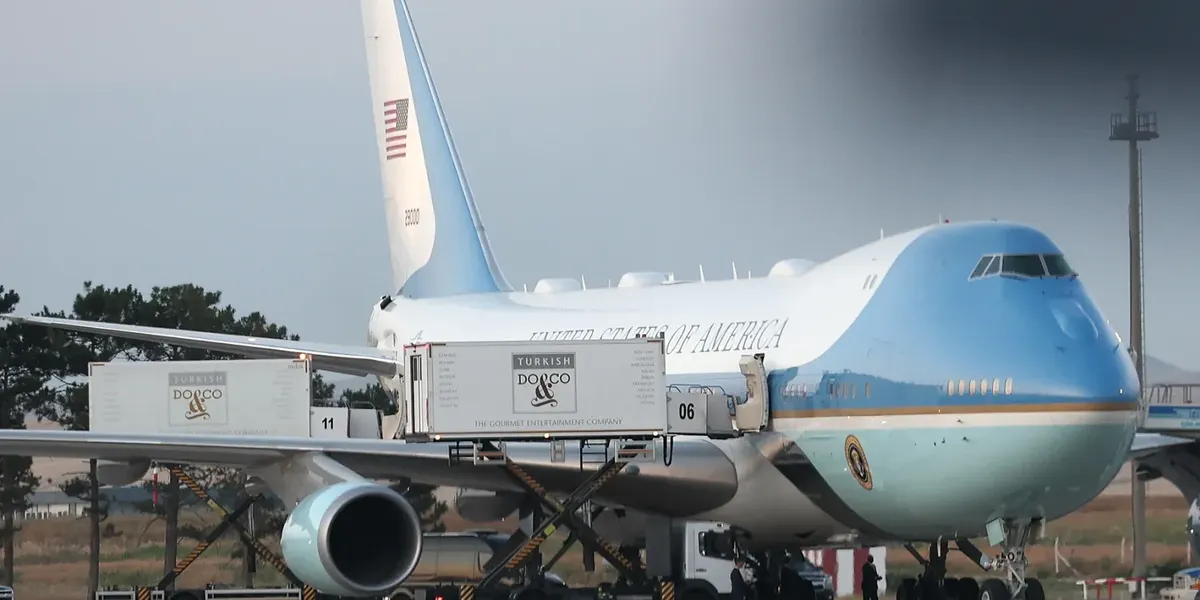
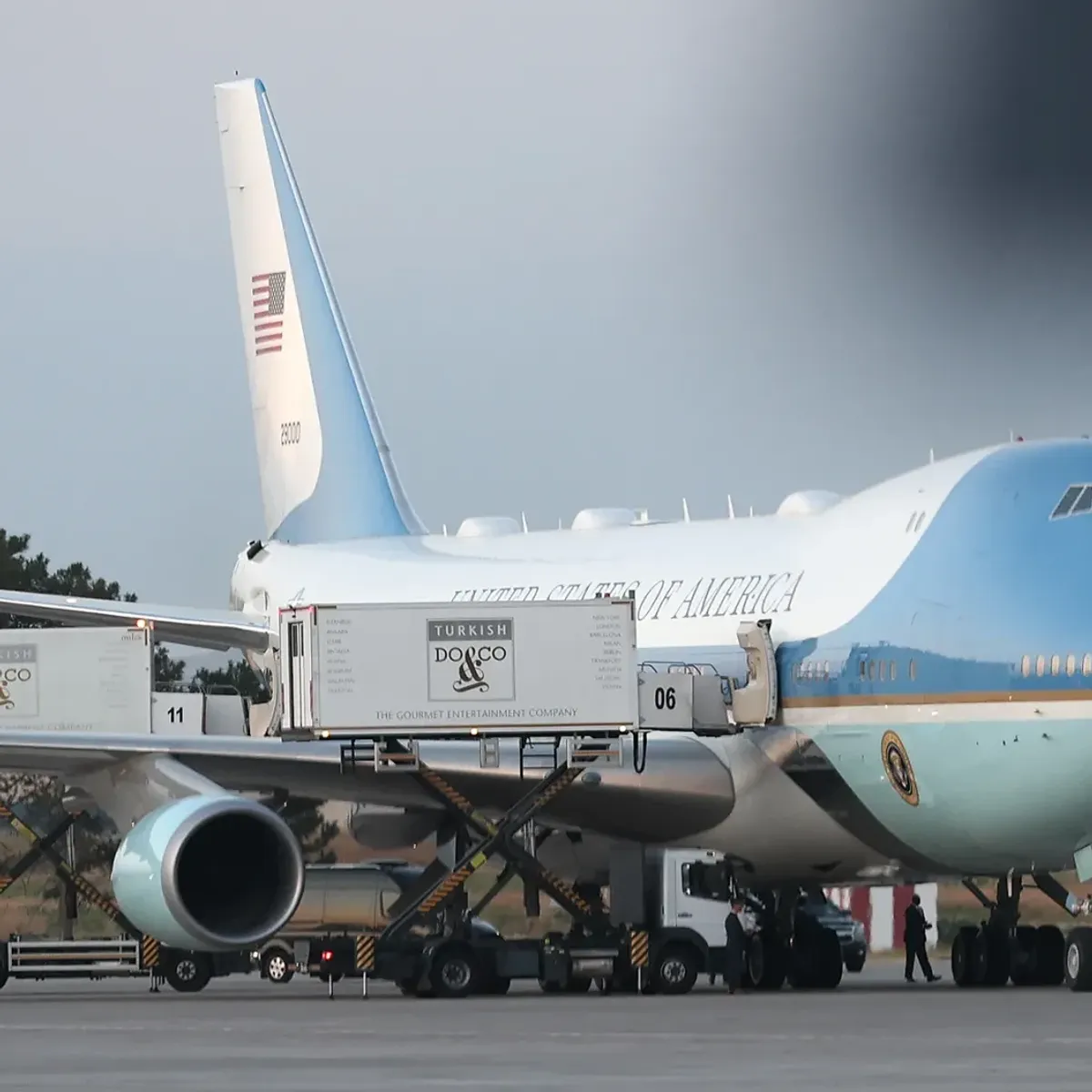
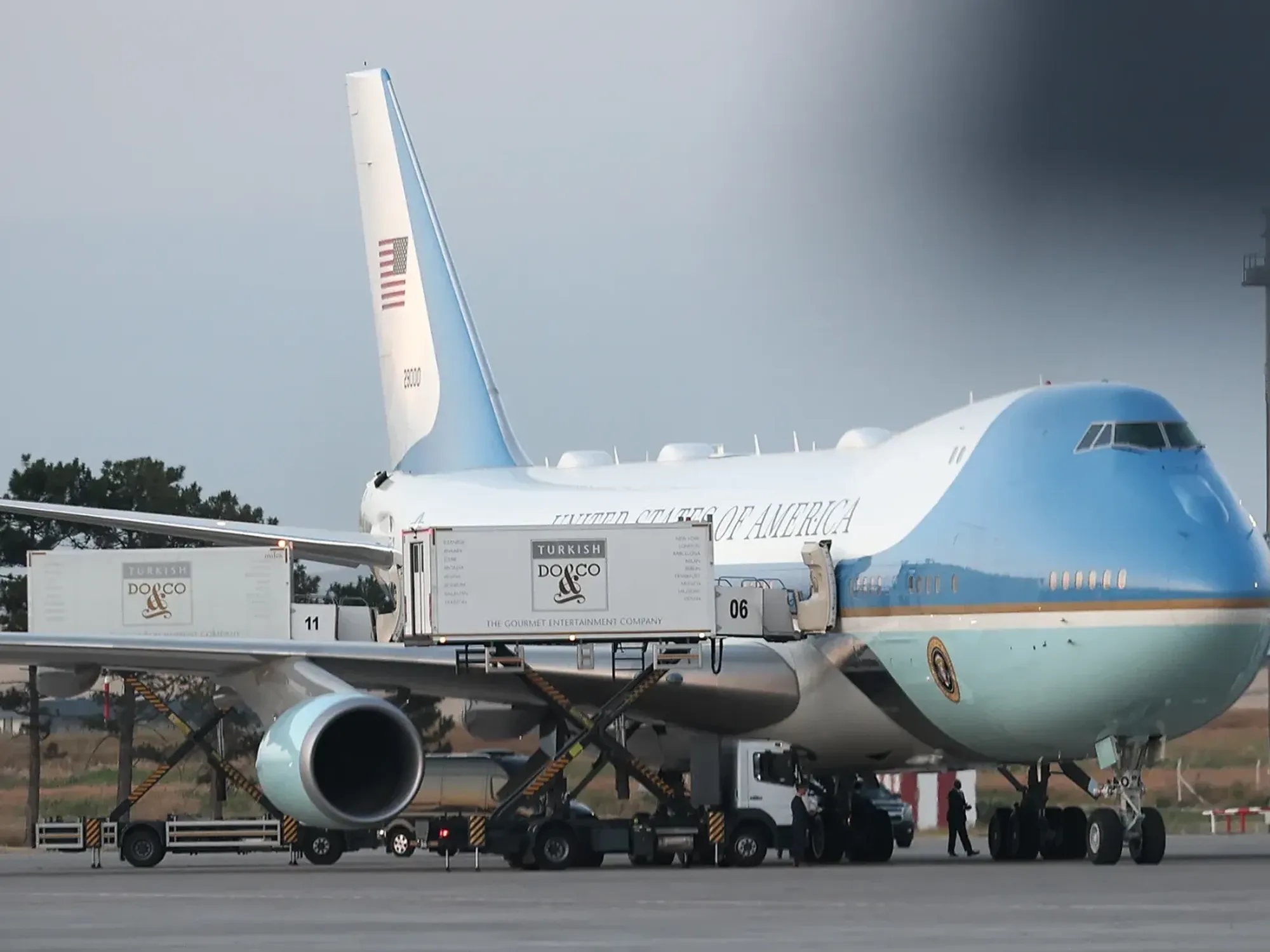

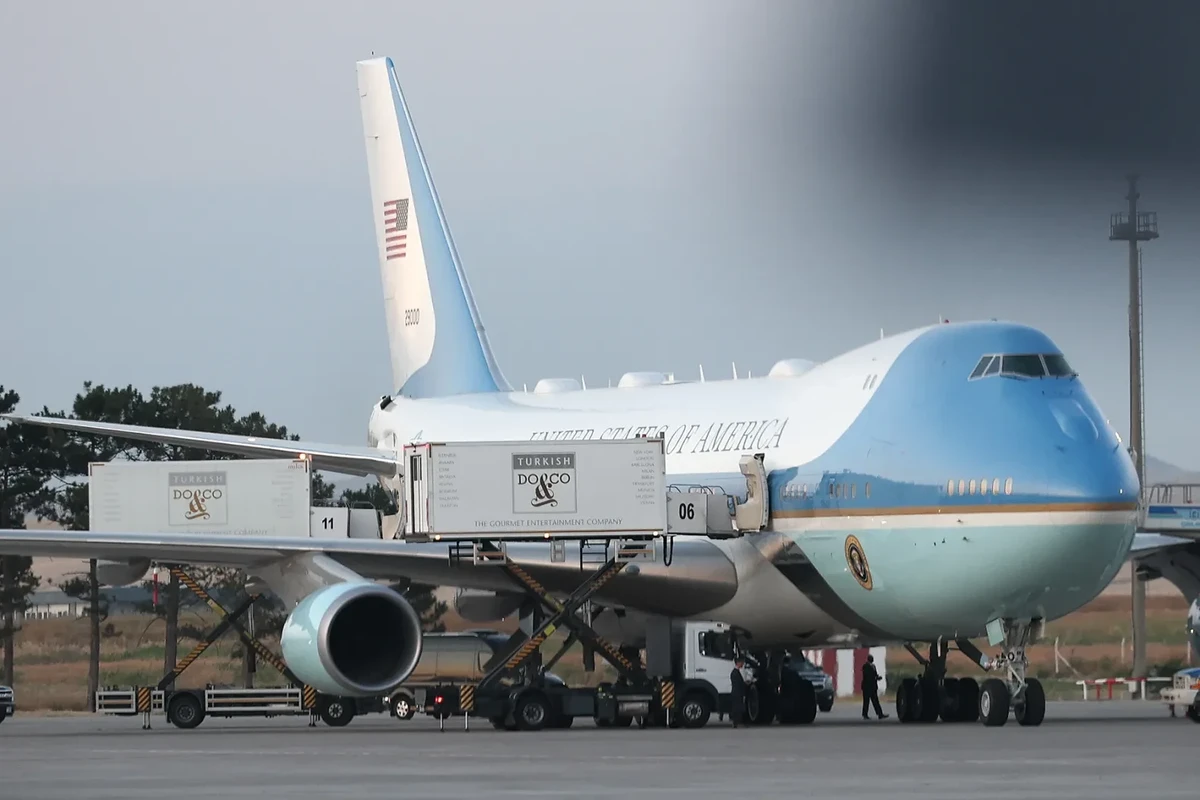
'Instadocs: Decoy Plane', which comes out around two weeks after news broke about Trump’s bizarre exit from Turkey, will premiere Friday
Air Force One sits on the tarmac with an airport catering container adjacent to the body of the aircraft on July 8 in Ankara, Turkey
On July 8, Donald Trump snuck out of Turkey via a decoy plane that he reached by riding in a catering container, according to ABC News, which reported the news on Aug. 13. Now roughly two weeks later, Netflix has made a whole documentary about the escapade. Instadocs: The Decoy Plane will premiere on the streaming platform on Sept. 4.
A 90-second trailer for the series shows scenes from Ankara, Turkey’s airport as Associated Press photographer Alex Brandon describes how unusual it seemed to see catering vehicles lining up around Air Force One. “I shot the shit out of it,†he said. He and the rest of the press corps then boarded the plane after seeing Trump ascend the stairs when another peculiarity arose. “We’re told by the White House staff that we should lower our window shades,†Reuters correspondent Gram Slattery said. Brandon then says he’s on high alert to see something unusual, and the clip fades out.
Decoy Plane is the latest installment of the Instadocs series, which Netflix has described as “fast-turnaround documentary series.†Previous Instadocs episodes have covered the reversal Alex Murdaugh’s double-murder conviction and prediction markets.
“The best documentaries don’t just capture history — they shape how we understand it,†Josh Tyrangiel, one of the series’ executive producers, said in a statement. “With Netflix, we have the infrastructure to match the speed of the world we’re documenting. Instadocs is about giving audiences something they’ve never had before: depth and craft at the moment it matters most.â€
In addition to Brandon and Slattery, Decoy Plane interviewees include MS NOW reporter Carol Leonnig, The Washington Post‘s Dan Lamothe, a former Secret Service agent, and a former Air Force One crew member.
Lana Condor, Wile E. Coyote, and Will Forte in 'Coyote vs. Acme.'
Never had Will Forte found himself so caught between art and commerce. The former Saturday Night Live star had received a call in November 2023 inviting him to a screening of the new Looney Tunes movie he’d just made, Coyote vs. Acme. Test audiences had loved it, and the producers were excited to finally share it with the whole cast. The very next day, like an anvil falling from the sky, Forte and his collaborators were crushed by the news that Warner Bros, the film’s studio, had decided to shelve the movie for a tax write-off.
The private screening still went ahead, though in the days leading up to it, Forte began to think, “It must not be as good as the producers thought. Maybe they were too close to it.â€
That uncertainty evaporated quickly. In Coyote vs. Acme, Forte plays a hapless personal injury lawyer who helps Wile E. Coyote sue the Acme Corporation over their myriad products (rocket skates, bombs, catapults, anvils, etc.) that have backfired on him in his pursuit of the Roadrunner. Forte, and everyone else in the room, loved it, and as the lights went up, doubt and melancholy turned into frustration and confusion.
“We’re all kind of looking around at each other, like, ‘What the fuck is going on here?’†he tells Rolling Stone, adding. “You’re telling yourself, ‘I love this so much, this is so great, this is a movie my kids can see,’ and you forget, ‘Oh, right. This is a funeral screening.’â€
The decision to can Coyote vs. Acme did cause an uproar. The creative team spoke out, as did industry folks who’d seen the film, like Phil Lord and Christopher Miller, the directing team behind blockbusters like Project Hail Mary and the Spider-Verse movies. Warner Bros. made some hay about shopping the movie to another studio, but it wasn’t until March 2025 that the independent production and distribution company Ketchup Entertainment secured the rights. Nearly three years later, Coyote vs. Acme — which is every bit as delightful, thoughtful, and funny as those who were at the funeral screening insisted it was — will arrive in theaters on Aug. 28.
Like the 1988 classic, Who Framed Roger Rabbit, Coyote vs. Acme boasts an expert mix of live action and animation. And also like Who Framed Roger Rabbit, it’s a family-friendly comedy unafraid of weightier ideas. Embracing the Sisyphean conundrum that simmers beneath all pf Wile E. Coyote’s futile, slapstick efforts to catch the Roadrunner, it’s very much a movie about learning to fail. It’s also about the cost of “progress,†corporate greed and indifference to suffering as Forte’s character, Kevin Avery, and Wile E. Coyote stumble upon a larger Acme conspiracy. (The movie also stars John Cena as Acme’s lead lawyer, as well as Lana Condor as Kevin’s niece and legal partner.)
That Coyote vs. Acme was briefly shelved by not dissimilar forces is almost too on the nose. Forte isn’t sure if the film’s content had anything to do with its canning, but he points out that Looney Toons has “always been on the more subversive side,†and those who greenlit the film presumably read the script first.
“There are some people who argue — and they’re right — [Warner Bros.] are a business,†Forte acknowledges. “They can put their money in and do what they want with the product. But at the same time, why did you OK this movie in the first place? I get it if it’s like, ‘Oh, we thought it was gonna turn out like this, and you made a movie that was 10 times shittier than the script.’ But this is even better than the script. If you’re not gonna take a chance on your movie that is testing well and has your IP in it, what are you gonna take a chance on? Everything’s a crap shoot. Why was this the one?â€
Forte is obviously delighted that Coyote vs. Acme is finally coming out, and during our conversation he spoke candidly about the movie’s long, winding road to release, as well as the unique experience of acting with cartoons in a live-action movie (and seeing himself on-screen with American icons like Bugs Bunny and Daffy Duck). He also chatted about what he’s learned from bombing, the pleasures and challenges of doing clean comedy, and the sketch show he made with his mom and her best friend.
Tell me about your relationship with Looney Tunes?I grew up watching Looney Tunes. I don’t remember a time in my life when they weren’t part of my life — that’s how early I started watching them. It was every day after school and on Saturday mornings. Then I went to college and kind of stopped watching cartoons, but I watched a couple of the old classics as I was about to start making the movie. I remember being so entertained as a kid, but I was just as entertained as an adult. They were so fun on so many different levels.
Watching them now, were you able to see how they might’ve shaped your sense of humor as a kid?Oh, certainly. And I’ve never really thought about that in interviews where I’ve been asked about the different things that influenced me. I would always talk about Saturday Night Live and David Letterman, which are huge to me, but for sure the Looney Tunes must have been a huge part of my comedy brain formation… They’re so fun, so smart, and very subversive, too. You don’t realize that when you’re a kid.
What was it like doing the live action/animation stuff as a performer? Especially since the character you’re interacting with most, Wile E. Coyote, is not only not actually there, but famously mute. I do a lot of voiceover work, and usually you’re just in a booth by yourself, so you’re kind of used to delivering dialog to nothing. But [director] Dave Green did this really smart thing where he brought in this guy Dave Barclay, who’s this master puppeteer — he was the guy behind Jabba the Hutt, he was one of the people doing the Venus flytrap in Little Shop of Horrors, [he did] Fraggle Rock. Just a ton of stuff. He brought this life-size Wile E. Coyote puppet, so during rehearsals, he’d be simulating the actions of Wile E. with the puppet, and then sometimes even for the first couple takes. Then the puppet would be removed, and they’d give me a tennis ball on a stick for an eye line. But by then you kind of had in your head what Wile E. would be doing.
Most of the time, it was just somebody reading the lines off-camera. Eric Bauza does most of the voices in the movie, and he might have come to visit [set]. God, he is so good. So when you finally get a chance to see the movie — because a lot of times you’re so focused on what you’re supposed to say and what direction you’re supposed to say it, that you forget: “Oh, that’s right, I’m in this scene with this iconic cartoon character.†When I finally got to see the movie, it was like I was watching everything for the first time. It was so exciting, and a really emotional experience getting to be up there with all these characters.
It’s been over four years since you filmed the movie at this point. Has it been easy to remember what the experience has been like now that you’re revisiting it? It was a very unique experience with a lot of very fun, unique people, so it’s easy to remember. Dave Green was just unflappable. There was a dust storm that came, and we all had to shelter in the studio. It became a dangerous situation and meant having to reconfigure the work schedule, and [Green] just kept this even, calm demeanor the whole time. Oh, I got Covid! I was being so careful! Week two was about to start, John Cena is coming in, and we have these big courtroom scenes together, and I get Covid. So I had to miss a whole week, and once again, [Green] is totally unflappable.
It’s insane the amount of work that goes into having to do any movie, but to do something where you have to plan out this interaction of the animated and live world — it’s insane. There’s one scene where I’m walking to this car, and an animated boulder falls onto a real car and smashes the real car. They had to figure out how to make this car implode. We just shot it in so many different angles, and they had everything mapped out. And it’s so fun because the entire movie is filled with animated stuff interacting with live stuff. I’m so impressed with how they worked and made this thing that just would have made my mind explode.
So much of the movie is about failure and learning to fail. What have you learned from bombing?I’ve had a lot of experience with this [laughs]. The main thing I learned about bombing is that if you are making the thing that’s close to your heart, you’re doing it to please yourself, and it bombs, it is so much easier to take than trying to make a movie to please other people. There have been a couple of things in my life where they were a little out of my control, and people tried to talk me into things because it would lure in this viewer. But it just spun out from what I thought the original idea was. It’s really hard to take it when something bombs like that.
But like MacGruber, when we made that movie and it bombed, that sucked to go through. But within a week or two, me, [co-writer] John [Solomon], and [co-writer, director] Jorma [Taccone], we just said, “We are proud of this. There’s nothing we could do. We made the movie we wanted to make.†And it made it so much easier. And it feels like that movie got a bit of a second look from people, so we remain proud of that movie. But that’s what I learned about bombing: if you’re making the movie you want to make, it’s so much easier to bomb than if you’re trying to please other people.
This is a pretty family-friendly project, and another thing I noticed you did recently was guest appearances on Studio C, which is a long-running, family-friendly sketch show out of Utah on BYUtv. What made you want to do that?That started with this show called Show Offs, and Colin Jost’s brother Casey was the host of that show. It’s an all-improv show, and they basically talked me into coming out; it was just a quick, one-day thing, and I had a really fun experience. I met a couple of guys who are now really good friends, so I went back and did Studio C twice. Look, I have done a lot of dirty stuff in my life, and it was really fun to do things that were clean. That’s a challenge. They’re so good at writing these things that are really fun, absurd, and still tickle my funny bone, but that are totally clean. It’s a good reminder that you don’t need these crutches of dirty stuff all the time.
You’re also working on a sketch show with your mom. Can you share any updates on that?We just put together a pretty smooth assembly of the first episode. It’s bonkers. I cannot wait for people to see this. I think we’re gonna try to put a sizzle reel together of the other five episodes, and then see if we could sell it on that. We’re delighted by how it’s coming together. My mom, Patti Forte, and [her friend] Carol Park — I think if we do this right, people are gonna go as them for Halloween. That’s my goal. They wear these specific sweatshirts that have their names on them, and I feel like we might see a couple of Patti Forte and Carol Parks Halloween characters if we’ve done our job right.
When I saw you were working on this, it reminded me of a great early Weekend Update bit you did where you sing a Mother’s Day song to your mom, about how you’ll miss her when she’s dead. That’s so funny, I just happened to come across that a couple of days ago!
What was it like watching it back? Did your mom know the bit?She did. So that’s the thing: my mom is not a trained actor, which is what makes this sketch show really fun. So when she came on [SNL], she did know the bit, and [during dress rehearsal] she comes out, and she was really overdoing it. Really overacting, being offended. I was really proud of her, because we gave her some notes, said you gotta tone it down, and then she played it perfectly on the air. You really believed that she was hearing it for the first time.
For the sketch show, is it just Patti and Carol, or did you get other folks in for it?It follows them trying to write a sketch each [episode], and the very end is them doing the actual sketch with a bunch of my buddies from SNL or different comedy actors. Also, there’s a Zoom with a comedy writer in the middle of it. And all those people are pretty exciting names. I don’t know if I’m allowed to say who the people are, but they’re people who I think people will be excited to see.
Jake Reiner
Eight months after the murder of Rob and Michele Reiner, their son Jake Reiner has sat down for his first television interview since their December 2025 deaths.
“Nobody really understands what it’s like to go through something like that until you’re living it,†Jake Reiner told Good Morning America in an interview that aired today. “It’s been eight months. It feels like eight years at the same time. And it also feels like eight minutes. Because every moment that I wake up, I’m reminded of my reality.â€
In the interview, Jake recalled the phone call from his sister, Romy, that first alerted him to what had happened with his parents. “Romy told me our dad was dead and then she said, ‘I can’t find mom,’†Jake Reiner said. “I immediately went into shock.â€
Jake soon after found out that his brother Nick was the prime suspect in their parents’ murder. When asked if he was surprised by his brother’s alleged involvement in the deaths, Jake said he didn’t want to answer that question.
“[Nick]’s in jail. It’s like, I physically lost my parents, and then Nick was arrested. Now it’s just me and Romy, and we have to navigate this by ourselves essentially,†Jake said.
“For me, it manifests into anger. It manifests into rage, into how unfair this was, how I didn’t get a say in what happened. I didn’t get to stop it from happening. I had no choice in the matter. I just have to accept the reality of it. And to me, that is just one of the most infuriating parts of all of this.â€
According to GMA, Jake Reiner declined to comment at all on his brother, including how he feels about Nick now as well as his brother’s attempts to use money from their family trust to pay for his legal defense; while Jake hasn’t attended his brother’s trial, he reportedly testified before the grand jury that indicted Nick.
“I’ll never understand. I don’t care how it’s explained to me. I don’t care what facts come out. I will never understand why this happened,†Jake said. “My parents had unconditional love for all three of us. I can tell you they never stopped wanting to help him. They never stopped helping him.â€
Part of the reason Jake stepped forward is to bring awareness to the annual Cape & Gown Gala, an event that raises money for the Children’s Institute, an organization that Rob and Michele Reiner were heavily involved with; Rob Reiner MC’d the gala in the past, and Jake will attend the event this year in his parents’ place.
“I don’t necessarily know that I have this weight on my shoulders to carry on their legacy, but I do feel responsible for making sure people know them and they remember them,†he said.
Blake Lively
A federal judge ruled Wednesday that Justin Baldoni must pay Blake Lively a little more than $400,000 of the $8 million she sought for attorneys’ fees, according to The Associated Press. The judgment follows the settlement Baldoni and Lively reached following lawsuits related to Baldoni’s alleged misconduct on the set of It Ends With Us.
She is now to receive $363,245.40 in lawyers’ fees and $44,206.35 in costs. Her lawyers previously requested $7,495,526.87 in fees and and $539,514.01 in costs and expenses.
Judge Lewis J. Liman, who wrote his decision in Manhattan, said that a California law limits the amount of legal fees Lively could recoup. The law was meant to protect survivors of sexual harassment and discrimination from retaliatory lawsuits. He interpreted the law to mean that Baldoni would reimburse her only for what she paid to defend herself against defamation claims, rather than every claim Baldoni lodged at her.
Bryan Freedman, who represents Baldoni, told TMZ he respected Section 47.1, which is meant to protect “real survivors†but suggested the law “was applied in ways it was never intended for.†But he still sees it as a win for Baldoni. “The ruling is a significant victory for my clients and sends a clear message that, no matter how powerful you may be, the courtroom is not a place to take advantage of the law for your own personal gain,†he said. (Freedman did not immediately respond to Rolling Stone‘s request for comment.)
“Justin Baldoni and the Wayfarer Parties lost their meritless retaliatory $400 million lawsuit, which two different courts held was designed to stifle public criticism and silence Blake Lively and others,†Lively’s attorneys, Esra Hudson and Michael Gottlieb, said in a statement to Rolling Stone. “This first-ever award of fees and costs under this California law is historic, and demonstrates that there are real consequences of bringing retaliatory lawsuits. As we have said from day one, Blake Lively’s case was never about money — it was about accountability.â€
Lively had sued Baldoni for sexual harassment, retaliation, breach of contract, leading a smear campaign against her, and other claims. Baldoni denied these allegations and accused Lively of using her lawsuit as a measure to take control of the film, whose subject was domestic violence. He and his production company, Wayfarer Studios LLC, countersued Lively and her husband, Ryan Reynolds, for $400 million alleging defamation, civil extortion, and other claims. A judge later dismissed Baldoni’s countersuit. They announced they had reached a settlement two weeks before a trial was to begin.
When Liman decided that Lively should get “reasonable†attorneys’ fees, her lawyers sent a bill that totaled more than $8 million, which, they said, represented discounted rates. In the filing, Gottlieb revealed that his typical hourly rate is $2,795 an hour but that he’d lowered it to $2,187 for Lively. The 224 hours he spent on her case alone totaled some $457,000.
“We acknowledge the process presented challenges and recognize concerns raised by Ms. Lively deserved to be heard,†Lively and Baldoni said in a joint statement when they reached their settlement. “We remain firmly committed to workplaces free of improprieties and unproductive environments. It is our sincere hope that this brings closure and allows all involved to move forward constructively and in peace, including a respectful environment online.â€
Ozzy Osbourne performing in 2022
Jack Osbourne offered an update about the forthcoming film about his father, Ozzy Osbourne. Speaking to E! News, Jack said the script for the movie is “done†and that the film will honor what the fans want.
“We’re currently going out to director,†he said. “It’s gung ho.†He added that the team has someone in mind to play Ozzy, who died last year at 76. “I’m not allowed to say, but conversations have been had,†Jack confirmed. “And if it all works out, it’s gonna be awesome.â€
Since Ozzy’s death, Jack has been involved in the family business, which includes creating an Ozzy AI avatar and developing a film about his life and career with Sony.
“I have this mantra, and I always say it when in meetings with my mom or doing anything in the family business,†Jack said. “It’s like, ‘Give the fans what they want.’ That’s our people, that’s who we’re catering for, that’s what my dad wrote music for, that’s what he toured for, it’s why we did the shows we did. It’s been a big theme.â€
He added, “Because we’re doing the Ozzy movie with Sony, and I’m always saying in the meetings, ‘We’ve got to give the fans what they want. We can’t make this artsy, esoteric biopic.’ No, we’re not doing that — for many reasons — but it’s not what the fans want.â€
A biopic about Ozzy has been in the works since before his death. In 2021, the singer announced that the film was being written by screenwriter Lee Hall. It was described as a chronicle of “the extraordinary life of rock legend Ozzy Osbourne, and the great love story between him and his wife, Sharon.â€
Sharon is a producer on the film. When it was announced she said, “Our relationship at times was often wild, insane and dangerous but it was our undying love that kept us together. We’re thrilled to partner with Sony Pictures and Polygram to bring our story to the screen.â€
During an episode of The Osbournes Podcast in 2024, Ozzy shared a blunt update on the progression of the project. “By the time they finish this film, I’ll be dead,†he said. “I wanna be alive to fucking see it.†Sharon added, “Movies take forever to make.â€
Tim Curry, 1974
Tim Curry, the actor best known for playing the “sweet transvestite†Dr. Frank-N-Furter in The Rocky Horror Picture Show and Stephen King’s murderous clown Pennywise in It, died Tuesday night, as Variety reports. He was 80.
No cause of death has been disclosed. Curry had lived with various ailments following a 2012 stroke.
Curry’s charming swagger, golden voice, and perfect lipstick pout made him a cult-movie legend when The Rocky Horror Picture Show became a midnight-movie success in the mid-Seventies. It was a role that would follow him for the rest of his career. Nevertheless, he’d continue to play oddballs and underdogs — such as the butler Wadsworth in Clue and the Lord of Darkness in Legend (both in 1985) – before scaring the bejesus out of mainstream TV viewers as Pennywise. His deep baritone and British accent helped him find work as a voice actor in cartoons like FernGully: The Last Rainforest (1992) and Star Wars: The Clone Wars (early 2010s).
The actor was born Timothy James Curry in Grappenhall, England to a Royal Navy chaplain and a school secretary on April 19, 1946. At age six, he became a soprano in his church choir. By his teenage years, he discovered acting and went on to study literature and performing arts at a Birmingham university, according to his 2025 memoir, Vagabond. “At the time I wasn’t really sure whether I wanted to be an actor or a singer, so I talked my way into Hair and postponed the decision for another year or so,†Curry told The New York Times in 1990. He played Woof in Hair in London’s West End in 1968 and went on to appear in other theatrical productions and TV shows.
He landed the role of Dr. Frank-N-Further — an impish, Frankenstein-like doctor with a fetish for cross-dressing (“He’s the ultimate seducer,†Curry once said) – in 1973 in what was then known as The Rocky Horror Show, a campy sci-fi musical romp that was conceived by Richard O’Brien, who wrote the work’s score, lyrics, and book. Although the actor originally presented the mad scientist as a German, based on the name, he pivoted to doing it in a distinguished English accent after overhearing a conversation on a London bus. “I thought, ‘That’s it, he should sound like the Queen,'†Curry once recalled. When music producer Lou Adler saw the production, he decided to bring it to the Roxy Theatre in Los Angeles, and Curry came along with it.
When Rolling Stone asked Adler in 2015 what struck him about the London production, he answered, “Tim Curry’s legs to begin with. As much as he had a manly feel about him, it was seeing him dressed as Frank-N-Furter in heels. When it was playing at the Roxy, even if I didn’t go for the whole show, I always made sure I was there for the entrance.â€
“It was one of the most blistering, shocking, sexy entrances that has ever been onstage,†Susan Sarandon once said.
Adler would eventually produce the film version of the work — The Rocky Horror Picture Show, featuring Sarandon, Barry Bostwick, and O’Brien as co-stars — which famously bombed when it came out in 1975 but soon became a midnight-movie sensation where fans would dress up as the characters on the screen, sing along and act out the action and throw props like rice and toast during key moments of dialogue. Its cult success made it one of the longest-running theatrical releases in history.
In an interview about the movie’s 40th anniversary in 2015, Curry said that the thing that still resonated with him about the film was the message of one of its songs. “The thing that resonated for me, more than anything, was ‘Don’t dream it, be it,’ which was a really good slogan,†he told Today.
He took that carpe-diem sentiment and launched a singing career after Rocky Horror, putting out three albums in the late Seventies and early Eighties; his debut, Read My Lips (helmed by Kiss, Pink Floyd, and Alice Cooper producer Bob Ezrin), improbably featured a roots-reggae version of the Beatles’ “I Will.†None of the LPs were massive hits. His biggest musical success was a sax-laden, speak-sung single called “I Do the Rock,†which made it to Number 91 on the Hot 100 in 1979.
Curry continued acting, earning a Tony in 1980 for originating the role of Wolfgang Mozart in Amadeus, a year after it opened on Broadway. He’d later get Tony nominations for his roles in My Favorite Year (1993) and Spamalot (2005).
“When I was playing Mozart, I really read very little about him, because I thought what was really important was to play not only Peter Shaffer’s Mozart but also the Mozart who’s seen through the eyes of his enemy Salieri,†Curry told the Times in 1990. “I think that if you get too close to the character, if you do too much historical research, you may find yourself defending your view of a character against the author’s view, and I think that’s terribly dangerous.'â€
He spent much of the Eighties and Nineties drifting between film and television roles, appearing in Annie (1982), Clue (1985), Legend (1985), and the series Wiseguy (1989). In 1990, he made his unforgettable turn as the demon clown in the TV miniseries adaptation of Stephen King’s It. “I’m fascinated by movie villains,†he said in an interview around the time of his role as Pennywise. “I enjoyed Lon Chaney. In some ways, I think that horror movies have gotten a little too far from the mind. … I personally think that what is most horrifying is the moment of decision behind somebody’s eyes when they decide to kill somebody, rather than [seeing] a pint of blood.â€
By the Nineties, he found himself being typecast as “butlers and villains†in U.S. films, but he said such roles were “irresistible to play since they’re much more fun.†He was able to find solace in voice work, lending his pipes to dozens of animated series and movies, from FernGully to the live-action cartoon Dinosaurs (1992 to 1994). His vocal portrayal of Captain Hook in Peter Pan and the Pirates (1991) won him a daytime Emmy. He’d play side roles in The Hunt for Red October (1990) and Charlie’s Angels (2000), and made appearances on series including Criminal Minds, Monk, and Will & Grace.
In 1990, Curry outlined what he felt was a “moral and political responsibility of the artist†that he took into account when he decided on roles. He carefully considered what a role said about the world before he took it on, asking himself whether or not he should take it on. “They’re the kind of questions any artist in the 20th century would be asking himself,†he told the Times. “Why am I doing this? Am I doing this for any kind of really valid reason? I think artists are driven by the engine of their own talent, but it’s a question of what use they put it to.â€
In 2012, Curry suffered a stroke at his home in Los Angeles and was seen in a wheelchair in subsequent years. He generally retreated from public view, making a rare appearance as the criminologist in Fox’s TV remake of The Rocky Horror Picture Show in 2016. It was a full-circle moment for the actor who had spent much of the previous four decades distancing himself from Frank-N-Furter. “I finally sorted through that,†he told the Times in 2015 of his ambivalence toward Rocky Horror. “I realized I’d been lucky. I still feel lucky.â€
Despite never becoming a leading star in a major film, the actor, who kept his private life under wraps, was happy to work in a niche later in his career, whether in voice work or in front of the camera, because it didn’t dominate his life. “I’ve been dealing with [fame] for quite a long time, and I’ve always been pretty slow to promote myself,†he said in 1997. “I’ve managed to work pretty steadily without having to throw myself at the public and say, ‘Here I am.'â€