Hunter Biden Talks Crack, Family, and the Owl That Saved His Life
Photo gallery
10 images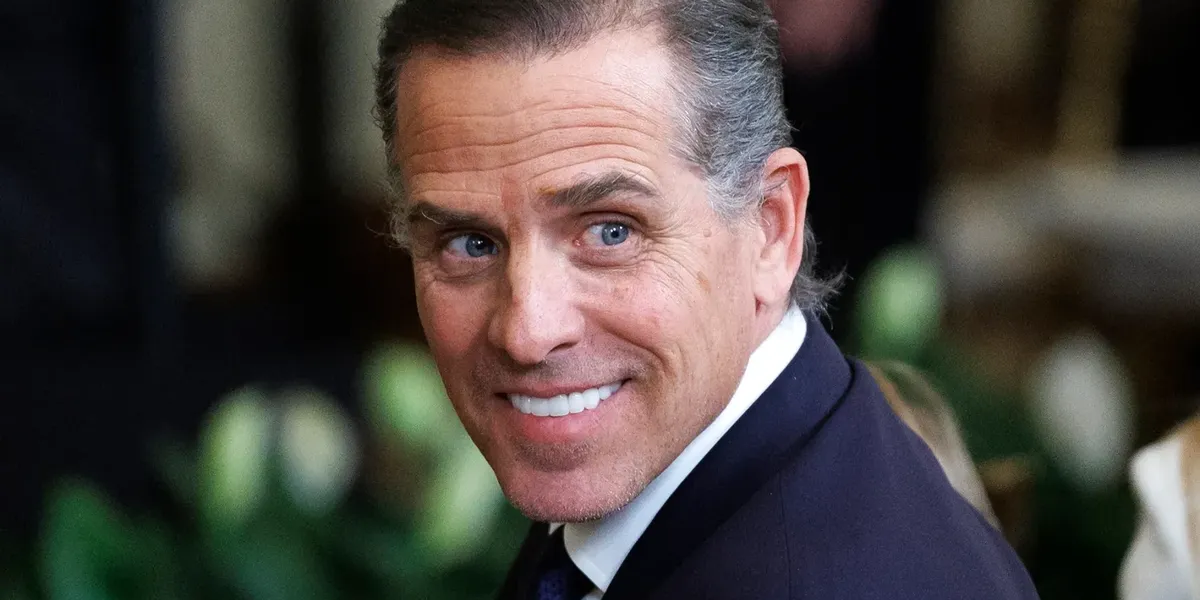


In a new interview on the addiction and recovery podcast 'Dopey', the former first son opens up about his struggles with substances and what pulled him through
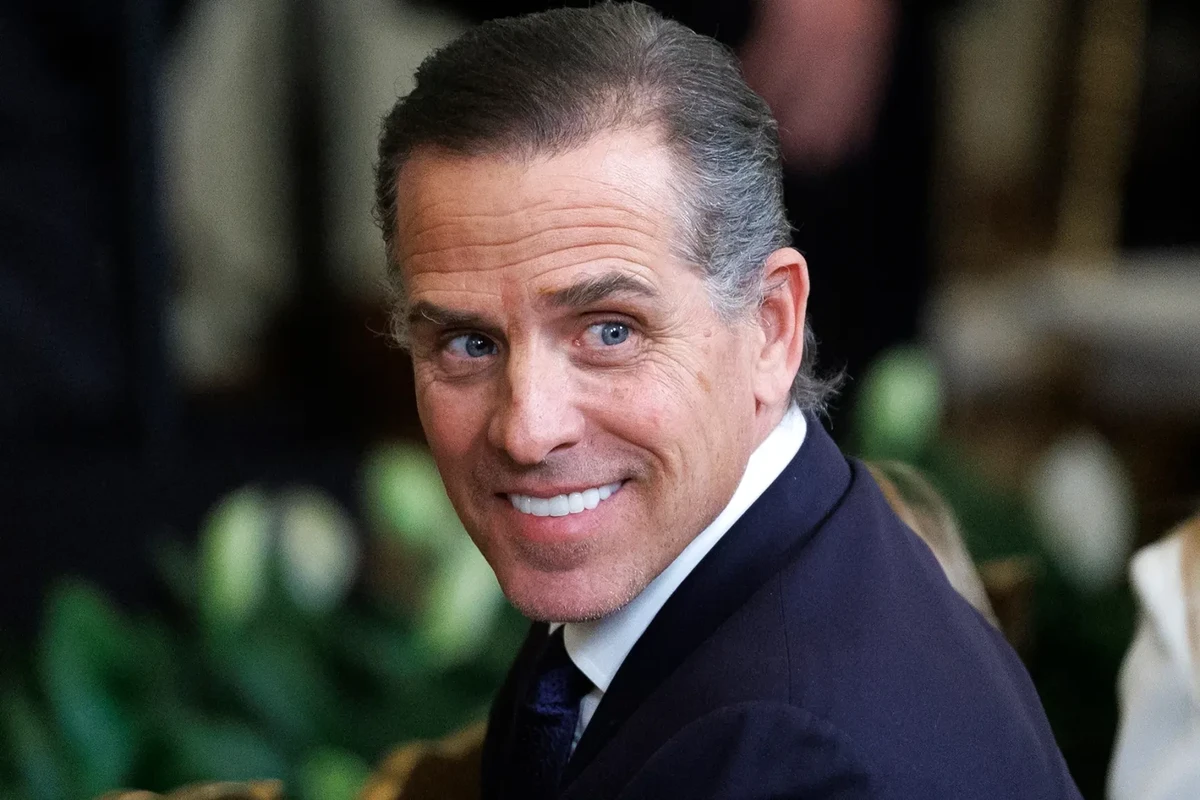
Hunter Biden, son of U.S. President Joe Biden, during a Medal of Freedom ceremony at the White House on Jan. 4, 2025.
I didn’t know what to expect when I met Hunter Biden. Would he have the Secret Service with him? Would he be cold? Would he be an asshole?
Biden, who is in recovery, was coming on my podcast, Dopey: On the Dark Comedy of Drug Addiction. He is exactly the kind of person I like to have on the show. When I started it in 2016 with my friend Chris O’Connor, our plan was to create a podcast all around the worst things we had ever done in active addiction. Chris wound up relapsing and tragically dying from a fentanyl overdose in 2018. I kept the show going, still focused on the insanity of addiction and ways that we can overcome it.
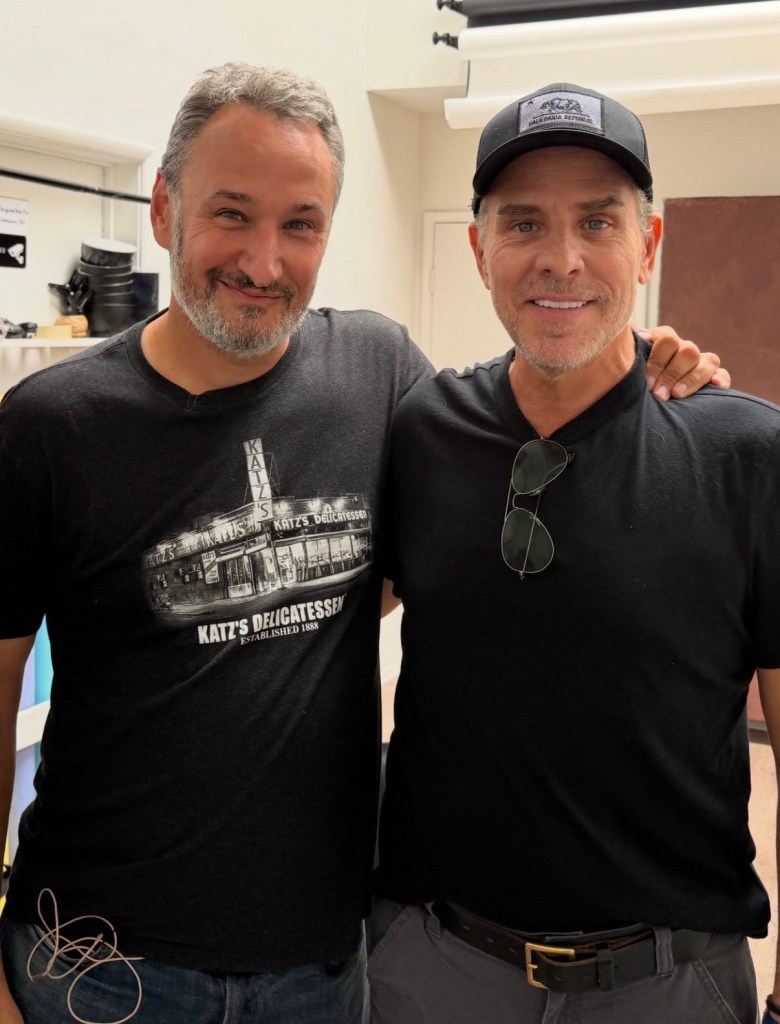
A few weeks ago, I flew to Los Angeles for the interview with Hunter Biden, and we met in a studio in Santa Monica, near where he lives. Biden casually arrived through the sunny back door. He was alone, came in smiling, and gave me a big, warm hug — not a weird, manipulative hug, which can be prevalent in the recovery community. It turned out we had mutual friends, and he knew about my podcast and how we were basically a for-addict-by-addict operation. He was happy to be there, and he fit right in.
I wanted Biden to come on the show because I know he was a drug addict like the other Dopes in the Dopey Nation. His exploits as a crack addict were legendary, his fall was well known and epic. The only difference between his story and our listeners’ stories was that their fathers hadn’t been president, and they haven’t been on the cover of the New York Post more than, as he puts it, “more than anyone else in history.” There is scrutiny, and there is Hunter Biden-level scrutiny. People struggling with addiction often feel the weight of the world on them. In Biden’s case, it kind of was on him. Pictures of him, naked and high, were plastered on TV screens around the world. His father’s political enemies used his problems with crack to try and erode trust in the Biden administration. His addiction or sobriety became connected to the state of our nation.
How did he get sober? What is it like to have the bar on his recovery set so high? The answers to these questions are very important to our community of addicts and alcoholics, both in and out of recovery.
During the interview, Biden and I covered a lot of ground. There was the basic Recovery 101 stuff, the immense trauma he suffered from losing his mother and sister in a horrific car accident when he was three years old. How his addiction began, and how the death in 2015 of his brother Beau, just 46, pushed him over the edge into crack addiction. And maybe most importantly we spoke of how meeting his now-wife Melissa set him on his current path of over seven years in recovery. We also covered some of his craziest moments using drugs; my favorite being the story of when he moved his crack dealer, whom he called Bicycles, into his apartment, and what it was like when his father, who was then the Vice President of the United States, arrived by presidential motorcade and met Bicycles face to face. It turned out to be one of my favorite talks in Dopey history.
The whole interview can be found on my podcast, but here are some highlights of our conversation.
What is the trickiest part of sharing your recovery story with the public in general?We get to talk about the beauty of our recovery and all the things that we’ve gained, like the amends that we get to make and what a wonderful existence that I am free to talk about anything I want. And I wanna make it clear that the hardest part of recovery and addiction is the effect on the people around us, the traumas that we put them through.
Like I always say, the biggest thing with my daughters was that I just was not available to them. I wasn’t present in their lives during that period of time.
Well, it’s a hell of a lot more fucking complicated than that. And a lot more traumatic than just that. And it’s easy for me to say, and we have a great relationship and we’ve amended everything. But when the shit really hit the fan with my addiction, they were in their formative years, between 16 and 20 and 21.
They really needed me when my brother died — my brother was their rock. My brother was their second dad and in every beautiful way that you can imagine. They loved their Uncle Beau. And when he died, I disappeared.
Cause you were destroyed.I was destroyed. But my reasoning or the rationale or my experience doesn’t matter to the trauma that it creates in a child. I have all my reasons for why I lost my shit. But you know what? Doesn’t matter. What really was the thing is that when they needed me most, I wasn’t there. And you can live a life trying to make amends for that. But I think it’s really important for me to always remember… they’re still living with the trauma of it.
Biden and I spoke about a woman he calls Bicycles, who was a crack-cocaine dealer who moved into his apartment in Washington, D.C. She was a fascinating character in his memoir, and I was dying to hear the story.
Tell the Dopey Nation all about Bicycles, please.Well, Bicycles has been on the street basically her whole life, since she was like 13, 14 years old. She would tell these stories about how, for periods of time, the way that she survived is that she would sneak into motels when they were changing rooms, just to get sleep, and she would hide under the bed and sleep there. She would go into police stations and she would hide underneath the bench, and sleep underneath the bench, when she couldn’t find a place to stay. And she had this incredible story of resilience and survival, and she was incredibly smart. I mean like quick-witted, a fast-thinking survivor.
She was about 15 years older than me, and she rode everywhere on her bike. I knew that she was a crack addict, and so I walked over to Lincoln Park — and I was like, “Hey, I want some crack.”
And she said, “You sure?”
Did she know who you were?No, I don’t think so. She says, “Are you sure?” And I said, “Yeah.”
And she sold it to me. Then she showed me how to smoke it and gave me all the necessary things to smoke it. And I did. And I had what they refer to as a bell-ringer experience, and it was revelatory. It was the answer to everything. I even suppressed the visceral memory of it right now because it was that profound and powerful. And then that began a two-year odyssey of chasing that singular moment.
Does your dad ever meet Bicycles?He’d call and he’d call. And then when he wouldn’t get the calls, he literally would drive over with a motorcade, as small as he could possibly make it.
I’d hear all these cars, and I’d see like six SUVs pull up and my dad get out and and walk with one or two of the guys — because they have to be next to him — and I’d hear a knock on my door and I’d open it. There I would be with all of the obviousness of someone that was in distress. And he’d say, “Please, what are we gonna do tomorrow? What’s the plan?”
And I’d say, “I got a plan, and this is what it is. And I promise you, Dad, I’m all right. I just am feeling really sad. Sad about the divorce, sad about the kids, sad about Beau. Just let me deal.”
We make all of these excuses for all the things that we do.
Tell us about how your dad tried to help get you sober.Here’s the thing: you can’t force anybody. I mean you can; you can grab them and kidnap them like they do with these poor kids, and send them out into the wilderness, and I guarantee you there’s a 98 percent recidivism rate with those people.
Talk about creating more trauma.Yeah, and less trust. And so he was wise enough to know that. And he was wise enough to know this: All you can do is love. And unconditional love is not love without consequences. And unconditional love is not love without accountability. Unconditional love means that no matter what you do, I will still love you. No matter what the consequences of what you’re doing, I will still love you, and that was the door that he always, not just left open, but would always be calling from.
What is your painting process? How do you pick your subjects?I know why I paint owls because there’s a really beautiful story about an owl that I have.
Tell me a little bit of that story, please.Well, I don’t know if it was a hallucination. I think part of it was definitely a hallucination, but it doesn’t matter because it was a real outcome. And the outcome was that I had been up for literally over 10 days and smoking crack. I had agreed to go to this treatment [center] in Arizona.
I kept saying I’d come and I wouldn’t and I wouldn’t, and finally I got my shit together enough to pack everything, put it in a rental car, and drive to Prescott [Arizona]. At one point, there are eight lanes with that giant gully in the middle, and I hit it. I fell asleep. And this is, like, a funny story for me. What if I killed 10 people?
Well you didn’t, thank God.Thank God.
I called the rental car company and they got me a new car. They bring it and they ask, “What happened?”
I said, “Somebody ran me off the road.”
They said, “How are you going in the wrong direction?” I said, “Man, I don’t know,” like this was God’s way.
That’s crazy.I get back in the car, and in order to be able to go to Prescott, you have to go through the mountains. And it’s literally windy roads, and it’s four o’clock in the morning. I mean no amount of crack that I have left to smoke or anything is keeping me awake and if you doze off on that road, you’re done. I mean completely done; it’s like a sheer cliff kind of road. And I swear to God, this giant barn owl flies over — well, I assume over the roof — right in front of the windshield and into the beams of the light of the car in front of me, enough to where it kind of jolts me awake.
I’m looking at this giant owl in front of me, and it makes the turn along the road. So, I make the turn. And then it keeps coming back, and it’s literally guiding me through these windy roads.
Now it had to be a hallucination, right?I don’t know.
I think it was just a psychedelic spirit.You know what I know, though? Whatever that was, it was real to me at that moment, and it saved my life. And I got to Prescott.
Argentina will have to say goodbye to a legend, as Lionel Messi has announced his retirement from international football, closing the book on one of the most extraordinary careers in the history of the sport. After more than two decades wearing Argentina’s colours, Messi will no longer represent his country on the international stage.
The decision marks the end of a career that took Messi from a teenage prodigy to Argentina’s most important player and, ultimately, its captain and World Cup-winning icon. He leaves the national team as its all-time leading scorer and appearance-maker, having scored 125 goals in 207 appearances.
See on Instagram
His international career also came with a long period of frustrationm, during which Messi endured three major tournament final defeats with Argentina before finally winning the 2021 Copa América. That breakthrough was followed by the 2022 Finalissima victory over Italy and, most importantly, the 2022 FIFA World Cup in Qatar, where Messi finally lifted the trophy that had eluded him.
He added another Copa América title in 2024, further cementing his place in Argentine football history.
Messi’s announcement comes shortly after the 2026 World Cup, where Argentina reached the final before falling to Spain. He had already suggested that the tournament could be his last, but today’s announcement makes his departure official.
This is not the end of his football career, however. Messi's contract with Inter Miami ends in 2028, so there's still time to witness his greatness. Messi and his team were in Montréal over the weekend, where he scored four times and added an assist in Inter Miami’s 7-1 demolition of CF Montréal at Stade Saputo.
Norm Macdonald performing at Del Mar Fairgrounds in 2017
Norm Macdonald’s story is coming to Netflix this fall, with a new documentary from Judd Apatow set to revisit the life and career of the Canadian comedy legend.
Norm: The Tale of Norm Macdonald will premiere October 16, Variety reports, and will be the first major documentary devoted to Macdonald since his passing in 2021. Apatow is directing the film, which promises an intimate portrait of the comedian through archival footage, personal photographs and rare home videos. The project has been in the works since at least early 2025, when Apatow publicly asked fans to submit photographs, videos and other material that could help tell Macdonald’s story.
See on Instagram
Macdonald was born in Québec City in 1959 and spent his early childhood in the Quebec City area before his family relocated to Ottawa. He eventually began performing stand-up at Ottawa’s Yuk Yuk’s, before making an early breakthrough at Montreal’s Just for Laughs festival.
The documentary’s official description focuses on the career that followed, from Saturday Night Live’s Weekend Update to Macdonald’s enduring reputation among fellow comedians. also offers a chance to see the roots of that career before Macdonald became a household name south of the border. Apatow has previously directed documentaries about comedy figures including George Carlin and Garry Shandling.
Dylan Cease is already a Toronto legend, having established himself as Blue Jays’ most important players. This week, he found himself in a very different kind of spotlight: inside the Art Gallery of Ontario.
The AGO unveiled one of Cease’s paintings, “Eve of Toronto”, in Walker Court as part of a new collaboration between the Milton, GA-born pitcher and the museum. The work, an abstract, colourful tribute to his new city, was also turned into a limited-edition collection featuring prints, postcards, T-shirts, sweatshirts and tote bags. Proceeds from the collection will support the AGO’s charitable mission.
See on Instagram
Cease began painting in 2022 as a way to step away from the demands of baseball. “Painting gives me joy,” he said in a statement released by the AGO. “It relaxes me.”
“Eve of Toronto” was created shortly after Cease arrived in Toronto and initially hung in Jays' manager John Schneider’s office. The painting is difficult to miss, built around bursts of colour and the word “Toronto” repeated throughout the composition. Schneider has joked about the attention it has received, but has also embraced the unlikely crossover between his ace pitcher and the local art scene.
Earlier this month, another original painting by the pitcher sold for $16,000 through a Blue Jays and Jays Care auction.
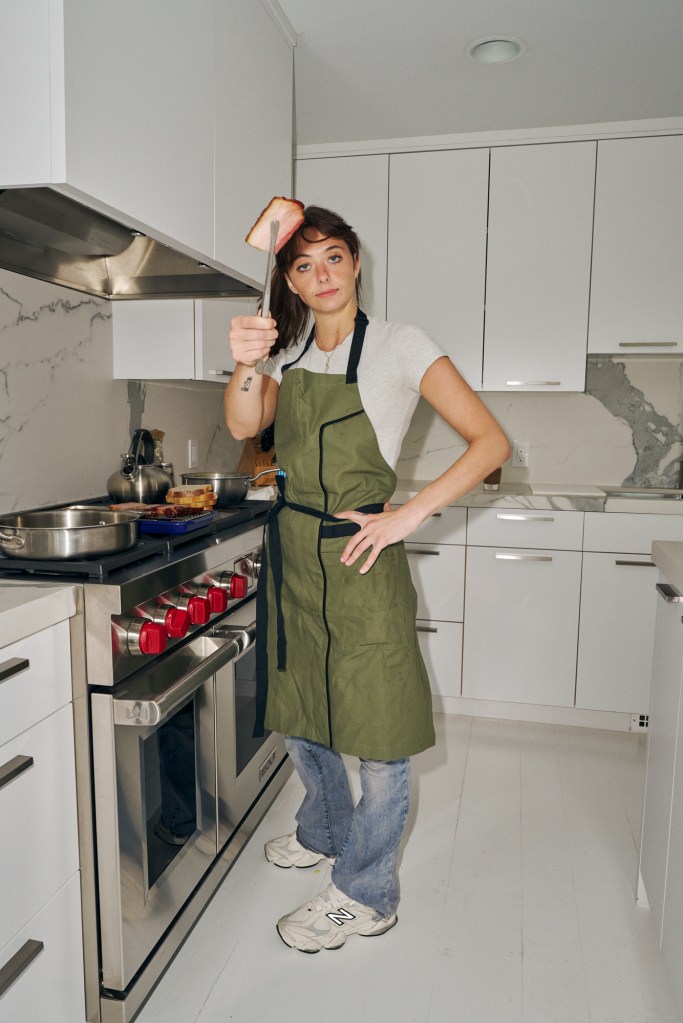
Olivia Tiedemann gets flipped off everywhere she goes. It happens at parties, in grocery stores, even when she’s walking down the street. But it’s no sign of disrespect. The one-finger salute is her biggest calling card — a profane habit that’s built her a social media fandom 5 million followers deep.
“One time, I was walking late at night and somebody honked at me and gave me the finger. I was like ‘Yep!’ and kept walking,” Tiedemann, 29, says. “It’s how we say hello to each other at this point.”
It’s been three years since Tiedemann first posted a chaotic vlog of herself cooking dinner at her job as a private chef in the Hamptons, East Coast playground for the rich and famous. The video traded the genre’s typical easy-breezy style for a mashup of clips where flames rose, expletives flew, and Tiedemann flipped the bird toward the camera at every opportunity. This fuck-you energy turned Tiedemann into an overnight star, netting her first million followers one month to the day after she posted that viral video. Since then, she’s worked with some of her biggest idols in the culinary world, cooking alongside everyone from Jean-Georges Vongerichten to Masaharu Morimoto, Giada De Laurentiis, and Gordon Ramsay. Now, the Sept. 15 release of her debut cookbook, Eat (Like) the Rich, marks a milestone moment in Tiedemann’s career, the first time she’s tried to translate her viral success into a tangible offering of her expertise — and a demonstration of her personal growth.
“When I first started making videos, I was upset at the time,” Tiedemann says. “I was going through this whole new world that was my job. I’ve matured a little bit, but I try to keep the fire. You can’t just be an angsty little shit all the time.”
TIEDEMANN AND I ARE on a food crawl through Bay Ridge, Brooklyn, the neighborhood where she grew up. Though she hasn’t been back in years, at our first stop, the Palestinian restaurant Tanoreen, we’re greeted immediately by the owner, who kisses Tiedemann on the cheek before announcing, “I ordered ahead for you.”
The second-eldest of four siblings, Tiedemann grew up a block away from the restaurant, raised by her construction-worker father and chef mother. The brash attitude that’s attracted fans on social media didn’t win her points at home. She had an often contentious relationship with her mom that nearly got in the way of her dream career. “I started to become interested in cooking and I was really resistant to it,” she admits. “It felt embarrassing, almost, to tell my mother ‘I want to be a chef, too.’”
Tiedemann went through several phases before her private-chef days, most of which came with an abrupt ending. When she was 15, she helped sell (illegal) weed lollipops from roving trucks in Union Square, a job made possible by a fake ID she procured on St. Marks. There was a stint at the fast-fashion store Brandy Melville, where she learned about business and drugs that “start with C” before she walked out the door one day and never returned. In high school, she skipped so many classes her senior year that she never got a diploma. Instead of going to college, she backpacked abroad for months.
It was her first restaurant job that convinced her to enroll in culinary school. And by 24, Tiedemann was head chef of an Italian restaurant on Staten Island. But when the menu shifted from upscale to more standard fare, Tiedemann started to lose interest. “I don’t want to fucking make penne vodka. I don’t,” she says. “There’s no amount of money that would have me sitting in a place doing that.” On her worst day, she blew up at a line cook after she asked for chicken stock and he returned with a bucket of Dijon mustard. Days later, she quit cooking entirely, or so she thought.
Tiedemann was working as a production assistant on films in upstate New York when she got a call from a staffing agency looking for a private chef for a Hamptons household. The job “was everything I ever wanted as a chef,” she says. That it led to social media stardom was an unexpected bonus. “Who would have thought that there could be a whole world right on the other side of it?”
HAMPTONS FOOD CONTENT IS an entire genre online, one that typically relies on a razor-thin balance of excess and relatability. Private chefs in the vacation enclave have to fit the One Percenter aesthetic while also reminding their followers that they’re staff in this equation — which usually results in videos where they act as ever-smiling experts who can grill and sous vide and plate surprise dinners for 20 without breaking a sweat. Tiedemann’s first videos flew in the face of these rules. She mixed curses and clashing pans with unserious captions, like saying a platter of perfectly medium-rare steak had “big dick energy,” or starting videos with “Good morning, motherfuckers.”
When Tiedemann first filmed herself cooking, it was to keep busy while the family she was working for was out of town. She never actually intended to share the videos anywhere. But after her first edit made her laugh (“I was like, ‘This fucks!’”), she posted it on TikTok. She gained followers so quickly that when the family returned two weeks later, she couldn’t hide what she’d been up to. “I was like, ‘Hey, guys, just wanted to let you know I’ve been giving everybody the finger through my phone from your kitchen. A lot of people are watching them now. Are we cool with this?’” Luckily, the family found them funny. But then, making funny videos became a job, too. “It’s so weird how instantly the pressure turned on,” Tiedemann says. “And it’s never turned off.”
Tiedemann is an enthusiastic gourmand, and her instinct for service is on full display as we talk. She spoons sliced beets and hummus onto my plate, pushing tabouleh to the side to make room for a mound of za’atar and sumac crisps. Every time a waiter comes by, she gushes over the food, waiting until they leave to eat more in an effort to clear her plate. “Fuck,” she whispers, adjusting the silver chef’s knife necklace dangling from her neck. “It’s hard to eat and chat.” Just when we’ve finished a plate of dip, a waiter sets down a massive bowl of shredded chicken, rice, and almonds covered in yogurt sauce and a tower of fried eggplant rounds on top of basil salad. Tiedemann and I lock eyes in a solemn understanding. There will be no food crawl.
‘EAT (LIKE) THE RICH’ IS a user-friendly guide that blends some of Tiedemann’s best-known recipes (challah French toast) with cooking advice (no! plastic! ever!). Like her, it’s full of personality, including recipes for “fuck desserts” and “salads that don’t suck.” She calls the book a “private chef’s list of commandments.”
Meanwhile, she’s continuing to grow her online accounts and working through a contentious contract with a content-production company. She recently moved her life from New York to Austin in a peak of rage (“I was so fed up with New York at that point, like the hell of it all”) but still commutes to the Hamptons in the summer to work as a private chef. While there’s been a lot of change in a short time, ultimately, she says the cookbook feels like proof her path to the food world, however twisty, was the right one to follow.
“This is the work of my life,” she says. “Everything that led up to this, all the years that I spent in a kitchen somewhere, having a terrible time. It’s cool to be able to put that together into this perfect little package that I [can] give to somebody else.”
There’s one anecdote in the cookbook’s foreword that Tiedemann wrestled with sharing. There, she reveals that she didn’t quit her head chef job because she thought she could find something better. She quit because she thought she was going to kill herself. “I wanted to not exist. It’s such a common story that you don’t see, because it’s back there,” she says, emphatically pointing toward the kitchen next to us. “[Your] whole life exists in this box. Those months [after I quit] were just reopening the world. It primed me to grow.”
Much of Tiedemann’s style as a chef relies on the idea that sometimes, dropping everything and starting again can lead to the best outcomes. But as she moves past her initial virality and toward a culinary career with legs, she seems to be realizing that the most badass thing she can do now is focus on following through. Social media fame has opened doors that could let Tiedemann abandon the day-to-day work of a chef — the burned fingers and picky eaters and endless plates of penne alla vodka — for a life of content creation. Still, cooking is the first and only thing that’s given Tiedemann purpose, so the better option seems to be throwing up a middle finger and getting back to work.
“I want to be a chef forever. Losing touch with that would be like losing touch with myself. So I never want to stop doing that,” Tiedemann says. “And if I ever do, I’m probably morphing into some little shit and somebody better stop me. Because cooking is what I like most in the world.”
What happens when Peter Pan’s shadow has a shadow?
Over the past two weeks, TikToker Toni Kulusich, better known as @babytoni99, has gone viral for videos of herself with Peter Pan at Disneyland. What might otherwise look like a routine character meet-and-greet has sparked a very different reaction online, with social media users questioning whether her decade-long fandom of a fictional character crosses a boundary.
According to an interview with Wired, Kulusich, 27, didn’t see her content really take off until a clip of her gifting Peter Pan a tiny crocheted duck started trending.
Suddenly, she’d gone from 10,000 views to a million, and the angry comments were flooding in. Critics took issue with some of the recordings, particularly those in which Kulusich appears to kiss Peter Pan on the cheek or get down on one knee to propose to him. Other videos, however, show Kulusich and Pan skipping arm in arm through Fantasyland, with the actor seemingly leaning into the friendly exchange.
But Kulusich insists there’s a distinction between her Disney obsession and her life outside the park. “It’s not like I’m going to the store or to my job and thinking about Peter Pan,” she said, referring to her job as a manager at a big-box retailer. “It’s just that when I’m inside Disney, I’m able to release my inner child and the kid who doesn’t want to grow up.”
Kulusich defended herself to Wired, saying that even her husband of four years, a Marine, is “really supportive” of her hobby. But her account has sparked a conversation about Disney adults, what’s appropriate when visiting a park, and what’s pushing things too far. Though Kulusich says that criticism of her is unfair, there are plenty of other instances of fans crossing the line. (Kulusich, who is using her middle name to protect her privacy, declined to be interviewed by Rolling Stone. Disney did not respond to a request for comment.)
Today, there are 12 Disney parks across the globe. Guests come for the attractions, shows, and, of course, the characters. Those range from princesses, known within the company as “face characters,” whose performers wear costumes and company-approved makeup while showing their own exterior, to Mickey Mouse and other “fur characters,” the Disney term for performers who portray animated stars in full-body suits.
It’s not an easy job. I worked at Disney World in 2016 as a character attendant, assisting princesses in their duties. I remember one shift when I interacted with guests alongside Rapunzel and Cinderella. There was a frequent visitor, a man in his 30s, who repeatedly came to the park and would go from princess to princess, presenting them with drawings, making requests for videos, and going in for long hugs. We put his photo backstage to warn other women.
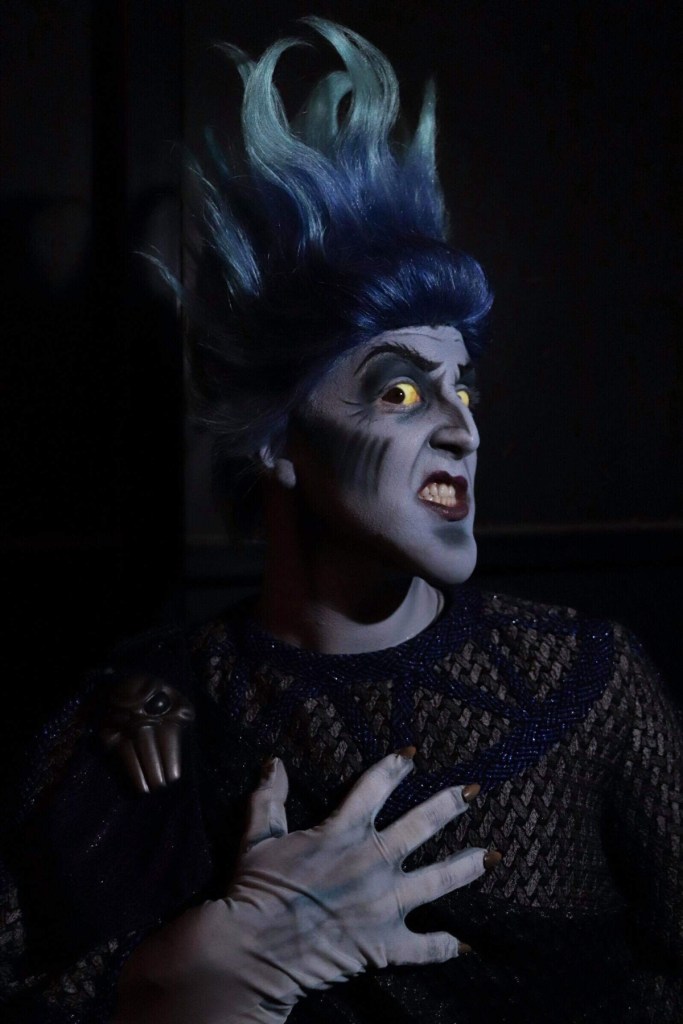
According to former Disney cast members, the divide between fantasy and reality can get surprisingly blurry for some adults who do become deeply attached to park performers. “Adult stalkers are much more common than you would think,” Justin Sanger, a 34-year-old former cast member who portrayed everyone from Hercules’ Hades to Toy Story’s Woody for more than nine years at Disney World in Orlando, Florida, tells Rolling Stone. “Honestly, the female characters are on the receiving end of this far more frequently than I ever was, but there was always someone who took their love for a character very personally.”
He says the role has changed significantly in the past decade, thanks to the internet. “Our job was to bring these characters to life for the guests, and for the most part, people understood that and took it at face value,” he says. “But the addition of social media created a whole new level of access and made people feel more ‘connected’ to a character — or to the person portraying them.”
He recalls seeing situations in which solo guests at the park would spend a significant amount of their free time interacting with the same character, sometimes even seeking out the actor playing them. He said that while most interactions are harmless, some fans go overboard with their devotion.
“There was also something about The Incredibles that seemed to attract a particularly extreme level of attention, including a lot of sexualization. We wore spandex and had fake muscles, but that was the role where I personally experienced some of the most extreme behavior from guests,” Sanger says. “This included people finding us on social media and asking for special meet-and-greets for family and friends. But it also included very bold, face-to-face comments about how our bodies looked in the spandex and even comments about how ‘stretchy’ Mrs. Incredible really was.”
Sanger says the behavior became so frequent that the performers had to take action. “We actually had to ban certain guests — and even fellow cast members who were harassing us — from coming to interact with us at the themed dance party because it became an every-day, all-day type of occurrence.”
However, Sanger notes that he has a soft spot for people who see Disney as an escape from the real world. “I genuinely don’t think there is anything wrong with being a Disney adult,” he said. “But being a Disney adult is not an issue. Stalking and possessiveness are.”
Rob Millerick worked as a character performer at Walt Disney World in Orlando from 2014 to 2018. During his time playing Nick Wilde from Zootopia, he encountered obsessive young parkgoers, who would ultimately play a role in his decision to leave the park.
At the beginning, Millerick says, there was nothing particularly unusual about the attention. “It was very light-hearted. They were just excited to see us,” he tells Rolling Stone. The group, made up of older teenagers and people in their early 20s, began showing up regularly for the parade’s three daily performances, led by one attendee in particular.
But the appearances became increasingly common. “As time went on, it got more and more aggressive and more and more frequent until [he] was showing up every day I was there,” Millerick says, adding that his fellow performers would warn him when they saw the attendee around. “The dancers that were with me started telling each other, ‘Hey, if you see this person, Nick Wilde has to be up on the float because he’s going to try and attack him.’”
The situation continued for months, and Disney eventually became involved. But Millerick says there was a frustrating pattern: “Every single time a manager was there to observe, he did not come,” Millerick says. “And any time the manager wasn’t there, he was there.” A few months later, Millerick quit.
Disney didn’t respond to Rolling Stone’s request for comment on how it trains employees to navigate difficult guest interactions, but from my own experience in the Disney College Program, I know that Disney’s foundational training course, “Traditions,” teaches employees to prioritize four key principles: safety, courtesy, show, and efficiency.
Every role comes with its own additional instructions; what a princess learns is different from what someone working an attraction learns, but the overarching goal is the same: Keep people safe while keeping the magic alive as long as you can do it with a smile.
As for Kulusich, she told Wired that after taking a break, she decided to come back to the park. She wasn’t going to go looking for Peter, but when she saw him, she said he waved. So while there may be problematic Disney adults who let their obsessions spiral, Kulusich insists that what she’s doing is simply an innocent hobby that “makes her happy.”