Merriam-Webster Adds ‘Looksmaxxing,’ ‘Cuffing Season,’ ‘Vibe Coding’ to Dictionary
Photo gallery
10 images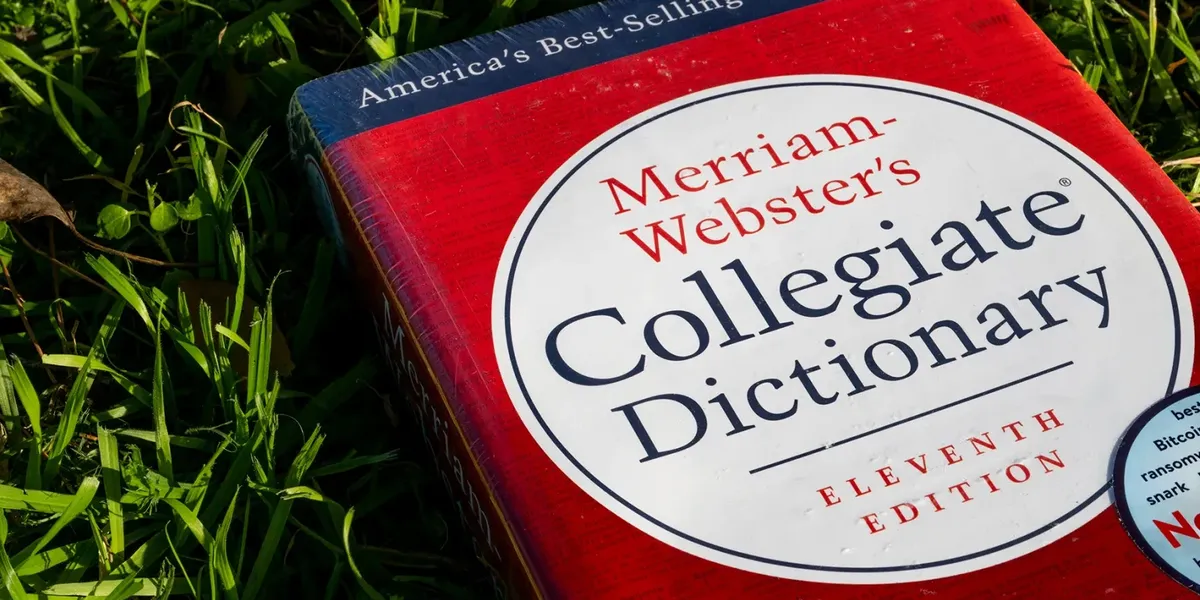





Company’s editorial team called the new words a “glow-up†to the dictionary’s historic lexicon
Has the internet made keeping up with the ever-evolving glossary of new phrases feel borderline impossible? Don’t worry, Merriam-Webster is here to help.
The famed dictionary added 1,400 new words to its dictionary on Wednesday, many focused on internet-first phases and trends. “The new entries reflect words and meanings that have demonstrated widespread use over time, offering a window into the world today,†Merriam-Webster said in a statement, calling the adds a “glow-up†to the dictionary’s historic lexicon.
The new batch of words focus on the worlds of food, social media culture, technology, fashion, and community. These include everything from “shapewear,†“looksmaxxing,†“meme coin,†“parasocial,†“promposal,†“vibe coding,†“cuffing season,†“Sunday scaries,†“crashout,†and “California sober.†Other additions are “Rickroll,†“compute,†“yacht rock,†“whack-a-mole,†and “uncanny valley.â€
Merriam-Webster has a long established history of updating its dictionary to include modern phrases and terms introduced and used in pop culture and digital spaces. According to their public guidelines, dictionary editors pick the new additions by using three criteria: frequent use, widespread use, and meaningful use.
With the new words including major additions from the technology and communication worlds, Merriam-Webster might be providing some clues to its word of the year. The frontrunners for the annual tradition haven’t been announced yet, but the winners in years past were “slop,†“polarization,†and “authentic.â€
“New words like hashtag and selfie get a lot of attention, but many of the new words we add are new meanings of words that are already staples in our language: think of the recent meanings of mouse and cookie that have nothing to do with rodents or baked goods,†the company says on its website. “The Internet-specific senses of lurk and browse built upon the existing meanings of those terms. A verb that we use every day, access, was first entered in the Collegiate Dictionary in 1973, and a specific reference to computers was added in 1993. These words may not make headlines, but they’re just as important as words that are newly coined.â€
There’s a voice in Rachel Accurso’s head. Right now, it’s also coming out of her tote bag — a recorded version of her alter ego’s cheerful tone made tinny by canvas.
“This is so funny,†she says, wrestling with a rainbow-colored plastic toy with her face on it, which is doing the singing in question. “I was walking down the street, and it was like, ‘Hi, friends!’ I don’t know how to shut it off!â€
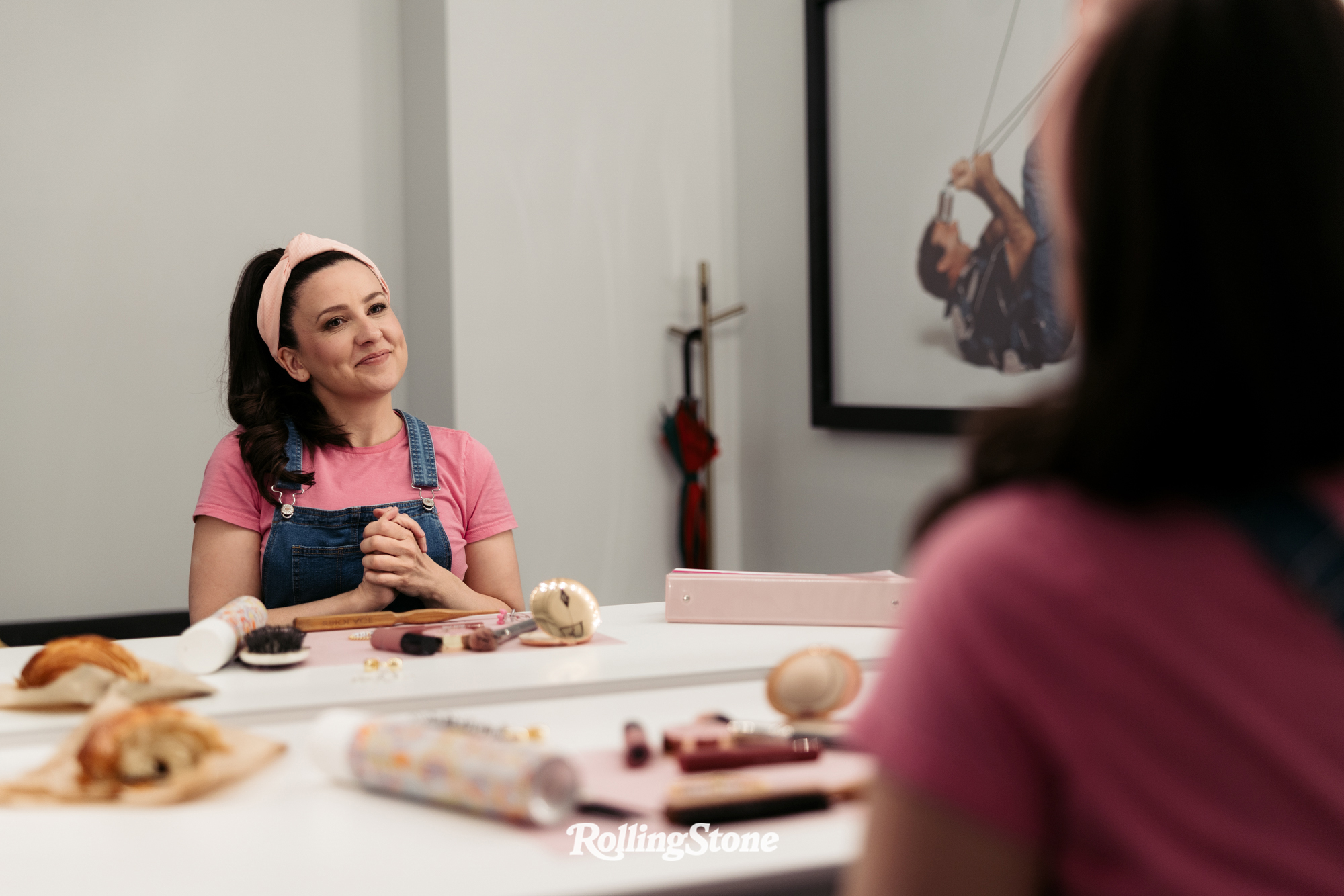
If she donned a pink headband, most people would recognize Accurso as Ms. Rachel, a children’s entertainer who started as an amateur YouTube host and has since crafted an educational universe. She has more than 20 million subscribers, a Netflix deal, a collaboration with Sesame Street, a line of toys available at Target and Walmart, children’s-book tie-ins, and an upcoming debut album, I’m So Happy, out Sept. 25. But there are two people at play here. Yes, there’s Ms. Rachel, a trusted face on the internet using songs to teach tykes how to say “mama,†use the potty, and hop like bunnies. But there’s also Accurso, a 43-year-old Christian mother of two whose conviction to speak out against violence, poverty, and disenfranchisement of children, particularly those in Gaza, has turned her life as a public figure into a melee of controversy.
This duality isn’t immediately obvious in the woman who greets me at her door in New York City with a bulging plastic bag of breakfast food and a wide, open smile. When the construction in the apartment next door makes itself known — clanking and paint smells seeping under the door — our morning at home swiftly turns into a picnic. “Let’s go down to the park,†she says, soft voice carrying only a trace of the singsong intonation that keeps children rapt. “It will be beautiful.â€
Originally called Songs for Littles, Accurso started the show in 2019 with her husband, Aron Accurso, a composer and musician who’s worked on Broadway shows like Billy Elliot, Nice Work If You Can Get It, and Aladdin. Ms. Rachel videos, which can run anywhere from 30 minutes to more than two hours, cover a wide range of deceptively simple topics, like playing hide and seek, naming farm animals, or learning how to brush your teeth. But Accurso leans heavily on her master’s degree in early-childhood education, which gives the show a research-backed foundation. The nursery rhyme “The Mama Song,†for example, uses exaggerated mouth movements to encourage babies to mimic the motion. “Icky Sticky Bubble Gum†turns a silly story about gum into a lesson about the parts of the body. The song “Hop Little Bunnies†promotes movement and following instructions like “stop,†“jump,†and “skip.â€
Accurso’s show doesn’t contain political material — unless lessons on friendship can be considered dangerous ideals. Nevertheless, Accurso’s activism on her public-facing Ms. Rachel social media accounts has made her and her family a target of harassment, accusations, and even death threats. It’s why, for safety reasons, I cannot share what neighborhood Accurso cheerfully walks me through, stopping to speak to neighbors and pet a fluffy white dog named Daisy dealing with a bout of arthritis. I cannot even describe the park where we set up camp to eat breakfast on the ground. Think being a mom is hard? Try balancing playdates and school drop-offs with security measures and constant vigilance.
On her public Ms. Rachel accounts, Accurso posts anywhere from five to 10 times a day on platforms like Instagram and Threads, calling out politicians, posting fundraisers, and constantly reiterating that children in Gaza deserve the world’s attention. Accurso’s driving belief is that with enough time, enough photos, enough heartfelt pleas, she can change people’s hearts and minds. But that fight comes with a limit — one Accurso is in the process of figuring out.
“‘You’re gonna lose this partnership. You’re gonna lose views.’ That doesn’t faze me because the kids gave me the platform. I’m going to stand with them no matter what,†Accurso says. “People on the ground in Gaza are risking their lives all the time to help kids. I can do it from Manhattan.â€
AN IMPROMPTU OUTDOOR BREAKFAST with Accurso involves plenty of food, and what feels like even more apologies. First, Accurso apologizes for not having a picnic blanket. Then, it’s napkins, though she offers pieces of paper, a handful of Ms. Rachel-themed bibs, and at one point, her own tote bag. Then she apologizes for not thinking about dietary restrictions. She’s picked up what feels like every breakfast option, including yogurt, avocado toast and salad, and a fluffy omelet covered in chives. All that’s missing: utensils.
“Oh, my gosh, we are screwed,†Accurso says, laughing. “What are we gonna do?†There’s a shuffle for things we could use to build makeshift forks, but it’s eventually abandoned. Accurso manhandles the omelet, layering the salad on top before folding it in half. “It’s an egg taco!†she says gleefully. When the hand sanitizer I offer her disappears at the bottom of my bag, she waves my empty hands away with a shrug. “I [don’t] care,†she says, ripping a thick slice of sourdough topped with avocado mash clean down the middle. “I [have] a 16-month-old who eats dirt.â€
Kids programming has always been an integral part of Accurso’s life. In fact, it probably still would be even if she wasn’t Ms. Rachel. No fewer than six times, she calls Fred Rogers — Mister Rogers — her “hero.†She adores Sesame Street and children’s books like Madeline. Growing up in Maine with a single mother, Accurso’s great love was the theater. She and her older sister — close to three years apart — used to call themselves “Sisteristic†when they put on living-room performances, and were constantly checking ads for community theaters. Accurso was once in a local production of Annie with Anna Kendrick; Accurso was Annie and Kendrick was a precocious voice in the orphan ensemble. (“When she did, ‘I love you, Miss Hannigan,’ she totally stole the show,†Accurso says. “I told her on DM[s] the other day, and then she found the program!â€)
Accurso moved to New York in 2009. Soon after, she met Aron at a Unitarian church on the Upper East Side. “It was coffee hour at church. I was about to leave, and I said, ‘Oh, there’s a cute girl.’†Aron says. “When I started talking to her, I realized, ‘What an interesting person.’ Immediately I said, ‘I’ll walk you out.’†(Their first real date was the short-lived Broadway musical In Transit.) The duo are opposites, personality-wise. Aron tends to be quiet and straightforward. Accurso’s mind and mouth run a mile a minute. When an interested squirrel moves to investigate our breakfast, she goes silent midsentence. “I feel like we’re not supposed to feed animals,†she whispers, vocalizing the notes to Snow White’s “I’m Wishing,†hand outstretched. “And it’s so hard because I want to.†But the Accursos share a passion for making music.
“When I was teaching public school, I asked him to make a track because there wasn’t a karaoke [version] for this certain song. I thought he was just gonna sit down and [play],†Accurso says, miming plunking a few solitary keys on a piano. “He was there for hours and hours, adding all these instruments to exactly match the track. I think it’s cool that he [brings] the Broadway level of care and detail to kids’ music.â€
The Accursos had their first child, Thomas, in 2018. After his first birthday, Thomas was diagnosed with a severe speech delay that required specialized therapy. It wasn’t cheap — about $175 for every 45-minute weekly session — but the techniques were life-changing. After she realized Thomas remembered more when he was able to watch lessons back on video, Accurso asked her husband to give her a birthday present. “I was like, ‘I want your mouth on a video camera to say cheese or baby,’†she says, curling her lips and baring her teeth to enunciate the syllables. “I’m self-conscious about my teeth. And he’s so nice, he’ll do what I ask. It was [Aron] jumping in right away [that crafted] that first video.â€
Ms. Rachel’s popularity wouldn’t be possible without the rapidly developing relationship newer generations have with technology. According to the American Academy of Pediatrics, every year, the age at which kids are exposed to screens goes down, and the number of hours they spend in front of screens goes up. And the choices available to them extend far beyond PBS or Disney. The landscape of online children’s content is cluttered with everything from multicolored fruit dancing to EDM to baby influencers, who unpack and play with mountains of toys on camera (à la Ryan’s World) for other kids’ enjoyment. When the Accurso family published their first video in 2019, they offered parents an educational and low-fi alternative. In one of their first videos, “Bubble, Bubble Pop!,†Accurso sings in front of a static underwater background for only two minutes, voice brassy without a professional microphone, before signing off with a cheerful “See you later, alligators!â€
“The first things we filmed, we stacked books [to make a] tripod,†Accurso says wistfully. “I didn’t care if it was crooked.†There were also some technical glitches. “I would record a whole show and the mic wasn’t plugged in, and I’d cry.â€
But kids were obsessed, as were adults. Parents would leave testimonials praising Ms. Rachel’s videos, saying they helped their children learn new skills, or calmed crying toddlers. There’s even an ongoing TikTok trend where parents play Ms. Rachel’s voice and wake babies out of dead sleep. As the Covid-19 pandemic set in, and millions of Americans became trapped in their homes with no access to mommy-and-me events, toddler classes, or respite, Accurso’s channel hit 1 million subscribers.
IF ACCURSO HAS A SUPERPOWER, it’s invisibility. Groups of screaming preschoolers pass by us in the park, fists clutched tight onto their walking ropes, chubby hands waving hello or pointing to squirrels scampering in their path. “Hi, friends, how are you today?†Accurso calls out as a group stops next to us. Not a single one seems aware that the only thing keeping them from recognizing their biggest idol is a pair of mint-green Lucite glasses and the absence of that signature headband.
“None of them seem to know I’m Ms. Rachel, which is totally great,†Accurso says softly, waving to the group. “Only grown-ups really do. [They] recognize me if they hear my voice. I often wear Mister Rogers socks or a Sesame Street shirt because I love children’s media.†That’s enough to tip people off. “Sometimes I’m not gonna wear the shirt, because I’m doing something with my son and I really want to focus on him. But I love meeting people out and about.â€
Accurso describes herself as having an overdeveloped sense of empathy. She says she feels physical pain when someone else is hurting. It’s why she was struck in late 2023 when she saw videos of Palestinian children watching episodes of Ms. Rachel, often with the chaos of a humanitarian refugee camp directly behind them. As videos of the war in Gaza continued to flood in, the images stayed with her. When she saw a video of a starving baby in Gaza wearing a rainbow onesie similar to one her then-infant daughter, Susie, wore, it made her so upset she had to give the item of clothing away.
“When I see a mom who has a baby who is starving and they can’t get any milk, I see that and [think], ‘What if that was me and Susie?’†she says. “With Gaza, I couldn’t not speak out.â€
Accurso’s online presence has always been intertwined with politics. In 2020, she shared children’s books about the importance of talking to kids about race, like the Ibram X. Kendi picture book Antiracist Baby. She also posted about the importance of voting in presidential elections. In 2024, she posted a video celebrating Pride Month and LGBTQ+ families (“This month and every month I celebrate you!â€) — prompting a boycott from political commentator Ben Shapiro. She lambasted former New York Mayor Eric Adams over proposed cuts to early-childhood education programs in the 2024 city budget. She’s been vocal about the harm poverty and food insecurity can have on developing children, and is quick to condemn racism and homophobia. She remains a staunch critic of the Trump administration’s family detainment practices and xenophobic rhetoric against immigrant children. And she has a demonstrated history of fundraising for kids in war-ravaged areas — including mass displacements in Sudan and the ongoing conflict in Ukraine. So she was surprised when her posts about the rising Palestinian death toll were met with aggressive criticism.
When she collaborated with Palestinian war photojournalist Motaz Azaiza, who has called Israel a terror state, she was accused of platforming an antisemitic voice in the movement. When she ramped up her posts about starving Palestinian children, critics said she was ignoring Israeli children targeted in the Oct. 7 attacks. In 2025, watchdog group StopAntisemitism put Accurso in the running for “Anti-Semite of the Year,†claiming Accurso inflated death statistics coming out of Gaza, shared “Hamas propaganda,†and ignored the deaths of Jewish children in Israel. The group also sent a formal letter asking the Department of Justice to investigate whether Accurso was being funded by Hamas for her post. Accurso denies these claims, stating she has only shared statistics shared by verified sources, like the United Nations. Even then, some disputed their veracity. (“I have to realize that people who believe the U.N. is fake — that’s not people I can engage with,†she says.)
In January, Accurso started a firestorm when she accidentally liked an Instagram comment on her post that said “Free America From the Jews.†Accurso apologized — saying she hit the button by accident and removed it once followers brought it to her attention. “I thought I deleted a comment and I accidentally hit ‘like,’†she said in a tearful video. “I’m a human who makes mistakes. Everyone who knows me knows I would never like that.â€
Looking back on the last few years, AcÂcurso says, “I thought everyone hated me at one point. I remember calling friends and family members, Jewish and not Jewish, and just being like, ‘Why do people hate that I don’t want kids to be killed and starved?’â€
Raffi — the famed children’s perÂformer known for “Baby Beluga†and “Five Little Ducks†— says that Accurso’s work and activism center around spreading joy and working to protect children everywhere. “In her love of the world’s children, she’s a person after my own heart. Her embrace of Palestinian kids is what Fred Rogers would have done,†he says. “Rachel’s courage and compassion is exemplary. I’m happy we’re friends.â€
But while close confidants have been supportive, the in-person backlash is also rampant. Last year, Accurso released a special performance of the song “Hop Little Bunnies†with Rahaf, a then-three-year-old from Gaza who lost both her legs in an Israeli airstrike. In the clip, filmed in New York, the two sing together. Rahaf swings her prosthetics to the song, and at one point, wraps her small arms around Accurso’s neck — following the song’s instructions and pretending to be asleep. But when she attempted to rent out a playroom for Rahaf’s visit, Accurso was turned away from multiple businesses, which cited threats and backlash.
“I finally found a place that would let us come. She had the best time,†Accurso says. “I just was like, ‘Let me just be in the moment with her and follow her lead.’ We played and laughed so much. It was beautiful.â€
But even this perpetual optimist can’t hide the fact that constant scrutiny has complicated the life she imagined for her children. “I wouldn’t change anything. Well, I would love for people to not send death threats,†she says. “For a while, we had security, and they were like, ‘Don’t do anything predictable.’ And it was just like, ‘Oh, I have to think about what I’m doing and fear for my family.’ That was tough.â€
Aron has always been happy for Accurso to be the public face of their show. “It’s a beautiful face,†he says, squeezing her hand. But he had to come up with emotional strategies for dealing with the threats. “I’m very proud of all the work that Rachel’s doing,†he says. “She wants the best for all the children of the world. She genuinely cares. I know that, and she knows that. And everything else is noise.â€
Accurso knows her content can upset people. But she doesn’t see any of her advocacy — for Gaza, for Sudan, for immigrant families in the U.S. — as separate from her job as Ms. Rachel. For Accurso, being a voice for children means accepting the moral responsibility to consider their welfare from all angles. She has always said that she started her show to help people. But teaching phonics or manners or even how to say “mama†has an eventual victory. If Accurso wants to teach the world how to have empathy, she’s got to realize it’s a goal with no end in sight.
“When I first started talking about Gaza, some people didn’t connect. I realized I had to humanize the kids. That was what needed to happen for people to get involved,†she says. “There’s so much attacking in our world, and yelling at each other, it pains me when people don’t have that experience, and so they didn’t see [Palestinian children] that way. But I really believe in people’s ability to learn and change.â€
THE MS. RACHEL PEOPLE INTERACT with online is almost always smiling. The real Accurso? Well, she’s tired.
I don’t see the effects until a few weeks aÂfter our breakfast, when I meet up with Accurso and her husband at the Ms. Rachel studio, housed in a small one-bedroom apartment in Manhattan. The two used to live here with their children, but now use it to film the show. The center of the living room is almost completely bare, with two chairs on one side and an upright piano pushed against the oÂther wall. Around it are Broadway posters like The Little Mermaid and Rogers’ autograph in a frame (a gift to Accurso from Aron). To the far left is a Silver Play Button award from YouTube, a plaque gifted to creators after they reach their first 100,000 subscribers.
When Accurso enters the room and sits next to her husband, her face, although smiling, is drawn, like someone has turned down her wattage. The night before, she posted a video on Instagram about an independent U.N. Commission of Inquiry, which found Israel deliberately targeted children in the Gaza Strip, even after the October 2025 ceasefire. “Where have you been, people we look up to? You didn’t want to lose your reputation or your power or your money?†Accurso says in the video, holding back tears. “How can you go to sleep at night knowing you didn’t say anything?â€
Today, it seems the lack of sleep is weighing on Accurso. “I’m so excited,†she says softly, sinking into a deep chair and covering her face with her hands. “I’m gonna take nine days off. I haven’t taken a vacation in a long time.†She doesn’t want to share publicly where she’ll be going with her family, but the last “vacation†was the birth of Susie, whom the couple welcomed via surrogacy in 2025. “I didn’t go [anywhere] when she was little.â€
It’s a reminder that while Accurso believes her advocacy is her responsibility as Ms. Rachel, it happens in a schedule already packed with rehearsing songs, filming videos, and being a parent. Right now, the big focus is the release of I’m So Happy, Aron and Accurso’s first album. It would have been easy enough to take some songs from the YouTube channel, add a new harmony here and there, and slap on a title. But that’s not how the spirit of Ms. Rachel works.
I’m So Happy is 23 tracks of both popular, public-domain children’s songs like “Old Macdonald†and “The Wheels on the Bus†and Ms. Rachel originals — all rerecorded with professional musicians. “When we did the YouTube versions, I would call up some friends and have them lay down other instruments from their home, and then I would try to mix it myself,†Aron says. “For the album, we wanted to take it to that next level of polish and sparkle. Each song has its own musical world.â€
For over a year, Aron led the project, enlisting more than 40 musicians for live recordings in studios in New York and Nashville. Aron himself conducted strings for their heart-wrenching song “I Love a Rainbow.†“I’m really excited for families to experience these songs they already know from our show, and see how we expanded them with bigger versions that have new sections and fuller arrangements,†Aron says. “Kids deserve detailed, rich music. Although they can’t verbalize it, I think that [children] notice the care and detail that goes into the music.â€
The whole family helped develop the album. “He played it for Susie all the time, and Susie would dance around and sing to it,†Accurso says, laughing. “Aron would be taking notes and thinking about the tracks while Susie pretended to be a dinosaur.â€
Accurso suddenly pops up with a request — she wants Aron to play the piano for us. His good-natured protests don’t move her, and before I know what’s happening, the two are seated side by side on the piano bench, the notes to “I Love a Rainbow†already lifting into the air. Accurso closes her eyes next to Aron, the melody to the song already escaping her lips. She’s happy to be singing again.
There’s a childhood memory Accurso returns to often. When she was in second grade, she read Ludwig Bemelmans’ Madeline, a classic children’s novel focused on a rambunctious girl living in a Parisian boarding house. In the book, Madeline’s adventures are cut short when her appendix bursts and she’s rushed to the hospital. But rather than waiting patiently for Madeline’s return, her classmates require immediate comfort from their minders, believing that they too are deathly ill.
When Accurso read the book, she was immediately struck with pain in her stomach. Her mother hustled her to hospital, only for the doctors to realize Accurso’s active imagination had left her in the same predicament as Madeline’s friends. She was sent home and told that the stinging was in her head, but she couldn’t understand what they meant. The pain felt real. It felt urgent. It demanded action. She was feeling Madeline’s pain. Wasn’t everyone?
“But it hurts,†Accurso remembers saying. “I hurt, too.â€
Production Credits
Hair by SAREEN BHOJWANI. Makeup by STEPHANIE POWERS. Photographic assistance: GRANT FLANAGAN and TESSA DILLMAN. Digital technician: FAISAL MOHAMMED.
Google wants to add another layer of age checks as governments and tech companies move toward tighter restrictions on Canadian minors online.
The company says its AI-powered age estimation system will begin rolling out gradually in Canada in the coming days. Users won’t have to provide new information upfront, as Google’s model will analyze signals already connected to an account, including the kinds of searches a person makes and the categories of videos they watch on YouTube.
If Google determines that an account likely belongs to someone under 18, it will automatically apply additional protections across its services. Those can include turning off personalized advertising, disabling Google Maps Timeline, restricting access to adult-rated downloads on Google Play and adding digital-wellbeing measures such as break reminders on YouTube. The company has also said its system can add safeguards around content recommendations.
If an adult is incorrectly classified as a minor, they can challenge the result by verifying their age with a government-issued ID or a selfie. Jeanette Patell, Google Canada’s director of government affairs and public policy, said the company is not collecting new information that is not already associated with users’ accounts.
The rollout comes as Canada considers its own rules for protecting children online. The Liberal government’s proposed digital safety legislation, Bill C-34, would require social media platforms to temporarily block access for users under 16. The bill has not yet become law, and Ottawa has not settled on a specific approach to age verification.
The following article appeared in the Oct. 25, 2001, issue of Rolling Stone.
The first thing I saw in the parking lot across Liberty Street from the South Tower was luggage. Burned luggage. A couple of cars were on fire. Half a block east, a man who’d been working out in a South Tower fitness club was walking barefoot over shards of glass, wearing only a white towel around his waist; he still had shaving cream on the left side of his face. Bits of glass were falling to the ground like hail. I ventured a block south, away from the towers, and that’s when I started seeing body parts. At first, just scattered lumps of mangled flesh dotting the road and its sidewalks, then a leg near the gutter. Someone mentioned a severed head over by a fire hydrant. Hunks of metal — some silver and the size of a fist, others green and as big as toasters — were strewn for blocks south of the buildings. Shoes were everywhere.
“Oh, Jesus,†I heard someone say. “They’re jumping.†Every few moments a body would fall from the North Tower, from about ninety floors up. The jumpers all seemed to come from the floors that were engulfed in flames. Sometimes they jumped in — one just after the other. They were up so high, it took ten to twelve seconds for each of them to hit the ground. I counted.
What must have been going through their minds, to choose certain death? Was it a decision between one death and another? Or maybe it wasn’t a decision at all, their bodies involuntarily recoiling from the heat, the way you pull your hand off a hot stove.
Moments later, a low metallic whine, quickly followed by a high-pitched whoosh, came out of the south. I looked up to see the white belly of an airplane much closer than it should have been. The South Tower of the Trade Center seemed to suck the plane into itself. For an instant it looked like there would be no trauma to the building — it was as if the plane just slipped through a mail slot in the side of the tower, or simply vanished. But then a fireball ballooned out of the top of the building just five blocks from where we stood.
People were running south down the West Side Highway toward Battery Park — the southern tip, the end, of Manhattan — and west toward the Hudson River. I ran with the crowd that veered toward the river, looking back over my shoulder at the new gash in the Trade Center. Once relatively safe among the tree-lined avenues of Battery Park City, people hugged each other and some cried.
But about five minutes later, a sharp cracking sound momentarily replaced the shrill squeal of sirens, and the top half of the South Tower imploded, bringing the entire thing down. It was the most frightened I’ve ever been. Screaming and sprinting south toward Battery Park, we all flew from the dark cloud that was slowly funneling toward us. At that moment, I believed two things about this cloud. One, that it was made not just of ash and soot, but of metal, glass and concrete; and two, that soon this shrapnel would be whizzing by — and perhaps through — my head. A woman next to me turned to run. Her black bag came off her shoulder and a CD holder went flying, sending bright silver discs clattering across the ground. An older man to my right tripped and took a face-first dive across the pavement, glasses flying off his face.
In the seconds, minutes and hours following the World Trade Center attacks, hundreds — maybe thousands — of ordinary people would find their best selves and become heroes. And then there were the rest of us, running hard, wanting only to live and to talk to someone we loved, even if it meant leaving an old guy lying in the street, glasses gone, a cloud of death and destruction creeping up on him.
I’d always wondered what I’d do in a life-or-death situation. Until that moment, I’d believed I’d do the right thing, would always help the helpless, most likely without regard for my own well-being. All across lower Manhattan at that moment, people were making similar decisions, so many of them so much more critical than mine. September 11th, 2001, at 9:45 a.m. was not my finest moment. As I turned back to help, I saw two younger guys scoop the fallen man up, and we all continued running south.
After about three blocks, I hid for a moment behind a large Dumpster on the west side of the street. But when I looked back toward the towers, I could see that my Dumpster was no match for the cloud, and I took off again. I ran the last few blocks into Battery Park, where the cloud finally did catch up with the thousands of us fleeing it. I could see only a few feet in front of me, and so I followed the silhouettes I could make out. Because Battery Park is the tip of the island, it wasn’t much of a surprise that the crowd would wind up dead-ending at the water. When it happened, the people in the front panicked. So they turned around, screamed, and ran back toward us in a stampede. We had nowhere to go — there were thousands of people behind us and hundreds coming back the other way.
As the crowd doubled back on itself, I jumped over a wrought-iron fence and landed in a flower bed. I stayed down for a second, thinking I’d wait out the panic low to the ground. But then I felt other people jumping the fence and landing near me. Thinking I was about to be trampled, I got up and ran behind a nearby tree. In a minute or two the panic subdued, and I hopped back over the fence and onto a park path. But now the air was heavier with debris and there was no clear path out of the park. I took off my tie and wrapped it around my face. People were coughing and stumbling. Some were crying, others screaming. It was difficult to breathe or even keep my eyes open.
Soon, there was another wave of calm and quiet, and the ash that fell from the sky and settled on the grass and trees gave the park the peaceful feel of a light evening snowfall. Eventually, I found a path that led me out to the east side of the Battery area, and I followed a crowd to the FDR. Thousands participated in the exodus up the highway and into Brooklyn. It was now just past ten, and we looked like refugees. In a way, we were. My tie wasn’t doing much good against the ash, so I took off my shirt and tied it around my head. We walked in the falling gray dust for fifteen minutes, still hacking, and rubbing our eyes. Then the cloud broke, and, covered in soot, we were in the sunlight again. There wasn’t a lot of talking. Some walked in groups, desperately trying to stay together. Others walked alone, crying out the names of friends, co-workers or loved ones from whom they’d been separated.
At 10:25, as I was getting ready to cross the bridge, another cracking sound came out of the west. We looked behind us and to the left to see the remaining tower collapse. Soon, that ash reached the Manhattan foot of the Brooklyn Bridge, and the bridge was closed. Three hours later, I was finally back in my apartment in Brooklyn. It was nearly one o’clock. There was a thin layer of ash all over my kitchen from the blast. I made my phone calls and cried with my fiancée. Then I called some friends who’d left messages, checking on me. I called my friend Sully in Boston, and we went through the list of names of our friends who worked in the financial district. I was one of the last to be accounted for. When we’d gotten through most of the names — Sims, Kane, T-Bone, Molloy — Sully said, “It’s not all good news. Beazo called his wife from high up in the second building to say he was OK, but she hasn’t heard from him since it fell.†Beazo — Tom Brennan to those he didn’t go to high school or college with – still hasn’t been heard from.
As it turns out, when I was watching that tower fall, I was watching my friend die. His wife was at home, in their brand-new house in Westchester County, amid their still boxed-up life. She’d already turned off the TV when Beazo’s building collapsed. Their seventeen-month-old daughter is too young to have seen the images of her father’s death, but someday — maybe on a distant anniversary of September 11th when each network commemorates the tragedy — I’m sure she’ll be able to see it, along with her little brother or sister who is due in two months.
I hung up with Sully and turned on the television to see what I had seen. Places where I once ate lunch or shopped for a sweater or bought stamps were now buried under piles of concrete and metal, as were thousands of people – some of whom I probably rode the subway with every day. One of whom was my friend.
Since then, I’ve been freakishly fine, given what I’d seen. Maybe it’s because I realize how lucky I was — my experience was like Christmas morning compared to what other people went through. Maybe it’s because I lack the imagination, or the will, to realize the scope of what I’d seen. But sadness works in bizarre ways. The second night after the attack, I sat in front of the news, alone with my eighth or ninth beer, and I listened to a report about NFL officials considering a postponement of the second week of games. I thought about what a nice gesture that would be, and I cried and cried.
Lindsay Clancy attends her murder trial on July 29.
Lindsay Clancy’s triple murder trial ended in a mistrial Friday after jurors said they were hopelessly deadlocked and a higher court rejected a last-ditch defense bid to intervene in the deliberations.
“I’m going to declare that the jury is deadlocked, and I’m going to declare a mistrial,†Plymouth County Judge William Sullivan said from the bench Friday afternoon, according to a livestream of the trial by Channel 5 Boston. He then thanked jurors for their service during the heart-rending trial of the Massachusetts mother charged with killing her three young children during what defense lawyer Kevin Reddington described as a severe episode of postpartum psychosis.
The ruling capped a chaotic day in which Sullivan said in the morning that he intended to declare a mistrial, Reddington called the decision a “travesty,†and the judge gave him “one hour†to seek an emergency stay from a higher court.
The scramble followed a Friday morning note from the jury foreperson saying jurors could not reach a unanimous verdict. A day earlier, the jury had reported an 11-1 split, with a lone holdout preventing a verdict.
“It is with a heavy heart that we report we are unable to come to a unanimous decision and will not be able to,†the jury’s Friday note said.
Reddington disclosed in court that the holdout was a man and seized on the phrase “heavy heart,†arguing that it suggested jurors had reservations about a mistrial. Citing the foreperson’s Thursday note, he said the holdout had “made statements acknowledging doubt†but “will not apply reasonable doubt to the evidence to return a not guilty verdict.â€
Reddington had previously asked the judge either to remove the holdout and replace him with an alternate or to order the jury to continue deliberating. The judge denied both requests, saying that removing a juror during deliberations was an extremely fraught and “sensitive†step, and he did not believe there was sufficient cause to take it. The parties are due back in court Sept. 29 to discuss what happens next. In the meantime, the charges against Clancy remain in effect.
Plymouth County District Attorney Timothy Cruz told reporters outside the courthouse that his office had not yet decided whether to retry Clancy. She remains held without bail at Tewksbury Hospital, a state-run psychiatric and medical facility.
During the closely watched trial that became a viral phenomenon, prosecutors argued that Clancy was deeply troubled but understood that what she was doing was wrong when she strangled her children with exercise bands. They asked the jurors to convict her of three counts of first-degree murder.
The defense argued that Clancy should be found not criminally responsible due to improperly treated mental illness, a verdict that likely would have resulted in her indefinite commitment to a forensic psychiatric facility.
During the divisive seven-week trial, prosecutors claimed the killings were “meticulously†and rationally planned by a controlling mother who was depressed and exhausted but not psychotic when she decided to kill herself and take her children with her. They asked jurors to hold Clancy criminally responsible for killing Cora, 5, Dawson, 3, and Callan, 8 months, in the basement of the family’s home in a suburb of Boston on Jan. 24, 2023.
“This is not a public debate about women’s mental health and how the medical system treats women,†Plymouth County Assistant District Attorney Shanan Buckingham said in her opening statement on July 27. But the trial became exactly that.
Clancy’s defense centered on testimony that she was suffering a complete psychotic break and hallucinating a commanding male voice outside her body, telling her to kill the children so she could then kill herself. Following the strangulations, Clancy used a kitchen knife to slash her own throat and wrists before she “threw herself†out of the second-story window of her bedroom, shattering her cervical spine, Reddington said. (A former labor and delivery nurse at Massachusetts General Hospital, Clancy, 35, was paralyzed in the fall and sat through the trial in a wheelchair.)
Jurors heard that after Callan’s birth, Clancy struggled with debilitating depression, sleep deprivation, intense anxiety, psychotic symptoms of dissociation, and intrusive thoughts about harming herself and the kids. She was “spiraling down,†Reddington said, at times crying hysterically or appearing like a “zombie,†as she repeatedly begged for help. The homicides happened just two and a half weeks after she was discharged from a psychiatric hospital.
Clancy was prescribed more than a dozen psychiatric medications over roughly four months, jurors heard. Trial testimony revealed a fragmented course of care from a rotating cast of prescribers who didn’t seem to have the full picture of Clancy’s mental state and medical records. Online, many trial observers seized on those gaps, claiming Clancy was failed by a system that expected an unstable patient to carry her critical information from one provider to the next.
In his closing argument, Reddington accused prosecutors of being “manipulative†by calling a witness who floated the theory that Dr. Paul Zeizel, a defense psychologist, planted in Clancy’s head the idea that she heard a voice ordering her to kill the children. He pointed to testimony from Sheila Cavanaugh, a chaplain at Brigham and Women’s Hospital, who met with Clancy immediately after the January 2023 killings.
During the trial, Cavanaugh testified that Clancy described hearing a “persistent†voice that “told her that if she did not follow the command, neither she nor her children would be safe.†Reddington argued Cavanaugh was present when Clancy was extubated and around for eight days before Dr. Zeizel even knew “Lindsay exited.â€
“She told Sheila first that she heard voices, command hallucinations,†he argued before the case was handed to jurors for deliberations on Thursday, Aug. 27.
Shortly after the trial started, it quickly became a social media cause célèbre, with countless moms taking to Instagram, Facebook, and TikTok to say they saw echoes of their own postpartum struggles in Clancy’s private writings and Google searches. While postpartum psychosis is rare, affecting an estimated one to two people per 1,000 births, postpartum depression is much more common.
As the trial unfolded, supporters said they identified with Clancy’s notes about feeling overwhelmed and exhausted, and the crushing guilt she experienced over her choices related to breastfeeding, sleep-training, and how she divided her attention among her three kids. A medical expert for the defense testified that struggling mothers, such as Clancy, might minimize their psychiatric symptoms out of fear they could be reported to child protective services and lose custody of their children. The expert said Clancy also may have worried that disclosing her most severe symptoms could jeopardize her nursing license. (Prosecutors argued that Clancy’s decision to share her intrusive thoughts with her husband and mother, but not with her medical providers, was evidence of rational thinking because she understood that disclosing them to clinicians could have consequences.)
As public support for Clancy grew by the day, online sleuths went to work challenging the prosecution’s narrative, closely scrutinizing witnesses and criticizing authorities for not investigating certain details more aggressively. Some went further, circulating theories that questioned whether Lindsay Clancy had even killed the children at all. They argued that Clancy’s injuries, including her extremely low body temperature and damage to her thyroid gland and voice box cartilage documented at the hospital, were inconsistent with prosecutors’ account of what happened and raised the possibility of foul play.
Reddington, a veteran defense attorney, attracted a devoted following among trial watchers who praised how he held his client’s hand during difficult testimony and comforted her when she broke down in sobs. He was lauded online when he excoriated prosecutors for bringing a case that he said would “kill the soul†of a mentally ill mother who “loved those children up to the time of their death.â€
“She knows that she killed these children,†Reddington told the jury. “She’s living her own hell. She knows what happened with those kids, and she wanted to die.â€
Clancy’s former husband, Patrick Clancy, testified that he watched his wife’s condition steadily deteriorate from mid-October through December 2022. “She just kept getting worse and worse,†he testified.
As Clancy’s struggles deepened, her parents visited regularly from Connecticut to help out with the kids and support their daughter, he told jurors. “We didn’t have a diagnosis,†Patrick Clancy said. “We just didn’t really know what was wrong.â€
He testified that Clancy told him she worried about harm coming to the children, but she denied having a plan to do anything herself, he said. Her behavior at other times appeared ordinary, he testified.
“It was very confusing because a minute later she was making lunch or playing with them or getting them ready for bed or whatever it was,†he told the jury. “I never saw Lindsay harm the kids.â€
Describing the night of the killings, Patrick said he left the house to pick up some medication and takeout food for the family. When he returned, the house appeared eerily quiet. He went upstairs, found the door to the primary bedroom locked, managed to open it, and saw “blood everywhere,†with the window open, he said. When he ran outside, Clancy was on the ground with deep cuts to her wrists and a cut across her neck, he testified.
Clancy, who was in and out of consciousness, allegedly told him the children were in the basement of their Duxbury home, he said. Once paramedics arrived, he ran to the basement while still on the phone with a 911 operator. He found the children unresponsive, with exercise bands around their necks.
The two older children were pronounced dead at the hospital. The couple’s 8-month-old died several days later. As he testified about the horrific scene and losing all three children in one night, Patrick Clancy’s chin was quivering. Jurors and people in the courtroom heard his 911 call, but the judge did not allow it on the public livestream.
In his testimony, Patrick said his wife called him not long after the incident from the women’s hospital where she was being treated. “She didn’t talk about our kids. She talked about what she went through,†he told the jury. “She said she heard a man’s voice telling her that if she didn’t do it now, she would lose her chance.â€
Investigators said that before killing her kids, Clancy researched how long the trip to the restaurant and a pharmacy would take so she would know how much time she had alone with the children.
After the killings, Patrick said in a statement that he had forgiven his wife and urged others to do the same. “I wasn’t married to a monster,†he later told The New Yorker. “I was married to someone who got sick.â€
Both Lindsay and Patrick Clancy have filed separate lawsuits against her medical providers, alleging they failed to properly diagnose, treat, and monitor Clancy’s postpartum psychiatric condition.
“Lindsay Clancy did everything a mother in her situation could do,†her lawsuit says. “She recognized something was wrong with her. She sought medical treatment. She went to emergency rooms. She called crisis hotlines. She admitted herself to hospitals. She took the medication prescribed to her. She communicated her worsening symptoms to her providers. She told them the medications were making her worse.â€
Amelia Dimoldenberg on September 25, 2025 at “Chicken Shop Date: 10 Years Of An Idea†in London, England.
Chicken Shop Date has reached its expiration date, according to an Instagram post from the star of the popular YouTube series, Amelia Dimoldenberg. Since 2014, the series has shown the British hostess going on “dates†(read: cringy interviews) with Daniel Kaluuya, Ed Sheeran, Charli XCX, Phoebe Bridgers, Cher, Billie Eilish, Sabrina Carpenter, and many other celebrities. The upcoming season, which will begin on an as-yet-unannounced date, will be its last.
“I never thought I’d stop Chicken Shop Date,†she wrote. “I thought maybe it would be a part of me forever, and in some way it always will, but I feel like it’s now time to move on from this adventure and onto a new one.â€
In the post, she also reflected on the way the series matured with her. “When I was 17 I had a fantastic idea that I might meet the love of my life on a date in a chicken shop,†she wrote. “I’ve spent my entire 20s sitting across from the most incredible people, people I’d always dreamt of meeting. All of them charmed me (some more than others) and I definitely charmed them.
“To me, the show is my very own romcom and I have loved creating so many stories for you to watch,†she continued. “I am so grateful to everyone who has followed me on this journey and found some joy in these episodes.â€
The image that accompanied Dimoldenberg’s post was, of course, a photo of fried chicken. Accompanying it was a note on a checkered napkin: “All good dates must come to an end.†She did not specify what her next “adventure†would be, so one can only speculate on where she’ll look for love next: the aquarium? a halal cart? a petting zoo? a chippie? Whatever she ends up, it’s safe to assume her perfect celebrity match is out there somewhere (but probably not at any of these places, including chicken shops.)
See on Instagram