Liim: A Sunflower Garden in Harlem Is Hard to Find
Photo gallery
6 images
0.0
0.0
Reader Score
No score yet, be the first to add.
0.0
Genre:
Rap
Label:
three times LOUDER
Release Date:
2026
A dinky piano motif opened “Playing Yoself,” a brief tune that came out last year. It was the slightest song on Liim Lasalle Loves You, the debut album from the titular 22 year old, who then made an observation—“I be singing like I’m the nigga playing the piano”—that doubled as a declaration of intent. Liim is precocious and charming, an A+ pupil in the school of lovesick prodigies: pained brothers swooning—or seething—on pianos grand and small, from Stevie Wonder striking organs to Odd Future mashing MIDI controllers. But Liim is not always a pianist, not always a singer: He perceives music “differently,” and proves it by performing it in a variety of ways. He spent his adolescence in Harlem, gorging skate videos and “different-ass shit” like “Smashing Pumpkins and Kodak Black.” Now as an adult, his motley influences have congealed toward latter-day L.A.: the smirking lust of Steve Lacy, the zany chops of the Internet, and the lovelorn streak of Tyler, the Creator, who—have you heard?—is a really big fan.
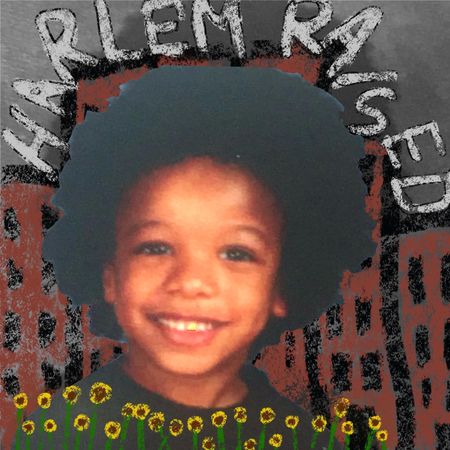
As a Brooklynite with a Pacific bent, Liim is bicoastally appealing, although his skill transcends those binaries. He sings over lush chords and hydraulic basslines, in a breezy lilt that deepens when he raps, in effortlessly jiggy spurts. It is a testament to his musicality that it often covers for his limited message, with “Playing Yoself” being a paradigmatic example: “Wondering what’s up with me... Wondering who’s slept with me.” Liim is still pondering these questions on his new album, A Sunflower Garden in Harlem Is Hard to Find, which is exquisitely produced and occasionally gorgeous. Even so, Sunflower invokes its influences—jazz-funk and swag rap, Roy Ayers and SahBabii—much more eagerly than it expounds upon them, which undersells how eclectic said influences actually are. This, together with Liim’s repetitive romanticism, makes for an enjoyable if slightly unmemorable record, the work of a savant still figuring out what to do—and say—with all his talent.
No score yet, be the first to add.
0.0
Liim was raised on New York radio, whose voluble DJs presided over, and often shouted over, a musical topography of the city. His debut echoed those broadcasts with mock segments and mercurial songs, the stuff you hear watching brownstones whiz by. Similar touchstones animate Sunflower, which retreads not only the radio skits (“This has been your humble host: Liim Lasalle, the poster child”), but the car rides—as on “Right Ride,” a summer anthem for the license-holding minority of his city. “Ride, ride, ride, ride,” Liim chirps, literally doing so: riding out the chorus, all lavish arpeggios and twinkly synths, with a single repeated syllable. Meanwhile, the rigidity of his songcraft—from rapping the verses to “riding” the choruses and hastily back again—belies the spacious joyride he is advertising. Liim the spitter rushes off stage; Liim the singer races back, right on time. Both are talented, and neither can breathe.
Sometimes, that binary sensibility repeats itself at the song level: Bask in the resplendent “Wanna Be With You,” for instance, until the breathy rap verse barges in. More broadly, the underlying impulse—look what I can do—is a conceit of the entire album, which tends to survey Liim’s roving capabilities like a scouting combine. The 40-second interlude “Friends and Their Opinions” appears sheepishly aware of the monumental task it has been assigned: bridging the buoyant singsong of “R.I.P Peace” to “Buttas On,” a stomper better suited for B4.DA.$$. A few tracks later—and several decades back—comes “1980,” named for a time when rappers excoriated “sucka MCs” and extolled their own crews, as fellow New Yorker AJRadico does on a guest verse. But longing for “days when the grass was green” only calls attention to the overgrown lawn at hand, whose talented star shines less brightly than his conflicting tastes.
When he learns to leverage them, those tastes may well be a strength for Liim, a superstar-to-be who has little to say, but unlimited reference points through which to say it. For now, the eclecticism coursing through Sunflower yields varying results—most perniciously, a stronger sense of who Liim sounds like than who Liim is becoming. The woozy “Machete Summer” is a loyal distillation of A$AP Rocky circa 2018: a sing-rapping lothario with a proclivity for plucky riffs. But where Testing sputtered by trying too many things, Sunflower basks in guaranteed success, retreading familiar playbooks for songs that are simply good—and little more. “Hunger in My Stomach” shares both a chord progression and dynamic texture with “(I Could Never Say) It’s Over,” a lachrymose soul staple Liim nicely nods to musically, but cannot quite match emotionally. His laid-back love songs are masterfully executed but modestly envisioned, an expensive steak and a peck on the cheek.
The best songs here, like “Sunflower Garden” and “Another Chance,” tend to be the briefest. To their credit, these tracks are successful for their own reasons—the latter an endearing, patois-inflected plea and the former a transfixing showcase of Liim’s beautiful voice, layered to perfection. Then again: They simply do not stretch out far enough to fail. Neither does Sunflower, a vibes-first record that would have crushed in the 2010s, when teenagers flocked to Camp Flog Gnaw and weightless R&B wafted from every Urban Outfitters. “This is a New York summer,” Liim proclaims. It would be more believable if he were willing to sweat.
0.0
0.0