Dolly Parton’s Cause of Death Revealed
Photo gallery
8 images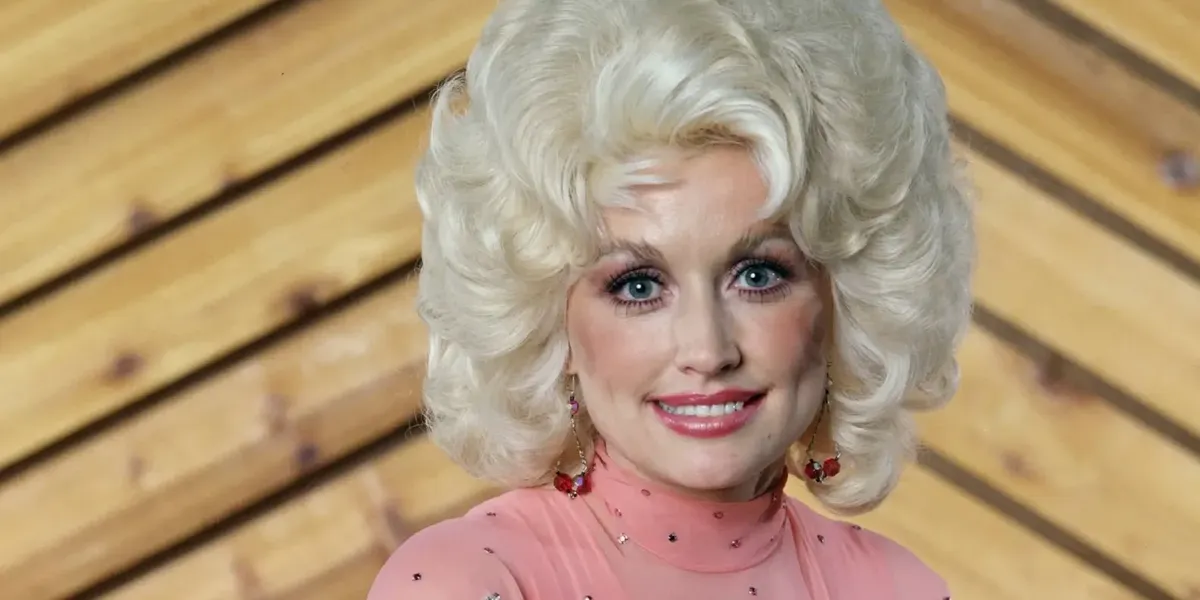
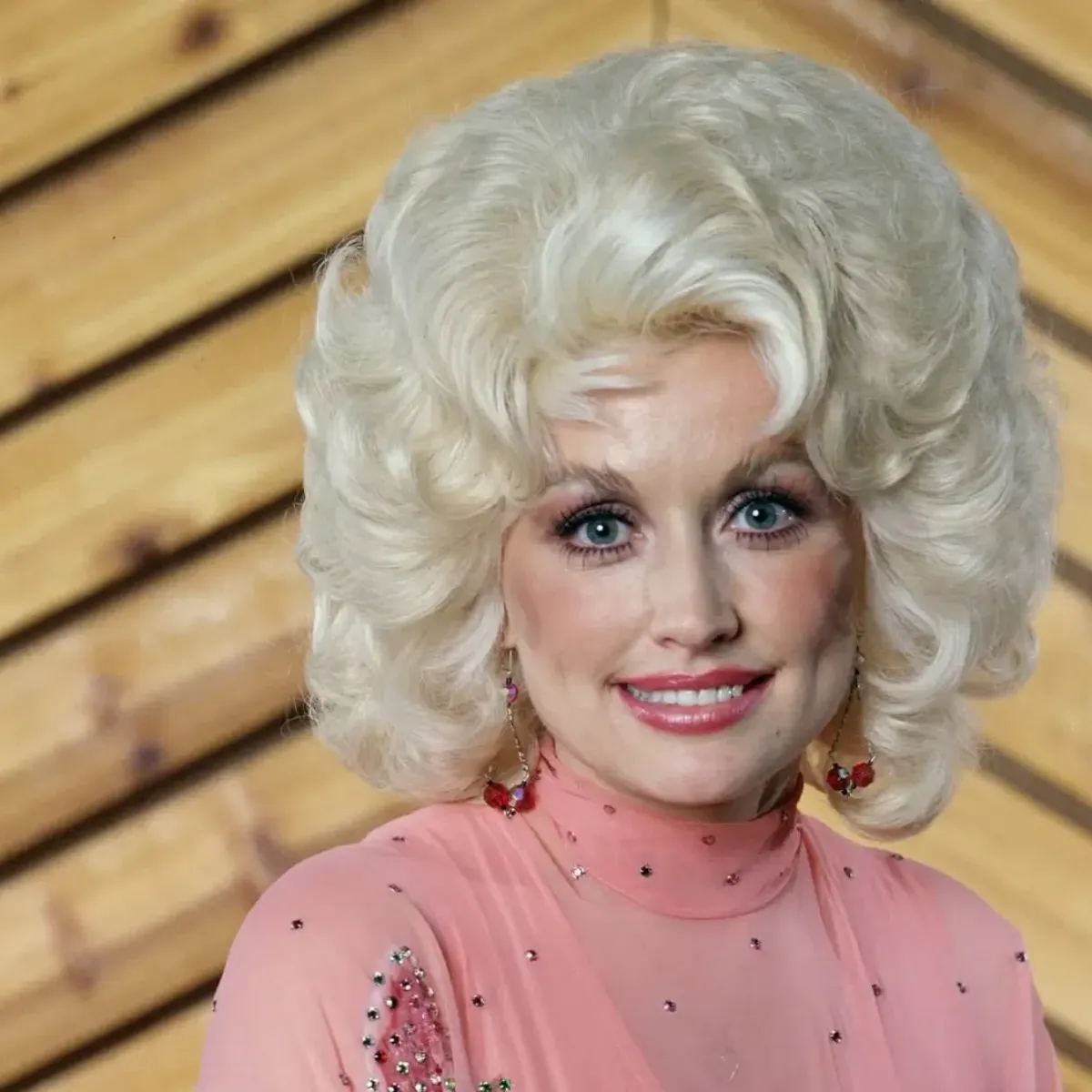
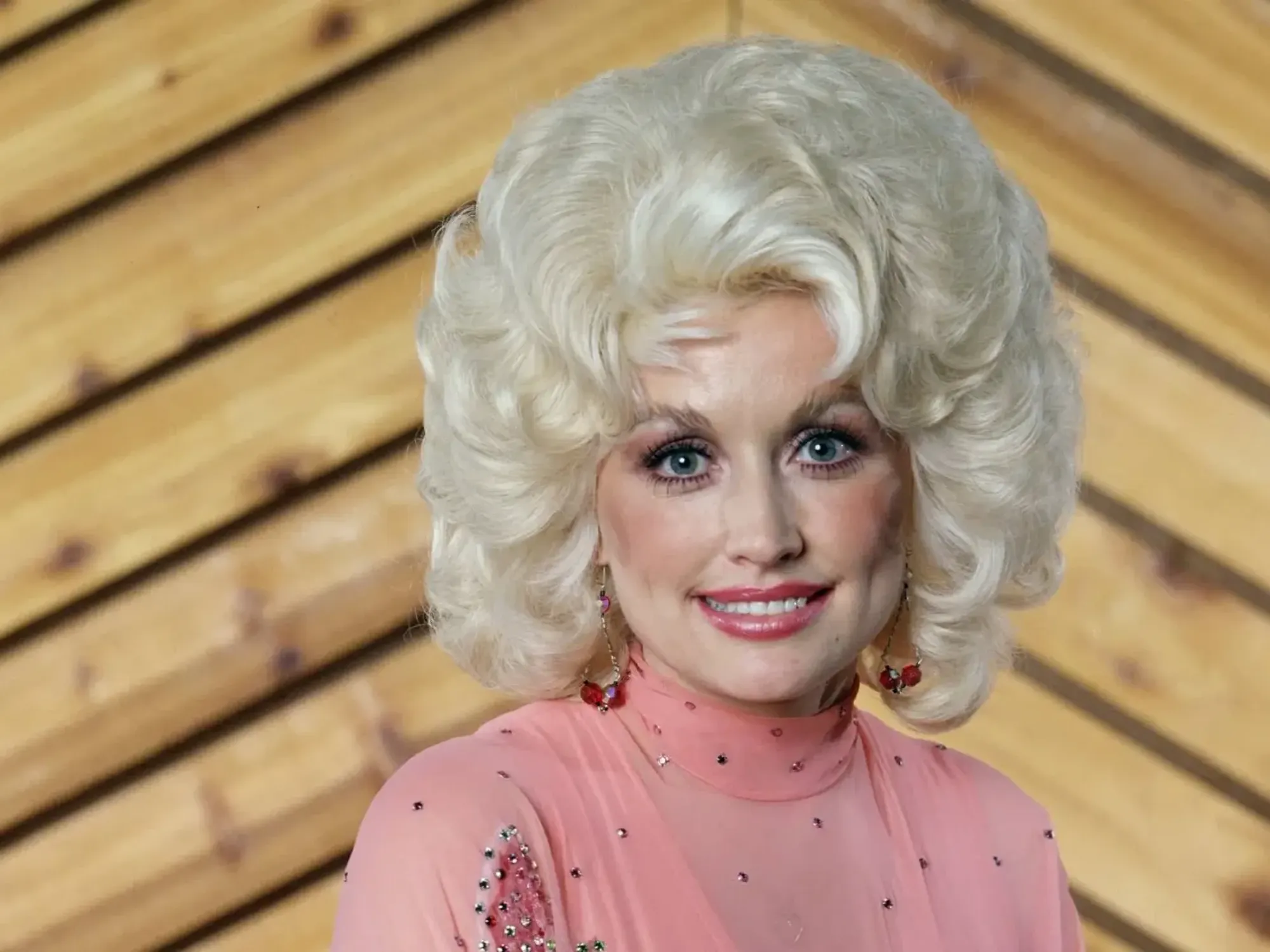

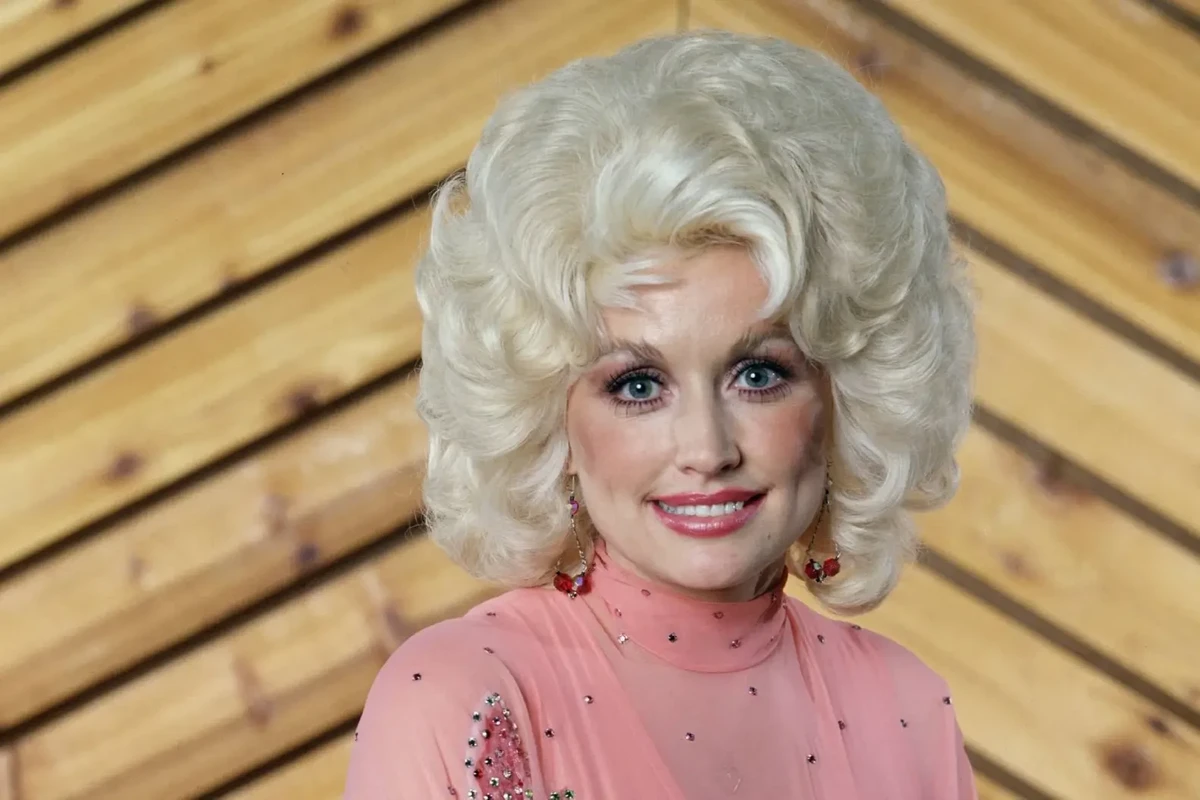
The beloved country icon died on Tuesday at the age of 80
Dolly Parton died on Tuesday at the age of 80.
Dolly Parton‘s cause of death has been revealed. The global icon whose extraordinary life and career inspired generations of musicians died on Tuesday at the age of 80.
Parton’s team confirmed that the star faced a brief battle with cancer and died surrounded by her loved ones in Nashville. “Dolly departed her Earthly life today at the Vanderbilt-Ingram Cancer Center surrounded by loved ones,†read a statement shared with Rolling Stone. According to People, Parton was hospitalized four days before her death.
Parton’s nephew, Bryan Seaver, announced her death via a video announcement on Facebook. “As her head of security for more than two decades, a role my father Larry held before me, I have imagined the heaviness of this moment, but haven’t truly felt it until now,†Seaver said. “It is an honor, an honor that is mixed with absolute pride and great sadness. But sadness lies with us, not with Dolly.
“Dolly also opened doors for generations of singers, songwriters, musicians, and dreamers from every walk of life and across every continent,†he added. “By her example, we believed that anything was possible. She never saw a door she couldn’t open, and the doors she opened made and changed history.â€
An outpouring of tributes across the globe have been shared following Parton’s death. Fans, artists, and leaders across all industries are mourning the star whose relentless optimism, grace, and resilience was a shining light.
Ella Langley celebrated Parton as a trailblazer who helped open the doors for other women in music. “Dolly, thank you for standing up for yourself as an artist, a songwriter, a musician, a producer, an author, a creative, and most importantly a woman in this industry,†wrote Langley. “You paved the way for so many to be brave.â€
Shania Twain, who memorably performed Parton’s “Coat of Many Colors†alongside the legend during a 2003 duet on Oprah Winfrey Show, was also among the artists mourning the loss. “My mentor is gone. My songwriting teacher and hero of grace and humility,†wrote Twain in a tribute alongside footage of the performance. “There is a hole in my heart but the joy of just the thought of her smile will continue to fill me with inspiration for as long as I live.â€
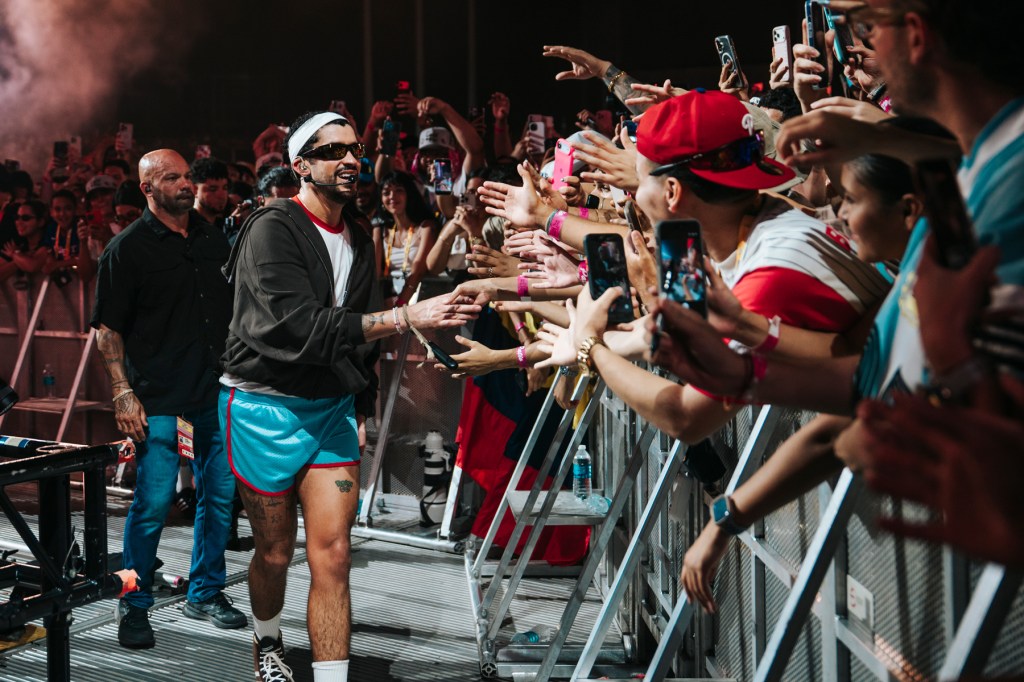
Bad Bunny performs live during his "DeBà TiRAR MáS FOToS World Tour" at Hiram Bithorn Stadium on August 22, 2026 in San Juan, Puerto Rico.
Bad Bunny closed out his record-breaking Debà Tirar Más Fotos world tour last night in the place where this creative chapter first began: right in the heart of Puerto Rico. As Benito himself told the crowd of nearly 35,000 people, “I couldn’t do a world tour without including my favorite place in the whole world.â€
After 57 dates that took him from Latin America to Australia, Japan, and Europe, Bad Bunny ended the tour at San Juan’s Hiram Bithorn Stadium with two final nights celebrating his Grammy-winning album, DeBà TiRAR MáS FOToS.Bad Bunny had already completed a 31-date residency in Puerto Rico before the world tour kicked off, but a victory lap in the land that raised him was inevitable. “I saw so much joy around the world when people from other countries became Puerto Rican for one night. Well, here at home we’re Puerto Rican every day, from sunrise to sunset, and from the day we’re born until the day we leave this world,†he told the audience at one point.
Like most of the international dates, the opening act was Chuwi, the dynamic Puerto Rican quartet Bad Bunny plucked from relative obscurity and included on the album’s sunny track “WELTiTA.†The foursome, who have shot to astronomical heights over the last year, played songs like “Rico y Pico,†“Tikiri,†“Mundi,†and “Tierra.†Their music is often influenced by socioeconomic issues in Puerto Rico, with lyrics that address everything from gentrification to colonialism in Puerto Rico and abroad — percussionist Adrián López even waved a Palestinian flag at the end of their set. Bad Bunny has rarely shied away from inserting himself into politics and current events either, so the moment stood out.
As the main show began, fans who attended Benito’s residency last summer noticed an immediate twist: The residency ended with a showcase of his salsa songs but for this, he started with salsa. He kept the format closer to the world tour, making the last song, “LA MuDANZA,†the opening salvo.
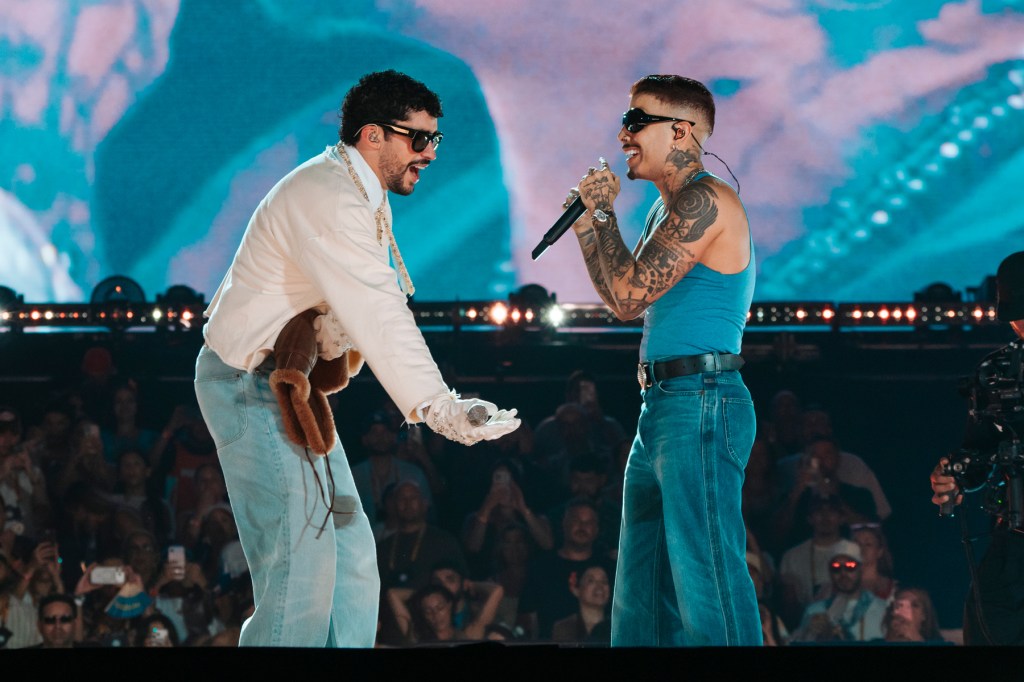
Backed by his touring band LoS SOBRiNOS, Bad Bunny got his fans dancing with hits like “PIToRRO DE COCO,†a salsa version of “CallaÃta,†and his now-classics “BAILE INoLVIDABLE†and “NUEVAYoL.†The first surprise of the night happened early on, as legendary Puerto Rican salsa crooner Victor Manuelle showed up to accompany Benito for a performance of “Mala y Peligrosa,†their 2018 collab, which Bad Bunny noted was “the first time I ever sang salsa.†As Bad Bunny stepped away for a wardrobe change, Manuelle continued keeping fans active with a cover of Celia Cruz’s seminal hit “La Vida Es Un Carnaval.â€
The iconic casita set that he debuted during the residency and brought with him for most of the world tour returned. The casita marks a highly anticipated part of his act since it features his biggest reggaeton bangers, and Bad Bunny didn’t disappoint. As rowdy bops like “Tità Me Preguntó,†“Me Porto Bonito,†“Yo Perreo Sola,†and “Efecto†blared, Benito put on a show, perreando to the cheers of his fans. RaiNao made an appearance, singing “PERFuMITO NUEVO†while Bad Bunny called her one of his favorite artists.
Saturday’s show included Arcángel, Farruko, and Ñengo Flow as the casita’s surprise guests. But on Sunday, it was all about Bad Bunny’s most steadfast and longtime compatriots, Jowell y Randy. As the raucous opening notes of “Safaera†got the crowd roaring deliriously, the duo made their way to the casita’s roof and joined Bad Bunny in performing the signature song. When it was over, they began to say their goodbyes until Benito stood to the side and wagged his finger at them — they weren’t going anywhere.Jowell y Randy took over the show for a spell, riling up their audience with raunchy tracks from their repertoire like “El Funeral de la Canoa,†“Hey Miste,†“Siente el Boom,†and more. Benito made his return after their set, introducing the night’s two exclusive songs, “RLNDT†and “120.†He didn’t perform these tracks at any other stop on the world tour and performed an extra one in P.R., with a giant message on the stadium’s screens: “[Puerto Rico] is the best.â€
Los Pleneros de la Cresta filed out of the casita for their traditional plena hits “CAFé CON RON†and “Ãbreme Paso†as Bad Bunny once again made his way to the main stage for the last part of the concert.
Slowing down the pace for more melancholic and lovelorn songs like “Ojitos Lindos,†“La Canción,†“Yonaguni,†and “KLOuFRENS,†Bad Bunny reminisced about the journey his career has taken leading up to last night. Tying his success to the support of his fans, he urged them to use that passion to fight for Puerto Rico’s interests amid problems it’s currently facing. “I want to give you today a little bit of joy… [and] hope and strength to fight and continue to defend this land,†he said.
The archipelago has faced a drought that has led to severe water shortages in many cities, with government and agency incompetence (or worse, corruption) accused of worsening an already fraught crisis. The power outages that have roiled the country since Hurricane MarÃa in 2017 have hardly stopped, a fact that Benito addressed in his song “El Apagón†and which he underlined here with a mock blackout symbolizing what millions of Puerto Ricans live through on a weekly basis. As he performed the track, its original closing lines, sung by his former girlfriend and longtime friend Gabriela Berlingeri, blended lyrics from “LO QUE LE PASÓ A HAWAii.â€
Not wanting to end on a low note, Bad Bunny had one last surprise for those in attendance. He brought out Rauw Alejandro for a rendition of “Party,†and “Qué PasarÃa…†off Rauw’s album Cosa Nuestra. That LP, which came before DtMF by two months, is also considered to be an homage to Puerto Rican culture, making it all the more fitting that he makes an appearance here as well. Two stars united by the love for their homeland.
The show wrapped with DtMF’s title track, and Song of the Year nominee, plus an encore featuring “EoO,†as Benito wanted to sign off with one last taste of his favorite music: reggaeton.Benito knows he can’t solve all the problems Puerto Rico has but he’s willing to support the movements he believes will benefit his home — and he’s given his fellow boricuas motivation in the face of rising odds. The DeBà TiRAR MáS FOToS era may have come to a close last night, but he’s created an impact that will be felt for a long time to come. It was never just music to dance to, but a reminder that everything and everyone worth fighting for is always around you.
Taking Back Sunday showed up at Warped Tour in Montréal this weekend wearing matching brown suits, arguably not the most punk-rock way to prepare for a day of sun, sweat and thousands of fans. The look was deliberate, though. As the band worked on their latest record, so did a visual world built from mood boards and images collected along the way.
"We had a lot of mood boards," frontman Adam Lazzara reveals. "I've been collecting stuff for a while, just as the record was taking shape."
The actual shopping trip was considerably less elaborate. "We were like, okay, we're all going to go to the store together, we're going to get suits," he says. "And then we didn't even go and really shop around too much. We found these at the first store, and we were like, ‘Okay, they're good.’"
After spending much of their career trying to avoid dressing like they had "real jobs," the band has apparently come around. "We hustled so hard so we wouldn't have to wear them," says bassist Shaun Cooper. "And then it became more comfortable to wear them than sweating through jeans every night."
That is the kind of perspective that comes with nearly three decades in a band. Taking Back Sunday have grown from young musicians chasing the next show into adults trying to reconcile touring with marriages, children and lives that exist outside the road. "We're still trying to figure the balance out," they admit, one of them joking that their child thought they worked at the airport because they were there so frequently. "We weren't too good with balance for a long time."
Once upon a time, the band's instructions to their agent were simple: "We don't care if we're home. Keep us working. Keep us out, we want it." These days, they try not to book anything longer than four or five weeks.
The contrast is particularly striking considering that, in 2003, they toured with Saves the Day for three months. When they reunite with Saves the Day this fall, alongside Thrice, they will be approaching the road from a very different place in life.
Warped Tour itself provides an even longer timeline. Guitarist John Nolan's first experience with the festival came in 1995, when he was still in eighth grade. He remembers seeing Sublime, L7 and Quicksand, buying a No Use for a Name hat and discovering Fat Music for Fat People Volume 2 for three dollars.
"It was just a core memory," he adds. "It was the summer after eighth grade before I started high school, and it was just such a great time with all my friends there sweating it out in the parking lot."
Now, the people who once inspired Taking Back Sunday are part of the band's own history, while the festival they once experienced as fans has become something they can return to as veterans. "It's amazing," Lazzara says. "Like John and Shaun were just saying about having these core memories, so it’s amazing to be able to say that you got to be a little part of that story too."
For them, Warped Tour represented something that was difficult to find before the internet made music discovery effortless. "They were bringing this music that you could only find out if you were in a record store or had a zine from another city," Nolan says. "Like, no internet, and they were bringing this whole culture, this whole community to these off-the-beaten-path places."
That sense of community is still what they see when they look out from the stage. Their audience now includes people separated by decades, but the gap disappears once the music starts. "There's people from all different chapters of life, ranging like a huge age gap for like 30, 40 years," they say. "But all getting lost at the same time to the same thing."
It is a fitting idea for a band that has spent so long refusing to become static. Asked how they have managed to survive when so many of their peers have broken up or moved on, they point first to stubbornness.
"We're all pretty stubborn," Cooper jokes. Then comes the more serious answer: they still have somewhere to go.
"We all have a kind of an idea of how we want the band to evolve," they explain. ‘’Whether it's wearing suits now, or where the sound is going to go or how we're going to shape the songs and the direction and continue to grow and evolve. The three of us have a kind of shared vision in that. And when we can bounce ideas off each other, that keeps exciting and fresh.’’
That might be the secret. Taking Back Sunday have been doing this long enough to know exactly what it takes to keep a band alive, but not long enough to lose the feeling that made them want to do it in the first place.
As Lazzara puts it: "I wanted to do this for as long as I can remember. And I'm able to. So I’ll keep doing it, by any means necessary."
Donald Trump in the Oval Office in August 2026.
President Donald Trump told the Department of Justice to settle its antitrust suit with Live Nation after meeting with CEO Michael Rapino in the Oval Office in late February, The Wall Street Journal reports.
The new story digs into the lobbying efforts and behind-the-scenes maneuvering that preceded Live Nation’s surprise settlement with the DOJ in early March, just one week into the company’s federal antitrust trial. While some co-plaintiff states signed onto that deal, many continued with the case, and a jury ultimately found Live Nation liable for operating as a monopoly in April.
The Wall Street Journal previously reported that the settlement was reached after a meeting at the White House on March 5 attended by Rapino, the company’s lawyers, and DOJ officials (including former Attorney General Pam Bondi). But Rapino had also met with Trump a few weeks earlier.
According to the report, Rapino’s Feb. 27 meeting at the Oval Office primarily centered around Trump’s efforts to overhaul the Kennedy Center, and the president’s desire to enlist Live Nation to handle the venue’s operations. But during the meeting, the president also asked Rapino why the company hadn’t settled its antitrust case with the DOJ yet. After, Trump reportedly directed the DOJ to strike a deal.
Reps for Live Nation did not immediately return requests for comment. Lauren Bis, a White House spokesperson, said, “Unlike Joe Biden, President Trump has not weaponized the Department of Justice against his political foes or used it to help his friends. The Department is focused on restoring law and order and keeping Americans safe.â€
The DOJ’s settlement with Live Nation has drawn significant criticism, both for how the deal was reached, and the terms it contains. While it did force some concessions from Live Nation on key issues involving its amphitheater business and Ticketmaster’s exclusivity contracts, many claimed it did not go far enough to address the company’s alleged monopoly over the live entertainment industry. For instance, the plaintiff states are currently seeking to force Live Nation to divest from Ticketmaster following their victory in court.
Dan Wall, Live Nation’s executive vice president of corporate and regulatory affairs, touted the terms of the deal in a new statement shared with the WSJ. “Our critics are comparing this settlement to the irrational hope of breaking up Live Nation and Ticketmaster,†Wall said. “For the actual claims in this case, the DOJ and settling states got as much or more as they could have expected to win in court.â€
He also defended Live Nation’s actions as it worked to reach a settlement with the DOJ: “The only reason we went above the Antitrust Division to senior DOJ leadership is because no one there would speak to us. When you’ve been unable to get a meeting for six months, you have every right to try something else.â€
Live Nation made significant efforts to lobby the DOJ and Trump administration into dropping, or settling, the antitrust. The company worked closely with many people close to the president, including Kellyanne Conway and MAGA influencer-lawyer Mike Davis (who previously helped lobby the DOJ to drop its challenge to a $14 billion merger between Hewlett Packard and Juniper Networks). And Trump involved himself reportedly after hearing about the case from prominent people.
According to the WSJ, Live Nation’s efforts also included hiring top law firm Sullivan & Cromwell to lead its settlement talks. The Sullivan & Cromwell team reportedly included two antitrust experts, but also a lawyer named James McDonald, who had little antitrust experience, but was representing Trump in his criminal cases in New York. (In July, Trump appointed McDonald to lead the U.S. attorney’s office for the Southern District of New York.)
Additionally, two top political appointees at DOJ reportedly had an influence over an early set of proposed settlements. One pushed the lawyers at the antitrust division to remove language forcing Live Nation to sell Ticketmaster from a draft response; he and the other appointee also reportedly echoed talking points Live Nation had unsuccessfully tried in court.
As for the case itself, it’s now in the remedies phase, during which Judge Arun Subramanian will decide what kind of punishment Live Nation will receive. Subramanian also has to review and approve the DOJ’s settlement with Live Nation, and decide whether it was reached in the public interest. In a July letter to the judge, the plaintiff states said said they had “significant concerns†that it was not in the public interest, and asked the DOJ to share new details about how the settlement was reached.
Canadians who wish to participate in the next Eurovision competition will be able to apply starting next week, CBC/Radio-Canada announced this morning.
Earlier this summer, the Crown corporation announced that Canada would be joining the Eurovision Song Contest next year, after it joined the European Broadcasting Union. The 71st edition of the world's biggest song competition, watched by hundreds of millions of viewers across the globe, will take place in May 2027 in Bulgaria.
Submissions for participants open on August 31 and will close on September 9. Applicants must be Canadian citizens or permanent residents to be eligible. Further details will be announced next week on CBC's Eurovision platform.
After the submission period ends, a shortlist will be selected internally by the broadcaster. Then, a public vote will be open to all Canadians to select who will represent the country at the prestigious competition. Finalists will then be reviewed by a panel of music industry experts, where a single artist will be selected and paired with some of the Canada's top musical talent to craft the song that will enter the competition in May 2027.
“We are seeking a magnetic Canadian performer with a genuine passion for representing Canada and a proven track record of captivating very large live audiences, whether through exceptional vocal power, electrifying stage presence, or truly original artistry,†said CBC's Executive vice-president Doug Smith.
This will be the very first time Canada will be officially represented at Eurovision. However, several Canadian artists have competed on behalf of other countries in the past. Notably, a 20-year-old Céline Dion wowed the world and became a global sensation when she represented Switzerland in 1988. More recently, Québec singer La Zarra represented France in 2023.
In October 1965, seven months before he left the Toronto folk scene to move to Los Angeles, Neil Young recorded the ballad “Casting Me Away From You†in the attic of his high school buddy, Comrie Smith. Young revisited the melody for the 1968 instrumental track “The Emperor of Wyoming,†which kicks off his self-titled solo debut LP, and the line “we found things to do in stormy weather†was used in his 1976 classic “Long May You Run.â€
Earlier this year, when Young was in Malibu, California, recording his new LP Second Song with the Chrome Hearts, he found himself out of new songs after recording the five he wrote for the project. His mind went back to Smith’s attic all those years ago, and he decided to re-record “Casting Me Away From You†for the album.
Young shared the new version of “Casting Me Away From You†on the Neil Young Archives (click here to check it out) that he paired with a vintage video of him driving across Broken Arrow Ranch in California, where he lived for several decades. “[My son] Zeke’s mom, Carrie Snodgress, is riding her horse along with Timer, our dog,†Young writes, “who’s riding as we cross the beautiful ranch on a new road.â€
Earlier this month, Young released the 11-minute title track to “Second Song.†The full album – which also includes a re-recording of Young’s 1964 extreme deep cut “I’ll Love You Forever†– will be released on September 19.
“Those two old songs, they just seemed to fit with the new ones,†Young told fans in July. “There was no concept. [The album] is a couple of old songs, and lot of new ones. With the length of the new songs, we could have knocked out the old songs and still had an album, for length. But we went ahead and added the two old songs. That’s what this album is about. It’s about the new songs vs the old songs. The old songs offer some sort of reflection and juxtaposition or something. They all seem to fit together.â€
Young originally planned on touring Europe this summer with the Chrome Hearts, but he cancelled all of the dates in February. “Everything is OK,†he told fans. “Just needed a break. Listening to my body.â€
He’s remained almost completely absent from concert stages this year, appearing only for a brief set at David Suzuki’s 90th birthday show May 22 in Vancouver. But he’s playing two shows on a double bill with Wille Nelson – September 22 in Bridgeport, Connecticut and September 24 in Philadelphia – as a warmup to Farm Aid in Virginia Beach on September 26.
It’s unclear if he plans on playing additional shows, but don’t expect to see him at Madison Square Garden, the Beacon Theater, Radio City Music Hall, or any other venue that use facial recognition technology. “Neil Young will not be playing venues utilizing the facial recognition surveillance,†reads a recent post on the Neil Young Archives.