Nintendo Sound Team: Donkey Kong Bananza
Photo gallery
6 images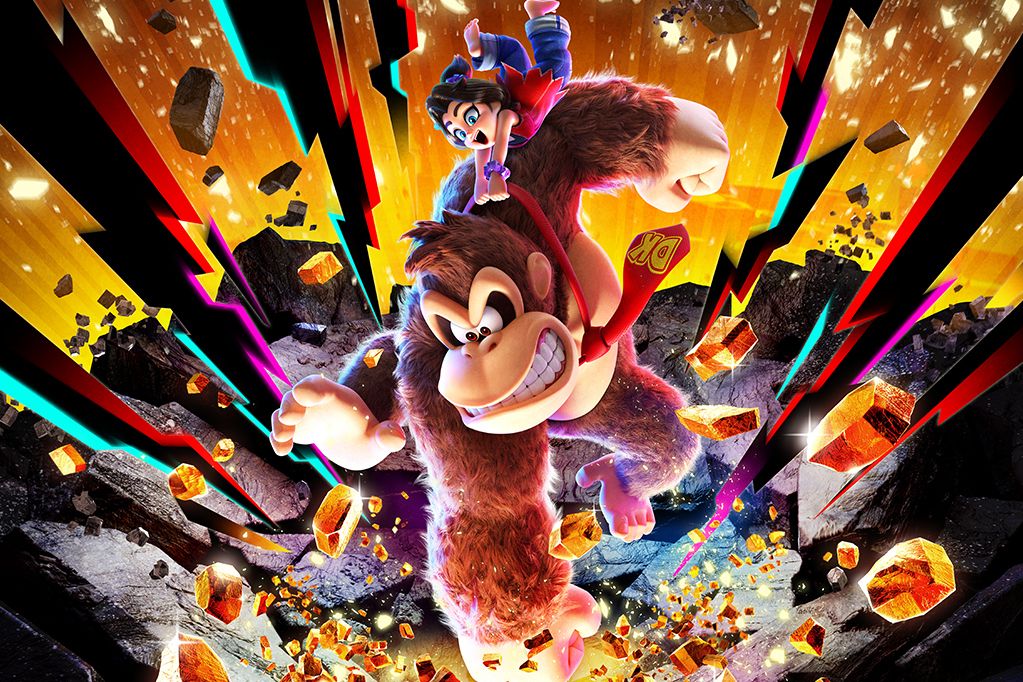

0.0
0.0
Reader Score
No score yet, be the first to add.
0.0
Genre:
Pop/R&B
Label:
Nintendo
Release Date:
2026
Donkey Kong Country—British developer Rareware’s massive 1994 overhaul of Nintendo’s classic franchise after 13 years as a simple arcade platformer—opens with a gag about its incomparable music. Cranky Kong, the withering ape from the original Donkey Kong arcade game, cranks a Victrola that’s playing the ancient game’s 30-second 8-bit main theme. Before he can finish his oldie, his grandchild (the Donkey Kong we know and love today) kicks ol’ Cranky to the curb, destroying his Victrola and replacing it with a boombox playing composer David Wise’s euphoric remix of the original theme. Country reinvented the franchise from every angle imaginable—gameplay, graphics, personality—and before you can hit a single button, its landscape-altering music gives it shape. Even after Rareware stopped making games for the franchise in the 2000s, Nintendo turned DK into a bongo-playing, sing-songy character whose essence was tied to the music that redefined him; music and Donkey Kong were inseparable.
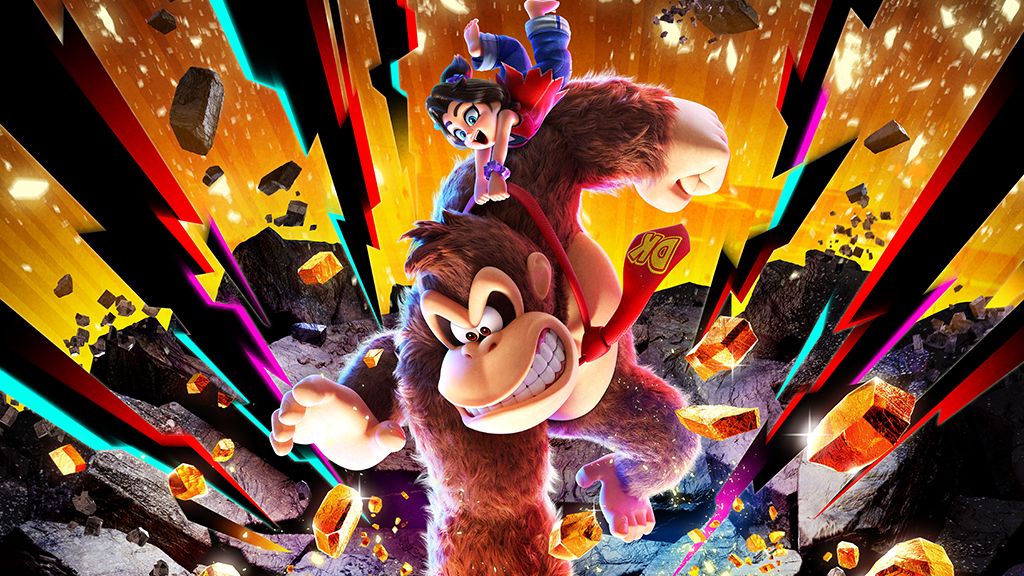
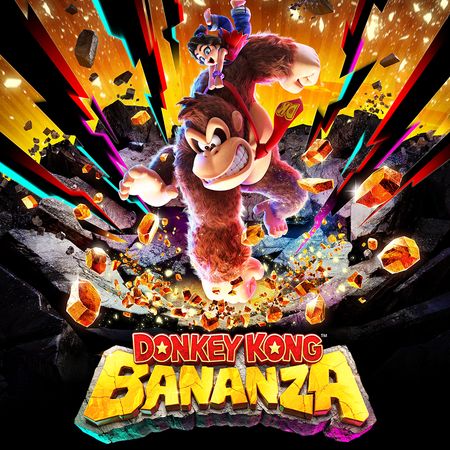
Come 2025, after years of rhythm games and 2D platformers in the vein of the original Country trilogy, it was time for the franchise to undertake its second full-scale reinvention—this time, as an astoundingly creative 3D platformer called Donkey Kong Bananza. Bananza gave the DK character a brand-new personality, his series a fully developed narrative, and his gameplay a remarkable rehabilitation. All of these innovations factored into Bananza’s near-universal praise, and they all revolved around one thing: music. Bananza places music at the core of its narrative and gameplay. Headed by Super Mario Odyssey composer Naoto Kubo, a small cast of in-house Nintendo composers built upon Donkey Kong’s legacy with a genre-hopping score whose dynamism graces the wildly diverse layers of the game’s music-obsessed planet, where the power of one’s singing voice is strong enough to both save the world and bring about its end. Released one year after the game, Bananza’s soundtrack is both an ode to the series’ trailblazing music and a modernized step forward for the franchise.
No score yet, be the first to add.
0.0
Throughout Bananza, DK and his teenage partner in crime, Pauline—a wannabe pop star whose singing voice is said to awaken the wish-granting root sought by an evil corporation—are guided by song through a world full of music-loving inhabitants: breakdancing apes, DJing elder monkeys; it’s an endless musical jungle. Pauline whistles and hums DK toward secrets within the world, and she sings a wide array of lovably over-the-top pop songs to help him transform into different animalized “bananza forms,” from the Latin-themed “Zebra Bananza” to the rap-rock “Kong Bananza.” Even rockabilly makes a cameo, on “Ostrich Bananza.” Pauline’s raucous, almost cheesy songs might be less enjoyable outside the game, but inside, they’re crucial to Bananza’s experience.
Just as essential to its musical outlook are Bananza’s main level themes, which bring back the sort of whimsy long found in Nintendo’s best games. Lagoon Layer has an ideal first-level theme: a jaunty, tropical romp whose softly strung intro escalates into sprawling refrains of delicate guitars, fluttering woodwinds, and heroic brass that leaps from the background. It perfectly conjures the mystery and wonder of this new world, and thanks to Bananza’s dynamic soundtracking, the track changes as you explore more of the level, becoming mightier as DK comes across new areas like Salvager’s Landing. By the time you reach the Radiance Layer, later in the game, the music sprawls wistfully all over —from the spiraling chimes of “Solar Control Tower” to the “Elder Court”’s orchestrated intensity to the mystifying ambience of “Serpent Sands.” It’s rare to find games, let alone Nintendo ones, that use music to enliven their worlds quite like this.
Bananza might’ve earned its rightful acclaim from its all-out embrace of new ideas and innovations, but the game doesn’t entirely avoid Nintendo’s seemingly terminal plague of injecting hollow nostalgia into its games. Though they’re a very small part of this massive score, the skeletal versions of Wise’s Country tracks (done without his involvement) blemish an otherwise shining star. The beauty behind Wise’s Country scores came from the madness behind his grueling hexadecimal composing process, by which he coded his own instruments entirely from scratch with archaic digital technology; without the element of the sublime that Wise so carefully fabricated out of his signature process, returning tracks like “DK Island Swing” and Eveline Novakovic’s “Simian Segue” lose their charm and luster. That’s especially true of Wise’s masterpiece, “Stickerbush Symphony”: Bananza’s rendition is so instrumentally plain, so devoid of the original’s character, that it’s distractingly anemic, like watching a former NBA all-star try to go at age 40 when they simply need to hang it up.
Wise’s ghosts function best subliminally, when small motifs from his immaculate scores find their way into Bananza’s original compositions as subtle odes. The ominous flutters from Country’s “Mine Cart Madness” re-emerge as fully orchestrated brass runs on the brand-new “Mine Cart Ride,” yet they’re limp on the game’s full cover of the original tune. In an incredible subversion, the euphoric synthetic choral refrain that introduces Country’s “Aquatic Ambience” gets bathed in lava during the heavy-metal final level “New Donk City”—the divine arpeggios that calmed us 30 years ago are now given an apocalyptic DragonForce-esque guitar treatment that bubbles up from the volcanic haze at the track’s midpoint, offering that extra motivation to return DK’s planet to its beautiful glory.
Bananza’s score might not be Wise-level perfection, but for a game that functions as a playable paean to the Donkey Kong franchise’s longstanding ties to music, it does a nice job continuing that legacy. In a game that rarely hesitates in finding new ways to innovate and stun, Bananza’s electrifying music only feels like it’s scratching the surface of what’s possible moving forward. The answer might just be in the mantra of its gameplay and narrative: As long as Donkey Kong keeps singing along, the series will find its way there.
0.0
0.0