Trump Threatens to Rename Lake Ontario ‘Lake America’ Amid New Canadian Trade War
Photo gallery
11 images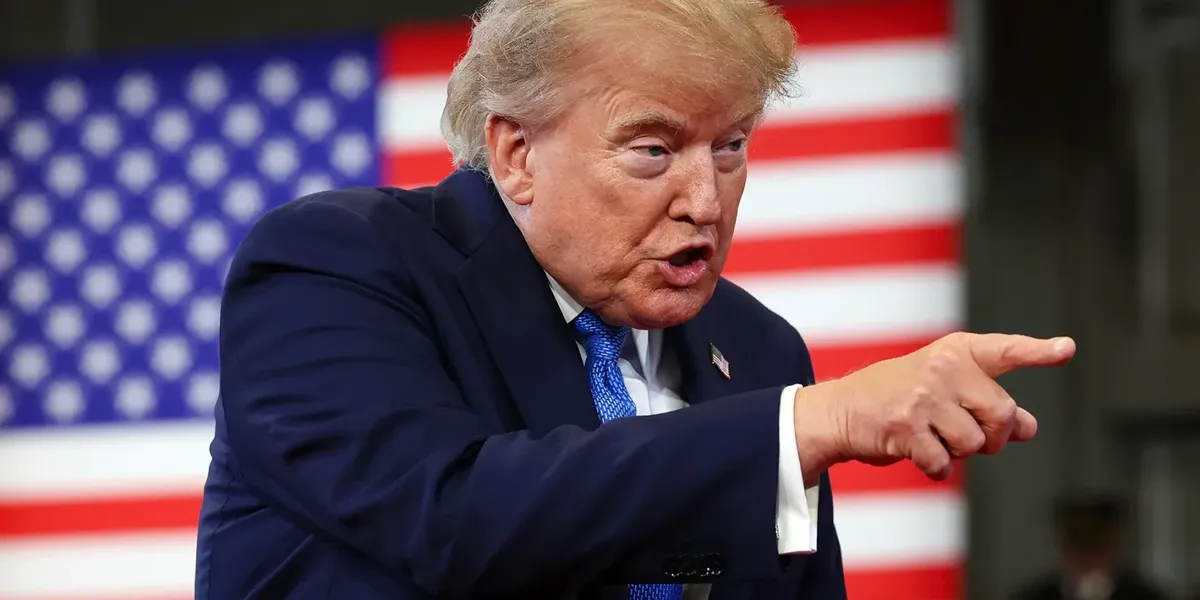
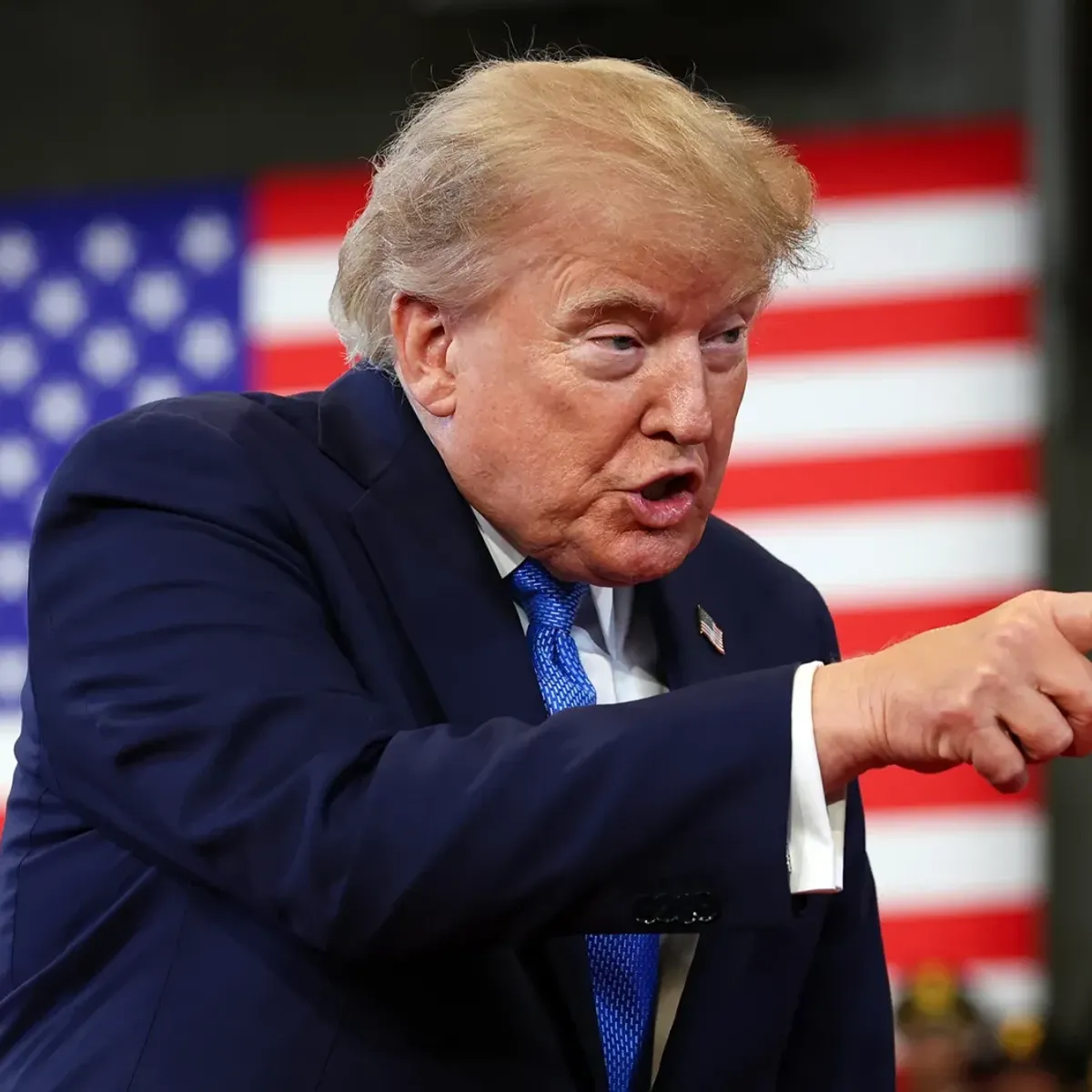
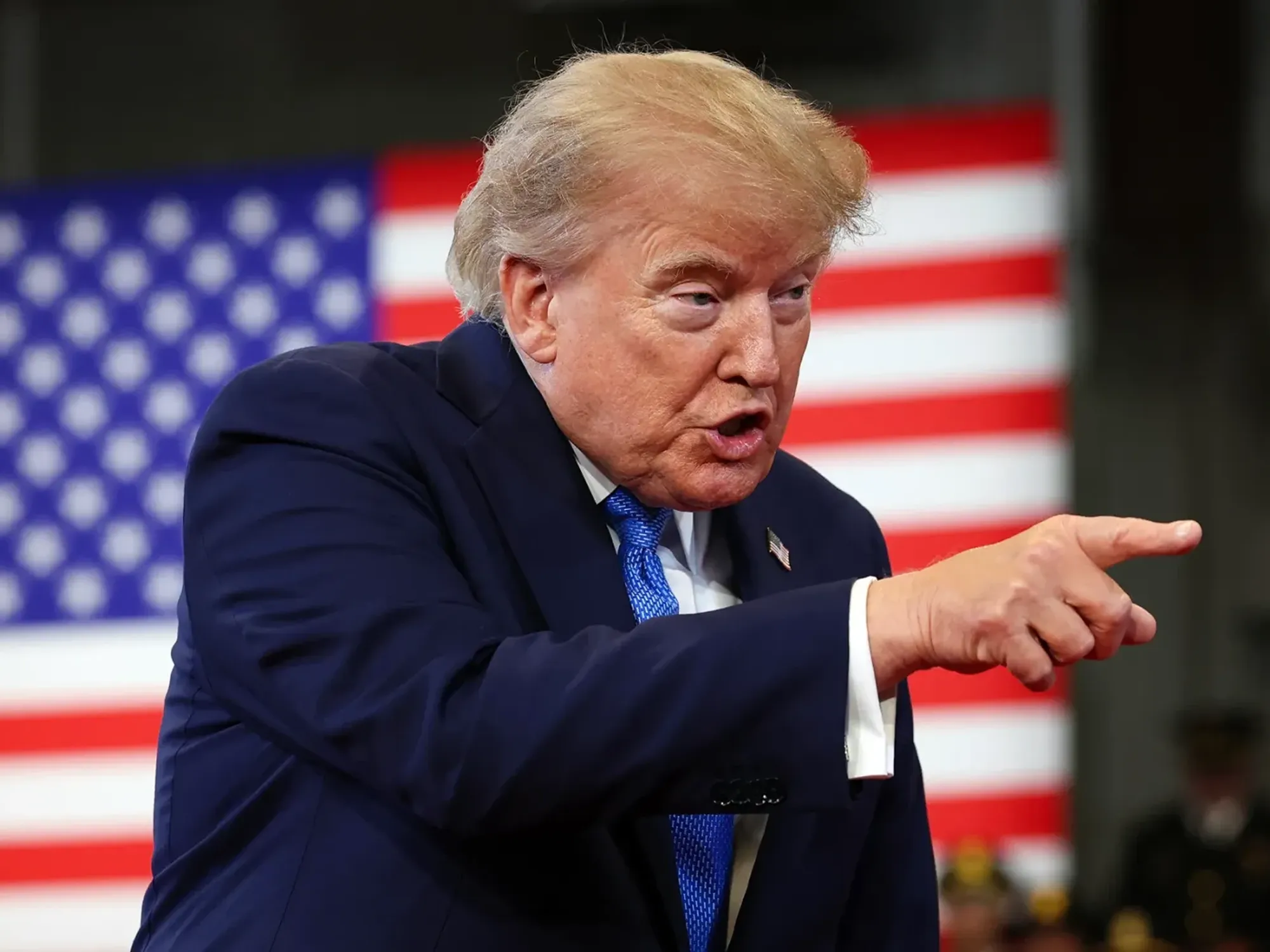
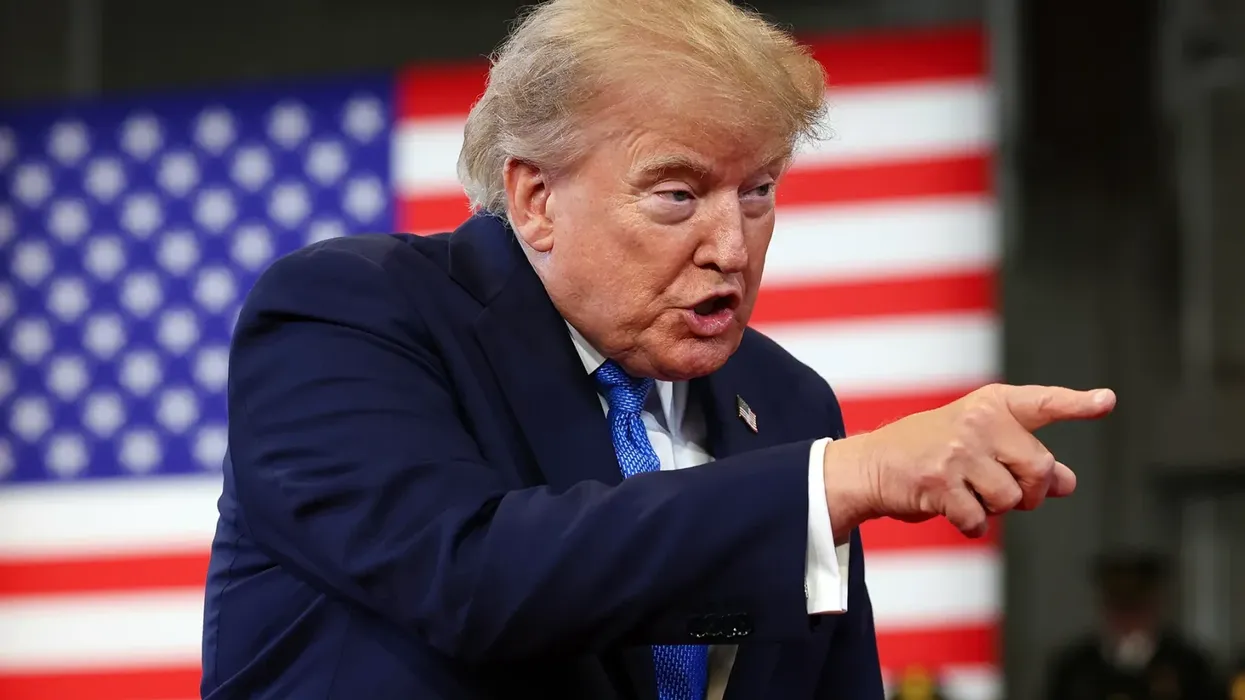

The president has decided to escalate his trade war with our northern neighbor, amidst a real war with Iran and skyrocketing costs at home
Trump has escalated his conflict with one of the country's staunchest allies.
In the absence of a coherent political strategy, threaten something ridiculous. Such has been the strategy of the Trump administration in virtually every major foreign policy and economic decision of his second term. As relations with Canada — our northern ally and major trade partner — collapse into a trade war spurred by the American president’s tariff threats, things have once again escalated into the absurd.
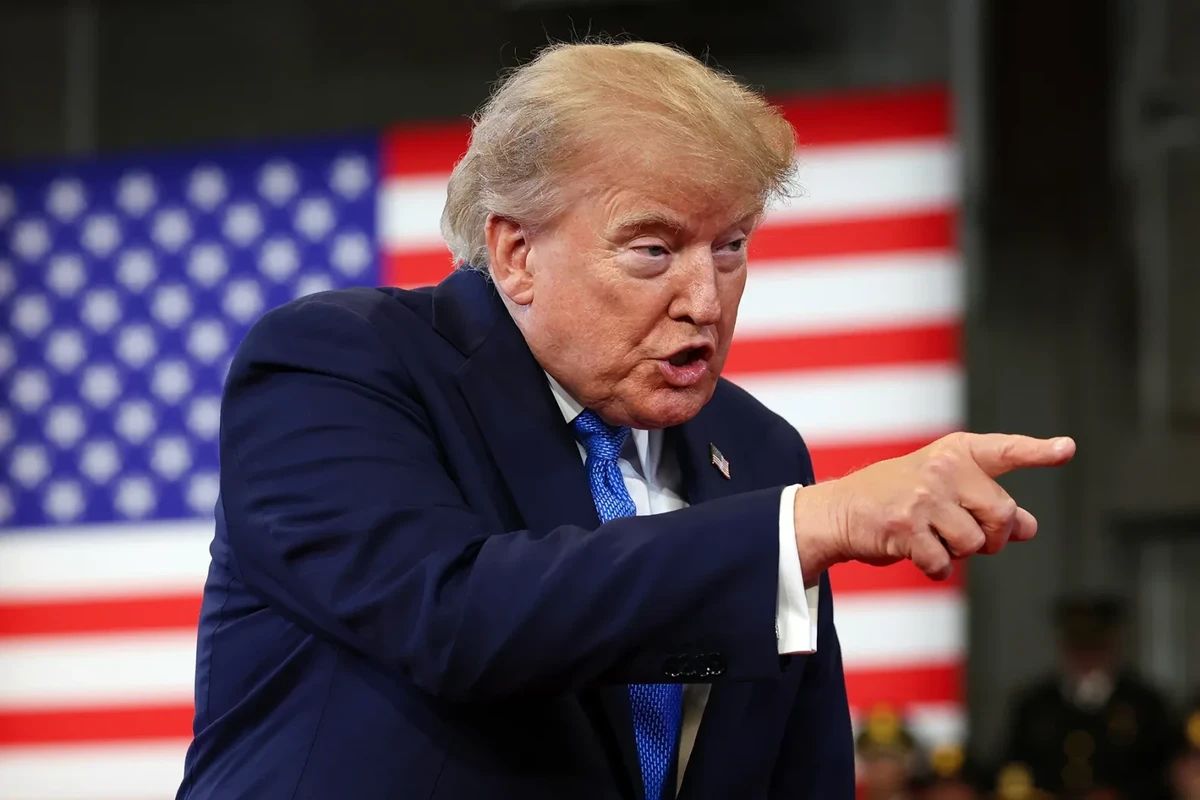
On Tuesday morning, President Donald Trump took to Truth Social to goad Canada, writing that “the United States is giving serious consideration to changing the name of Lake Ontario to Lake America in that we don’t expect to be doing much business with Ontario any longer.â€
The threat mirrors Trump’s claims that he holds the authority to rename major global geographical features at will. Notably the president has attempted to rebrand the Gulf of Mexico as the “Gulf of America,†It’s all a part of a larger imperialist impulse on Trump’s part. The president has floated invading and annexing Greenland, Venezuela, and Canada, claiming he will make each the “51st state.â€
“Over the last 10 years, the United States lost, on average, 60 Billion Dollars a year with Canada. No more,†he added in a subsequent post — which misrepresented the annual import/export differential between Canada and the United States as a “loss†and not an exchange of goods.
Americans can count the death of North American free trade among the many casualties of the second Trump administration. Earlier this month, Trump threatened to level punishing, 50 percent tariffs on over $20 billion of Canadian imports. Canadian Prime Minister Mark Carney has threatened dollar-for-dollar retaliatory tariffs.
“In recent days, the United States proposed new terms that were uneconomic, unfair, and undermined the net benefits for Canada and called into question the reliability of any deal,†Carney said on Sunday. “In short, they asked too much and they offered too little. You’re at war when you get attacked. We got attacked.â€
Canadian goods account for approximately 10-15 percent of all U.S. imports, and is the nation’s second biggest trade partner by volume after Mexico. With costs for everyday goods continuing to rise, and an affordability crisis threatening Republicans’ unified party hold on Congress after the midterms, a trade war with a historic ally comes off as wholly idiotic. Maine Senator Susan Colling, a Republican facing a tough reelection bid in a state that borders Canada, said in a recent interview that “imposing new tariffs on Canada is a mistake.â€
In a post on social media, she warned that continuing down this path “will increase costs for Maine families, as most businesses will have no choice but to pass on the tariffs to their customers through higher prices.â€
Ontario Premier Doug Ford has threatened to cut off energy exports to the United States from Ontario, telling reporters on Monday that “everything is on the table,†and that Americans “won’t get a grain of sand†out of the province that powers millions of homes in the United States if things continue to spiral.
As for the American president, he had some choice words.
Trump can “â€kiss my ass.â€
Natalie Harp with Donald Trump on July 22, 2026.
In early 2024, while reporting a story on New York’s boisterous, controversial Young Republican Club, one of my sources told me they had a pretty direct line to Donald Trump himself.
At the time, Trump wasn’t president again — yet. But he was campaigning, and in order to get something in front of his eyes you had to first get the attention of someone else: his assistant and right-hand woman, Natalie Harp.
Harp, 35, is now at the center of a major media frenzy, as Democrats like Georgia Senator Jon Ossoff have seized upon her unusual relationship with her boss: part assistant, part hype-man, part gatekeeper. On Sunday night, Ossoff made a comment that many interpreted as an insinuation that Harp had a more personal relationship to the president.
“The president sleeps through his meetings. He golfs and trades stocks,†Ossoff said at a campaign event in Georgia. “See he doesn’t want to do the job. He wants to build his ballroom and travel with Natalie on their apparently defenseless flying palace gifted by the Emir of Qatar.â€
Ossoff’s comments set off a firestorm both in Democratic circles and the GOP’s reactionary messaging apparatus.
“Jon Jackoff has to be the biggest cuck loser in politics,†Steven Cheung, the White House communications director, posted on Monday morning. By Tuesday, the entire media ecosystem had weighed in — with some coming right out and saying what they thought Ossoff was implying in his joke, and detailing why it was out of bounds.
“Ossoff was clearly implying that Trump was having an affair with his staffer,†Megyn Kelly wrote on X. Florida Congresswoman Anna Paulina Luna called him a “sexist arrogant jerk.†Pundit Robby Starbuck wrote that “Ossoff is a vile coward for insinuating they’re having an affair.†The flood of backlash poured out of just about every conservative commentator you could think of.
The White House joined the fray after CNN posed a question about Harp to Trump, asking him to respond to Ossoff’s comments directly. “You mean Pee-Wee Herman?†Trump quipped in the moment, referring to Ossoff. His comms team went for a full broadside later online. “Someday, your children will come across your disgusting and inhumane question,†Trump’s rapid response account posted at CNN reporter Kristen Holmes. “They will be sickened and embarrassed to have a parent be so callous and vindictive. It’s quite troubling.â€
Ossoff, meanwhile, tried to soften the blow of his joke, redirecting it — sort of — away from Harp herself to make it more of a comment on the president’s relationship to his staff in general. “I’ve heard this particular aide referred to as his security blanket,†he told Jen Psaki on MS NOW. “And I think we could say that about any number of the senior aides in the White House.â€
But the damage was done, and it’s hard to believe Ossoff didn’t know exactly what he was doing. In recent years, some Democrats have occasionally flirted with the type of mud-slinging that Trump and his imitators became known for, but they’ve rarely landed a hit that provoked this much of a reaction.
“What a coward. Own your sexist joke, bro,†right-wing commentator Scott Jennings posted.
Harp’s history — and her relationship to the president — give some clues as to why the Republican beehive is so agitated.
Harp began her career in the public eye as an anchor for One America News, a right-wing propaganda outlet that was founded in 2013 and became something of a mouthpiece for the Trump administration and then the MAGA movement during the Biden administration. Democrats and liberal commentators have pointed out that Harp was often fawning over Trump during her segments.
While these clips have been used as more evidence that Trump and Harp have a strange dynamic, it’s hard to say that this kind of content is outside of the norm for OAN’s programming at the time. But that doesn’t mean Harp’s history with Trump isn’t strange — even by MAGA supplicant standards.
At the 2020 Republican National Convention, she said she was a bone cancer survivor and credited her survival to a “Right to Try†policy pushed by Trump in 2018 that allowed patients to use experimental drugs.
“When I failed the chemotherapies that were on the market, no one wanted me in their clinical trials,†Harp said at the RNC. “They didn’t give me the right to try experimental treatments, Mr. President. You did, and without you, I’d have died waiting for them to be approved.â€
The Washington Post, however, notes that the drug Harp used was already approved by the FDA — which would have meant that the “Right to Try†law wouldn’t have applied.
Still, it’s clear that Harp feels a close personal connection to Trump. After her short stint at OAN, the Post cited her as a Trump employee as early as 2022. In 2024, The New York Times reported that Harp’s primary role on Trump’s staff was what other aides called “the human printer†— following Trump around with a battery powered printer so she could give him physical copies of social media posts, missives, text messages, and positive, often conspiratorial news stories. The Post story in 2022 also detailed her in this role, noting that other aides were “particularly distressed†by her access to and influence with the president.
“She is indicative of the people around him who just love him,†one anonymous adviser told the Post in 2022. “Love him too much.â€
The Times’ reporting also noted that Harp’s esteem for Trump was particularly fervent, describing how she wrote him a series of what the newspaper called “devotional letters,†one of which said: “You are all that matters to me.†The Times described her running behind Trump’s golf cart, reading him social media posts and news articles. Following one of those instances, the Times reports that she wrote him another letter, apologizing for being “an embarrassment†while on the golf course in Scotland. “I want things to always be right between us,†she wrote. “I also know I’ve been distracted all week (forgetting to eat throughout the days, and even forgetting to sleep, and only catching a couple hours at a time).†Harp signed the letter, “With all my heart, Natalie.â€
Harp’s family have acknowledged that her relationship to Trump is not that of a traditional staffer. In an interview with CNN on Tuesday night, Harp’s estranged brother Preston Harp said that “Since she was 16 she’s had an obsession with – she’s written letters to other presidents, let me put it that way,†Preston Harp said, mentioning “George Bush during the Iraq War†and that “her dream came true finally.â€
These details are certainly odd, but so is basically everything about the particularities of Trump’s inner circle. Ossoff’s comment, however, likely came at least partially in response to another outlandish story that broke earlier this month.
On August 10, the Post reported that Trump had covertly switched planes during a trip to Turkey, hiding in an airline catering truck with a tiny group of aides in order to dodge a potential attack on Air Force One by Iranian proxies. The White House press corps and several key government figures — including Secretary of State Marco Rubio — stayed on board the “decoy plane.†Harp did not. She was reportedly in the food truck with Trump.
It’s impossible to know the exact nature of Harp’s relationship with Trump. Ossoff did not specifically mention an affair, though it’s hard to interpret his familiar comment as anything else — and the right-wing media is reacting to it as such, trying to take a moral high ground on behalf of a president who has, at least in civil court, been found liable for sexual abuse on at least one count, and routinely makes sexist comments toward female reporters and others.
Jesse Watters of Fox News was one of the only right-wing commentators to recognize the hypocrisy of bashing Ossoff’s comment while supporting Trump: “Am I fazed by this comment? No. Has Trump said so much worse, so much more sleazy things against other people? Yes. Have I defended those things? Absolutely. So, I’m not going to pretend to be all hot and bothered by it.â€
Watters is an outlier, though. No matter what the charges, Trump will always have his protectors in the GOP, some more loyal than others. In recent years, Natalie Harp has been more loyal than anyone else.
Much has been written and said, positive or negative, about Justin Trudeau's relationship with superstar singer and one-time astronaut Katy Perry. He's been criticized for dancing in Instagram posts and for applying sunscreen on his girlfriend, among other things.
It seems his detractors have a new thing to be mad about, as an investigation from the Journal de Montréal published on Tuesday found that RCMP officers regularly accompany Trudeau, including during private travel with his children and Perry. ''He uses the RCMP like his own private security agency,'' one source reportedly told the publication.
The newspaper reported that some assignments can involve three or four federal police officers on the ground, with taxpayers covering their travel, accommodation and meals, along with salaries and overtime. To be clear, this privilege is given to every single former Prime minister.
The reported trips have included vacations in Italy and Saint-Tropez, Perry's concerts in Japan and Germany, and other private excursions. Trudeau has also travelled internationally for professional engagements, including appearances at the World Economic Forum in Davos and speaking engagements abroad.
Exactly how much this costs the public remains unclear, as the RCMP declined to provide the Journal with figures for Trudeau's protection, the number of officers assigned to him or the operational details involved. The force cited security concerns, saying that revealing such information could expose details about protective arrangements.
Trudeau is entitled to RCMP protection because of his status as a former prime minister, and that protection does not automatically disappear when he travels for personal reasons.
However, the presence of Perry can create additional security considerations. A former RCMP deputy commissioner told the Journal that Perry's own security team operates under a different mandate and therefore cannot simply be responsible for protecting Trudeau. Security officials may also have to assess threats associated with Perry, who travels with a high public profile and has previously faced security incidents.
While in office, Trudeau's security costs rounded out to an annual average of about 30 million dollars, nearly three times more than former prime minister Jean Chrétien. As one source tells the Journal, though, Trudeau has been the victim of substantially more threats in the years since.
People bicycle along the water in Manhattan, New York, on April 16, 2026.
Out of all the sins of the Trump administration — wars, ICE raids, anti-vax lunacy and the return of measles, the empowering of Kash Patel and Stephen Miller, and so much more — Secretary of Transportation Sean Duffy declaring war on “DEI bike lanes†is surely a small thing. But it’s also such a monumentally stupid act, so counterproductive, so anti-MAHA as to be completely maddening. NPR recently reported that staff at the Federal Highway Administration have been asked to purge any references to bikes and bike lanes from the agency’s website.
Additionally, Duffy, a former Real World and Road Rules participant, retired member of Congress, and devoted Donald Trump sycophant, wrote: “We urge Congress to restrict competitive and formula grant funding for bicycle lanes and other bicycle infrastructure that reduce travel throughput [sic] for motor vehicles and support removal of existing bike lanes that contribute to congestion.â€
Despite protests, the feds moved to dismantle a beloved D.C. bike lane earlier this year, but that action was halted when a judge, in response to a lawsuit brought be a local bicycling group, paused the destruction, writing in a 61-page opinion: “The Court’s review of the record reveals the absence of a reasoned explanation.â€
Logical arguments are out but irrational attacks are a constant feature of the Trump administration. And in this case, Duffy and Trump are going after something that is widely popular and spinning it into partisan nonsense. According to a 2025 YouGov poll, three quarters of Americans support having bike lanes. Broadly speaking, Americans think bike lanes increase quality of life and safety for drivers and cyclists alike. Bike paths and rail trails also bring tourism to places in rural America hungry for visitors and are a huge boost to local economies. The Empire State Trail in New York stretches from Manhattan all the way to Canada and generates a whopping $1.87 billion in economic activity, according to a recent study. Some 9.75 million visitors have ridden parts of the trail.
Nor are bike lane projects particularly expensive, especially along urban routes. Certainly not compared to, say, lobbing more than 850 Tomahawk cruise missiles into Iran at a cost of some $2 million a shot. For an administration that claims to want to make people healthy again, the declaration of war on bike lanes may be as bizarre as spending billions to attack Iran. Biking is an excellent low-impact cardio endeavor. Riding a bike helps to clear the mind, brings people outside, and is a fun family activity. Moreover, in the winter, cross country skiers and snowmobilers can enjoy those same paths in rural areas.
What bike lanes have to do with DEI is unclear. Likely this is the Biden administration’s fault for some admittedly political language touting the infrastructure bill’s grants. The Biden team announced they would “consider how projects can address climate change, ensure racial equity, and remove barriers to opportunity.†Which could be seen as lofty goals when many Americans were desperate for pot hole and bridge repairs. But that’s not really the issue here. If the Biden people were for something, then the Trump people must always be against it. This is a ridiculous calculus, counterproductive, and why voters are so sick and tired of our broken political system.
In a maneuver worthy of a North Korea apparatchick, Duffy apparently ordered data showing that bike lanes make driving safer scrubbed from a federal website. Time and again, like the pharaohs of Egypt, the administration will simply excise information that doesn’t fit its agenda. Duffy, the former pro-lumberjack turned MAGA cheerleader, is also leading the charge to rename New York’s Penn Station after Trump, and using access to much needed federal funding for a necessary renovation as leverage to make his case.
Not surprisingly, Duffy and Trump’s hostility extends to high-speed rail or really any kind of investment in public transport. The very successful congestion pricing program in New York City was declared an enemy by the Trump folks — even after data showed 27 million fewer cars entered Manhattan after just one year of the program. After all, if we can’t all be stuck in Midtown traffic while riding in a giant gas-guzzling SUV then what’s really the point of being American?
None of this makes any sense. Surely we can have roadways for our cars and our cyclists. Recently, my childhood best friend was visiting New York and I took him on a Citibike ride around lower Manhattan, on the same city streets where we grew up during the 1970s and 1980s. Back then, biking those streets was the kind of high-risk activity many parents simply wouldn’t allow. Or in our case, they closed their eyes and prayed. There were virtually no bike lanes at the time. For kids, it was extra dangerous because you are smaller and less visible. Speaking of busted infrastructure, I learned to ride on the abandoned elevated West Side Highway, dodging broken bottles, garbage, and much worse. On our ride this year, my friend was amazed. Perhaps it was the beauty of riding on a protected path watching a Manhattan sunset along the Hudson River, or maybe he was seeing a city so completely reborn while gliding along on two wheels. Sometimes when you are on a bike, your eye just catches the world passing by differently.
During the early 2000s, it was Michael Bloomberg, the billionaire Republican mayor of the city, who pushed for hundreds of miles of bike paths, making the city infinitely safer for bikers and alleviating pressure on mass transit. It’s one of Bloomberg’s most positive legacies. And yes, there are plenty of cyclists who ride like jerks and don’t obey traffic laws — but we can and should police that just like we do reckless driving. Of course there’s an inherent risk in riding a bike, but dedicated bike lanes make our country safer and better.
Two exceptional but wildly different people have said things about riding a bike that have always stuck with me. Albert Einstein used cycling as a metaphor for existence: “Life is like riding a bicycle. To keep your balance, you must keep moving.†Truer words were never spoken. And basketball legend LeBron James has made the case for biking as an equity engine of sorts, recalling how his first bike changed his life: “[My bike] gave me the freedom to not only get to places, but to access things that otherwise would have been out of reach. Even now, riding a bike makes me feel like a kid again. There’s nothing like feeling the air on your face and that freedom to just ride.â€
Donald Trump speaks during the re-scheduled White House Correspondents Dinner on July 24, 2026, in Washington, D.C.
If you want to get an inside view into Donald Trump’s accelerating, public detachment from reality, all you need to do is scroll through his posting diary on Truth Social. The president spent the weekend feverishly sharing a deluge of AI Slop about the Iran war, his critics, and his own self delusions.
The barrage began Sunday morning, when Trump shared an image of CNN host Kaitlan Collins edited to look like trangender influencer Dylan Mulvaney — a frequent target of right-wing attacks. The image was a reference to comments the president made during Friday night’s re-do of the White House Correspondents’ Dinner, which was rescheduled from April after a gunman attempted to force entry into the venue.
“I thought Kaitlan had really made it big with a major new sponsorship,†Trump said during his remarks. “But then I informed her that it wasn’t her on the Bud Light can, it was Dylan Mulvaney.†The transphobic jab was a reference to a Bud Light influencer campaign Mulvaney participated in in 2023, which inspired a conservatives campaign to boycott the beer brand, and has continued to torment conservatives for the three years since it happened.
From there, the president continued to share AI-generated dribble intended to double down on many of the public figures he targeted in his speech at the dinner. One image spoofed musician Bruce Springsteen and former New Jersey Governor Chris Christie. There was also: Rep. Jerry Nadler (D-N.Y.) and Christie fighting over a slice of cheesecake. Comedians Stephen Colbert, Jimmy Kimmel, and Jimmy Fallon as homeless beggars. Comedian Rosie O’Donell as an obsessive fan writing letters to the president from her home in Ireland.
Trump shared dozens of posts fantasizing about his military prowess, including an AI-generated movie posters lauding him as the “COSMIC COMMANDER: LEADERSHIP, DESTINY, BEYOND,†and “TRUMP X WASHINGTON: A TIME TRAVEL EPIC,†in which the president seemingly saves George Washington from falling off a cliff, Lion King style. He also shared an AI-generated “Strike on Kharg†imagining the U.S. military bombing Kharg Island, a critical hub for Iranian energy logistics in the Strait of Hormuz, and over a dozen other posts depicting Trump either commandeering imaginary Iranian oil tankers, blowing them up, or throwing AI-generated Iranians overboard.
The president has also continued to mock the backlash to his suggestions that he will run again in 2028 — in violation of the Constitution. He donned a “TRUMP 2028†hat during his Correspondent’s Dinner speech, and posted several digitally altered photos of himself wearing similar hats on social media.
By late Sunday night, Trump’s AI fever had calmed, and he returned to his usual text-based ramblings and Fox News live-posting, lauding Rep. Bandon Gill (R-Texas) for an appearance on Sunday Night in America with Trey Gowdy, to discuss former special counsel — and Trump revenge target — Jack Smith.
“The Deranged One stone cold lied before Congress, and worse. He destroyed many lives. Hopefully he will be treated accordingly,†Trump wrote of the prosecutor who indicted him on over 40 counts related to misconduct during his first presidency.
What can one learn from these bouts of boomer-posting, which have become more frequent as the president’s second term advances. The actual work of the presidency comes second to Trump’s obsessions with himself — be it renovating the White House to look more like the mutant baby of his Mar-a-Lago resort and his Manhattan apartment, throwing himself lavish MMA-themed birthday parties on the South Lawn, or profiting off the presidency. His approval among voters is abysmal, and his party’s hold on power is in jeopardy with the midterms looming. Reality is looking grim for Trump, but if generative AI has given MAGA anything, it’s an ability to visualize their delusions with a single prompt.
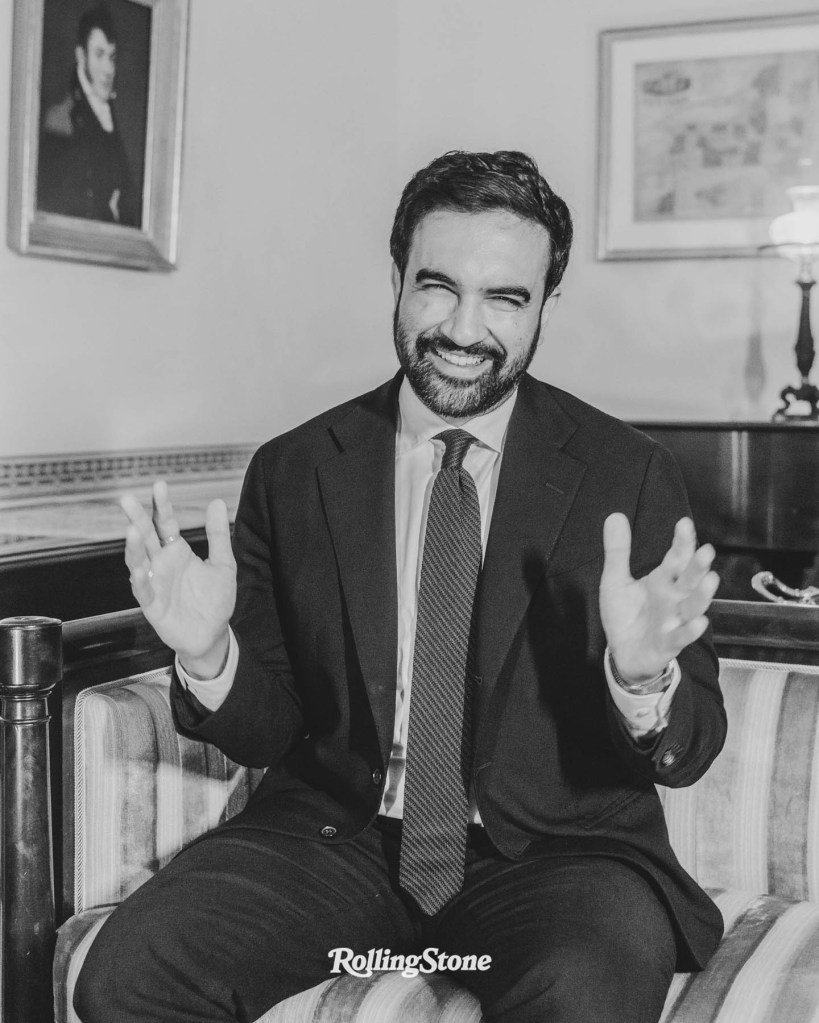
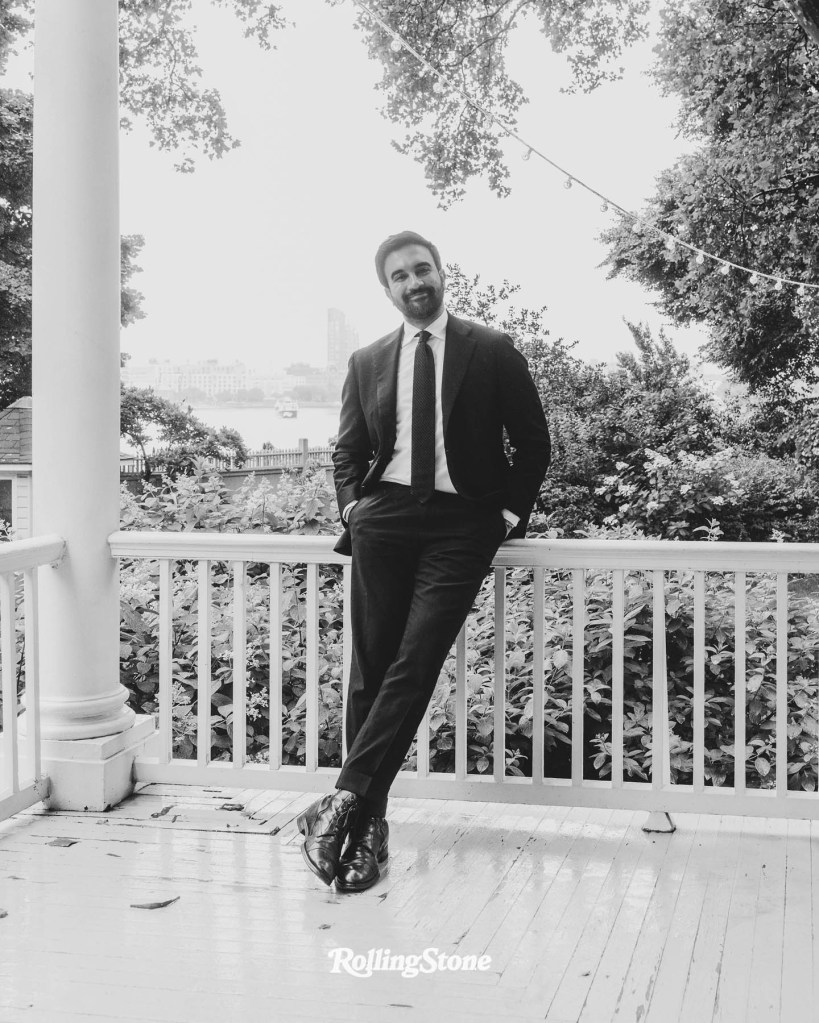
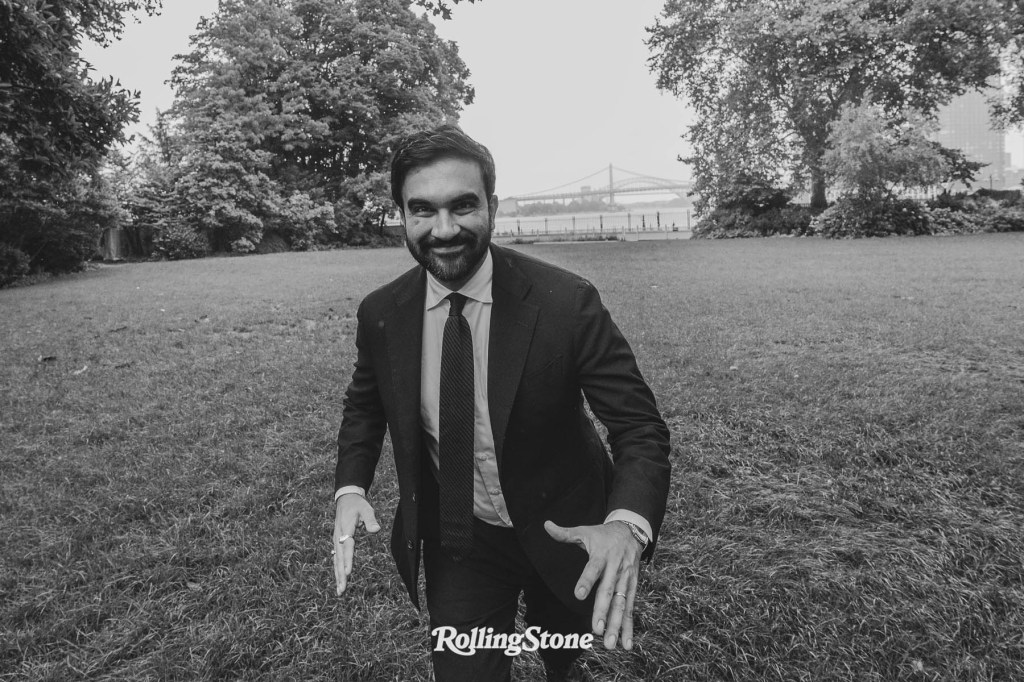
Zohran Mamdani and I have a serious beef. He is unrelenting. His attacks come from all sides, when I least expect them. Charm, good looks, quick wits — just a few of the attributes that have made him New York’s youngest mayor in a generation, as well as a national political figure with the power to shake up Congress and parlay with the president — are weapons in his capable hands. I feel their brunt now for one simple reason: I am a proud supporter of Chelsea Football Club.
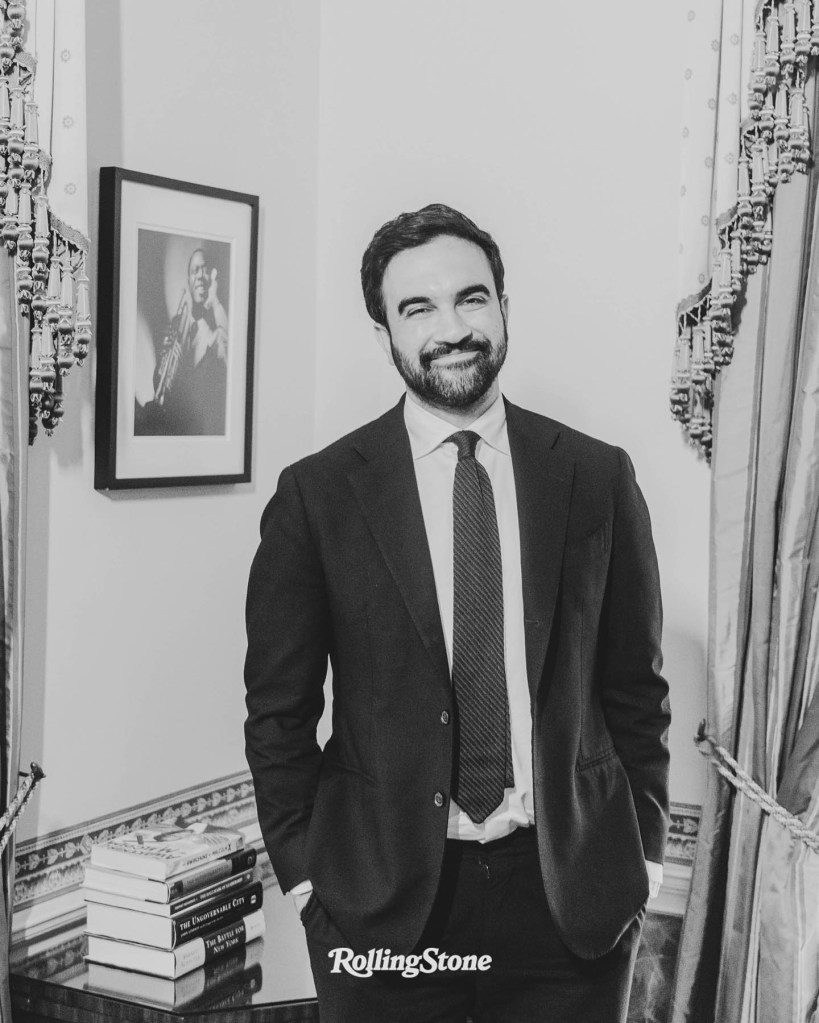
“What got you into Chelsea — you love Clearlake Capital?†he asks me before the cameras have even started rolling in the historic foyer of Gracie Mansion for the Rolling Stone Interview. He is roasting the fact that my team is owned by a massive American private-equity firm that spent $1.5 billion on new players only to finish in 10th place in the English Premier League this season. The mayor supports Arsenal, a rival London team who finished first. He is equally disgusted with my support for England in the World Cup. “Brother, whyyyy?†he says, grimacing.
I knew these opinions would be contentious, and yet, I was not prepared for the verbal violence they would bring. I make noises of protest, jabbing at Arsenal’s longtime sponsorship by the dastardly Dubai-owned Emirates Airlines, blaming my allegiances on an English father. None of it works. The dimples on Mamdani’s cheeks are pointed at me like a double-barreled shotgun. He is grinning, grinning.
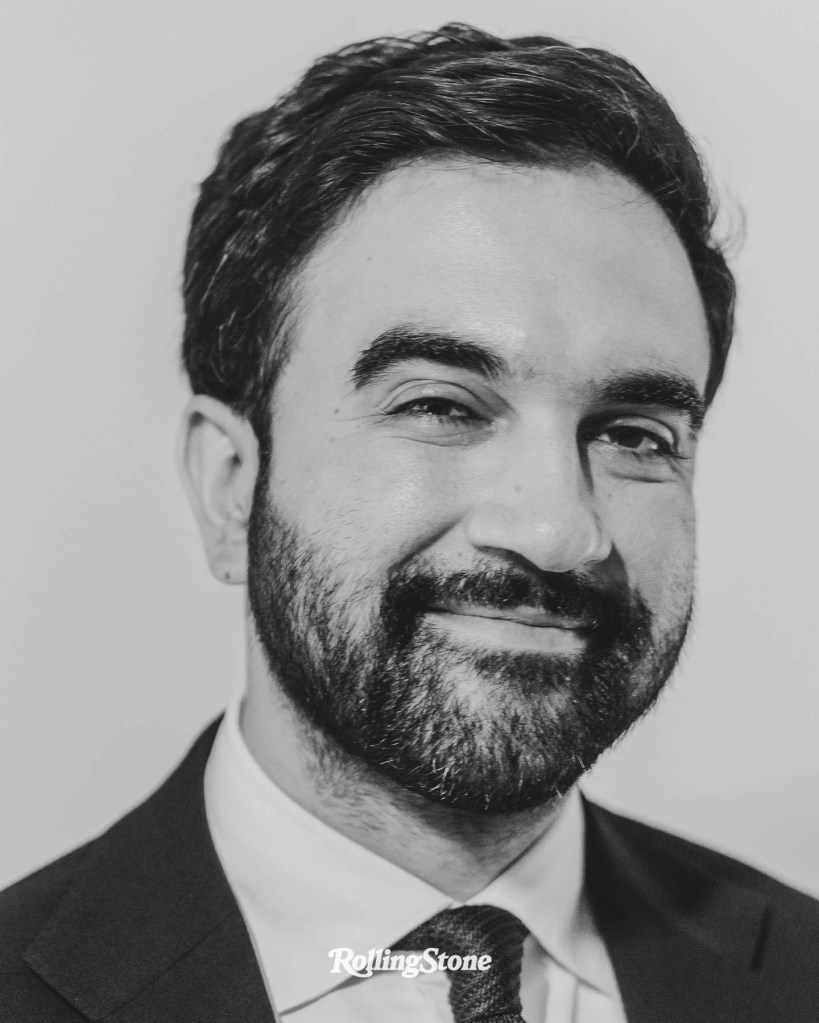
This process repeats multiple times over the course of our interview, whenever sports come up. I begin to understand what former Gov. Andrew Cuomo must have felt like on that debate stage last June, being skewered by a cheerful democratic socialist in a slim-cut suit. If Zohran Mamdani wants your head, his blade is ever sharp.
Since his decisive win over Cuomo in November of last year, Mamdani’s name has been on everyone’s lips. To the right, he is the bogeyman of their greatest fears, a brown man who believes in the radical redistribution of wealth and who they fear will institute Sharia law across the city. To the left, Mamdani is a sunny-dispositioned savior of New York’s perennial dysfunction and the catalyst for change in a national political system that has long been ruled by do-nothing centrist Democrats and an increasingly bloodthirsty far right. In the first six months of his administration, he hasn’t really behaved like either side’s caricature of him. Instead, he’s governed: cutting deals with the state government, City Council, and the powerful forces of New York’s political ecosystem. And in New York’s June primaries, he laid his political capital on the line by endorsing a slate of radical candidates for national and state office, knocking off several incumbents and making it clear that he was ready to spill blood within his own party.
Mamdani, then, is a rare force in modern Democratic politics. The charm is genuine, but it’s also a tool. The ideals are sincere, but they’re also a challenge. His staff, as far as I can tell, love him, but there’s no question of the power he now holds. On the campaign trail, he was “Z†— a state senator not so far removed from his days canvassing for other candidates. In victory, however, there are no more nicknames. They call him “Mayor.†Like it or not, everyone else has to do the same.
You’re coming off of a huge primary Election Day, where you backed several democratic socialist candidates with limited experience in public office. That was, by some measures, a big risk with your political capital, and you came away with a clean sweep. Take me into that Tuesday night. How did it compare to the night a year ago when you won your own primary?It was an incredible evening. To see what it meant to so many different parts of our city, to travel [to each of their events], to see that no matter what neighborhood or borough you called home, New Yorkers were hungry for change. It was incredible.
Did you have any moments of déjà vu?So many of the people who were at the heart of our campaign poured themselves into these races. It speaks to the fact that for so many of us, it was never about one office — it was about one movement for working people. I mean, Darializa [Avila Chevalier, who successfully primaried House Hispanic Caucus leader Adriano Espaillat], for example, she was a field lead on our [mayoral] campaign. As I was walking through her district, we met one of her field leads who told me that they were a canvasser trained by Darializa more than a year ago. That is what we are looking to build — a movement that, wherever it finds a fight for working people, it is there on the front lines.
Darializa is a former activist, and she was criticized during her campaign for past social media posts praising communist ideology, calling for the police to be abolished, and at one point tweeting “Fuck Kamala Harris.†For many people, she seems to be another bogeyman for what socialism will bring. What did you say to her about handling that backlash?I told her first that this only happens when there’s a chance that you win. And this is a reflection of the desperation that some are feeling in the face of what would be a new chapter in our city’s politics. For the vast majority of those who will be voting and who live in that district, this is not what they are concerned about. The people of New York’s [13th Congressional District] want to know that they have a representative that is willing to fight for them in the face of living in the most expensive city in the United States of America. It’s one of the poorest congressional districts across the country. So much of what we saw, the fearmongering, the blatant racism, it was an attempt to distract from the fact that Darializa would deliver on exactly that vision for those same working people.
You said the backbone of your movement has been people moving from field leads and activists to actually running for office. What advice do you give those who are thinking about making that transition?What I would say is that to run for something … at the heart of it has to be “Why are you doing this?†If the answer is “For working people,†then you will find that there are far more people who are ready to stand alongside you in that fight.
The issue of income inequality, the absence of affordability in people’s lives, it’s not unique to New York City. It is something that Americans are feeling across the country. They’re tired of a politics that has effectively been bankrupt, whether it’s politically bankrupt, morally bankrupt, or economic. And they’re looking for something that actually speaks to their needs.
This election cycle was the most political hardball we’ve seen you play. Several of the endorsements you made came against the wishes of the centrist block of the Democratic Party. Why did you think that this was the right time to take those shots?I made a promise a little more than a year ago to New Yorkers that I would use every tool at my disposal to deliver on an affordability agenda. When you are fighting for those who have been left behind, there will always be risk. It will always be easier to let that fight go.
I often think about the words that Tim Walz said about political capital. To paraphrase them: What is the use of having it if you’re not using it to help working people? That’s what came back to me in that moment. The consistency, the clarity, the conviction that characterized all three of these [congressional] races compelled me to make that decision.
That national battle between centrist and leftist Democrats has really come to center stage. Former DNC chair Jamie Harrison tweeted on election night: “I say this with no ill will or animosity. If you hate the Democratic Party, then please don’t run for our nomination.†He didn’t mention you or any of these candidates by name, but it seems like a pretty pointed critique. How do you respond to that?Usually, if someone says, “This is not of any ill will or animosity,†what they’re about to say is characterized by ill will and animosity. But look, the question that I come back to is “What is the Democratic Party if not its voters?†If you look at what Democrats are voting for in New York 13, in New York 7, in New York 10, and you say that that is not representative of the party — it may not be representative of what has effectively become our party, which is something that’s run by well-paid consultants and big-money interests. But it is representative of what Democrats themselves want to see. It’s representative of the fact that in this country there is just one majority and that’s the working class.
Of course there’s a difference between campaign promises and what you can actually deliver. What has been a lot harder for you to achieve since coming into office than you thought it would be on the campaign trail?It’s often framed that campaigning is easy and governing is hard. In campaigning, however, you are asking people to believe in something despite their own experiences. What I appreciate about governing is that it comes with an opportunity to deliver.
Over the past six months, we’ve taken what was previously an intellectual question — “What does it look like to run a city with democratic socialism?†— and delivered on it. We have paved over 165,000 potholes. We have returned tens of millions of dollars to tenants who were taken advantage of by their landlords. We have put our city on a path to universal childcare, saving parents more than $20,000 a year. We’ve done all of this while delivering the lowest recorded number of murders and shootings in New York City history, and with a commitment to put our city on a path to the most ambitious affordable-housing agenda that we’ve seen in generations.
Right. But I’ve seen you get criticism even from some of your supporters more on the left as you’ve had to moderate some of these proposals and promises. Are there ever moments where you feel like you have to compromise in areas you didn’t want to?The job is difficult at its core. You are looking to deliver for eight and a half million people, many of whom have experienced politics as an act of disappointment with various stages. My North Star is thinking about those that have been priced out of this city. What I’ve found is there’s a lot more that’s possible to do than what we’ve been told in the past.
I am never going to say that this work is easy or it’s straightforward. It’s incredibly difficult. However, there is a way to deliver on what you ran on. It will take time. But what we’ve shown is that even in six months, you can put the city on a different path.
A lot of the ideas that you ran on would not have been so shocking to the political establishment in FDR’s era. Why do you think that those things are seen as political impossibilities now?For a long time, those kinds of ideas — what the Democratic Party can stand for, what it can fight for — could only be found in a history book. Think about the distillation of this vision into the four freedoms [FDR’s principles, taken from his State of the Union Address in 1941, that all Americans should live with the freedom of speech, freedom of worship, freedom from want, and freedom from fear]. If offered today, [the four freedoms] would be heard as a radical vision of this country, when in fact it’s very much grounded in why so many [Americans] are proud to be Democrats — why I’m proud to be a Democrat. It speaks to a recent history of our party becoming more a reflection of a consultant class and of special interests than a reflection of what working people need.
You say you’re proud to be a Democrat. Do you think that your movement can ever coexist with the centrist faction of the Democratic Party, or is this really an existential battle for where the party’s going to go?I think we all belong to the big tent that is the Democratic Party. The question in front of us is “Where do we want to go, and what do we want this party to be?†The Republicans have this seemingly limitless ambition for what it is that they want to accomplish, whereas we seem to be constructing an ever-lowering ceiling of possibility. In 2028, we have an opportunity to move beyond the current federal administration. That begs the question “To what?†I think that it is time to not only have a vision, but to deliver on that vision.
What we’re showing here in New York City is that it is possible to put working people back at the heart of our politics and then also deliver for them at the same time. Too often, New Yorkers have been asked to choose between their quality of life and the quality of the city’s ambition. It’s time to show that in fact both of these things can be fulfilled at once.
What does a national Democratic Party look like to you, ideally?It looks like a party that is asking itself the question of “What are working people struggling with?†and then answering that question with what they can do to make life easier. I believe that our politics has to go beyond an intellectual exercise and has to be something that is material. If we cannot describe our politics and how it helps people afford their rent, their groceries, their childcare, then it seems like a hobby that some people can afford to have.
A sentiment I’ve seen online a lot in reaction to your first six months in office is some version of “Turns out you can just do things.†What’s one accomplishment you’re proud of that wasn’t a stated campaign promise?On the first day of our administration after inauguration, I went to meet with a number of tenants who live in a building that is controlled by a real estate organization, where they have filed complaint after complaint after complaint. I went into one of the tenant’s homes and she showed me her bathroom, and it was just rust falling off the pipe, falling off the ceiling. I asked her how long she’d been living with this and then she turned around and she pointed to her son, and she said, “Longer than he’s been alive.†He was more than 20 years old.
We made the decision to file a lawsuit on behalf of those tenants. Just by virtue of filing that lawsuit, we got the next owner to agree to remedy all of the violations at that building and other buildings owned by that same real estate organization. That, to me, shows the worth of fighting because if you aren’t willing to fight, you will never be able to win.
But you need to enact those things systemically as well. As you know better than I do, NYCHA — the New York City Housing Authority, NYC’s public-housing agency — is one of the most complaint-written landlords in the city.Sometimes the systemic nature of an issue has been used to justify why you cannot do anything in the short term. We have heard many who have come forward and said, “NYCHA has $80 billion in capital needs. It’s a federal responsibility. We need the federal government to act.†All true. We also know that whether or not it’s a Democratic administration or a Republican administration, NYCHA has had those capital needs. If we are going to wait for D.C. before we take action, we are effectively leaving hundreds of thousands of public-housing residents on the hook for the amount of years that it will take for D.C. to finally remember those same tenants. We are going to put forward the resources that go beyond what the city has done before — we nearly doubled our city’s capital commitment to NYCHA.
Part of the reason that you face questions like this is because you’ve become the face of a movement in American politics. But when you become the face of something, you start becoming liable for everything that someone wants to pin on you. I’ve seen everything from the Charlie Kirk assassination to FIFA’s overturn of American player Folarin Balogun’s red card in the World Cup put on you. How do you decide which of those critiques you feel like you have a responsibility to respond to?If they affect working New Yorkers. There’s a difference between the discourse and what people in this city are concerned about.
You’re good at this.Thank you.
Everyone who has seen you, met you, interviewed you says the same thing — that you are a talented politician. Sometimes it’s not said as a compliment. What does being a good politician mean to you?I think it means delivering. For a long time, being a good politician has meant debating. [My administration] wants it to be material. If you knock on a New Yorker’s door right now and you ask them what they’re worried about, they’ll define it in terms of cost.
What do you judge yourself by? What are you privately worried that you’re not going to be able to deliver on?I often go back to why so many New Yorkers knocked on doors for our campaign. What brought them out to do that? That hope is a responsibility. If you share that with others, it’s also a duty to deliver on it.
For me, when we talk about 2,000 seats of free childcare for two-year-olds this year, 12,000 seats next year, a seat for every single two-year-old by the end of four years, I always want to make clear that that is not my achievement. It’s the achievement of everyone who walked up those six-floor walk-ups and knocked on door after door after door and told people that there was a world we could win where childcare didn’t have to be $20,000. I want to measure our administration in whether we delivered for both the person who was knocking and the one whose door was getting knocked on.
I’m curious about your upbringing, which was about as classically New York as you can get for someone who came here at the age of seven. How did that cultural upbringing shape your view of the world and your politics? Your musical references are everywhere, for instance.Some of my earliest memories are in New York City. I used to love going to Tower Records. I think it was on 66th and Broadway. And they would have just floors of just incredible numbers of CDs. I loved the Offspring at the time.
Classic. Classic of the era.The first album I was given was the clean version of Jay-Z’s The Blueprint. They used to sell bootleg CDs right outside of Tower Records, and that’s where I bought Eiffel 65’s seminal classic. A lot of people only know them for “Blue (Da Ba Dee).†“Too Much of Heaven,†great song.
What are you listening to now?Right now, I’ve been listening to a lot of Radio & Weasel, who are a duo from Uganda who were running the charts for a long, long time. I’ve also been listening to a Pakistani rapper named Shamoon Ismail, who I’ve listened to for a few years. If I’m feeling reflective, throw on some Kacey Musgraves.
New album was great.I’m still listening to Golden Hour.
It’s always funny hearing those cultural references coming from a guy who has made it a thing to pathologically wear a suit. Tell me about that style choice.I feel like an uncle who opens up the closet and it’s just the same outfit again and again and again. I mean, shout-out to the suits.
One of my pet peeves with politicians, and no offense, is the T-shirt over the collared shirt.Oof. I do that sometimes.
I know, I know. I’ve seen you do it, and it’s not a personal attack.I’m taking it like one.
And of course we know you love sports. What was your entry point to sports?I have to credit my uncle. He introduced me to Arsenal in the late Nineties, early 2000s. I was born in Uganda, in East Africa. Arsenal, I would argue, is the most supported team in Uganda. A lot of that has to do with the history of African talent on the team: Kanu, Lauren … Kolo Toure, Emmanuel Eboue, Alex Song … I’ll even name him even though I’m forever hurt by [him] — Emmanuel Adebayor.
My first World Cup memory is probably around ’98 as well — just falling in love with Zizou [France’s French-Algerian captain Zinedine Zidane]. I mean, what a player. The first time my dad ever let me be late for school was when France was playing Senegal [in the 2002 World Cup]. His love of academia had no chance against Pan-Africanism. We stayed home, watched Papa Bouba Diop score on Fabien Barthez. That’s one of my early memories.
How do you use that knowledge of sports to connect with people?I think there are a lot of people for whom sports are effectively their first language. When you speak to someone for whom English is clearly a second or third or fourth language, you’re in some ways speaking to a shadow of them. You’re missing the entirety of who this person is. And when you talk to someone about sports, whether it’s soccer or basketball, whatever else it may be, it’s as if the fullness of them is finally in view.
All right, the sports stuff was supposed to come at the end. We’ve got to talk about Trump. Your meeting with Trump at the White House was one of the most striking parts of the very beginning of your tenure as mayor. What’s your relationship now?The relationship is as it was. It’s built around New York City. For all of the many disagreements that the president and I have, we have one thing in common, which is a love of this place.
Do you feel like you have to appeal to Trump’s ego a little bit in those interactions to keep his sights off the city? I think the fear has been that what happened with ICE and the National Guard in places like Minneapolis or Los Angeles is going to come to New York City.I think I need to continue to be honest with the president, and that honesty is in places of disagreement. I’ve spoken to him directly about how I think of ICE as a cruel agency that does nothing to serve the interest of public safety. I’ve spoken about how I think it should be abolished.
What do you think about him constantly saying how handsome you are?Thank you?
We’ll take it, I guess. His second term has come down harder on other cities, but New York hasn’t escaped the ripple effects of what Trump has done.The cruelty of ICE is not an intellectual concern to our city. There are New Yorkers who’ve had their families split apart by this agency. I get texts on a regular basis from both people that I know and those that I’ve never spoken to before, asking me for help.
Whether we’re speaking about health care or we’re speaking about SNAP, federal policy is making it harder for people to afford to live in the city. And we’re trying to do everything we can to fight back against the effect of those cuts. And yet, there is a limit to what a city can do in the face of federal policy that is looking to decimate these programs. It’s going to have a real impact on an untold number of New Yorkers across the five boroughs.
The other national issue that has become increasingly relevant for every politician in this country is Israel and Gaza. Why do you think that it’s important for New York’s mayor to have a clearly defined position on that subject?My politics is one that has no exception. When I’m speaking about the importance of dignity and international law and human rights, I speak about that with an application to everyone. For a long time, what we’ve seen is a willingness to exempt Palestinians from those ideals. The more willing you are to cut anyone out of a conviction, the more likely you are to lose that conviction altogether.
Where did you develop those convictions?From a young age, if I could see a contradiction between that which we said we believed and that which we were willing to do, it was something that I just couldn’t let go. The more you’re in politics, the more you’re told this is just simply how it is. And to me, I just never think that’s a good enough answer.
I bring it up because it’s really one of the most divisive issues of our time, and it’s also one that has brought you some of the most intense criticism — in your personal life, too. Your wife, the artist Rama Duwaji, has also been criticized over her views on Israel and Gaza. How have you two adjusted to that?It is hard to prepare for death threats. It is hard to prepare for getting a phone call from a district attorney telling you that someone from another state is going to be charged for what they have said and hoped to do about you. When you are willing to speak up for all people, there are consequences that come from it. It’s obviously at a different scale now that I sit in front of you as the mayor. But even when I was an assembly member and I would speak about how it’s unacceptable that we’re sending billions of dollars to kill innocent Palestinians, I would receive voicemails that threatened many of the same things.
I’ve come to accept it as part of the work that I do. What will always be very difficult to accept is what it means for the people that I love. You hear politicians speak about it, and it initially reads as if it’s a cliché. When you start to live it, you fully understand the weight of what this work does to those that you love and those around you. It transforms everyone’s life.
As we’re speaking on July 6, I want to address the elephant in the room: Taylor Swift’s wedding, which happened two days ago. How long did you know that she was planning a big event in the city?We had some indication that there would be a permit application coming in, but it wasn’t until right before the wedding that that permit was actually submitted.
So she was last minute.In terms of what the city had to respond to, that application came in just before the wedding. But our responsibility is also to plan for any eventuality and to make sure that we’re ready to respond to it.
You get any feedback from the various agencies involved?Generally, I think the city services acquitted themselves very well.
There you go. So that’s the—I thought you were asking me how the attendees — whether they had a good time. I was like, “I have no idea.â€
Well, I was going to ask if you were invited.No.
Yeah, too bad. Her loss.[Laughs.] No. I’m fine.