Johnny Marr Finds Defiance in Idealism on New Single ‘It’s Time’
Photo gallery
6 images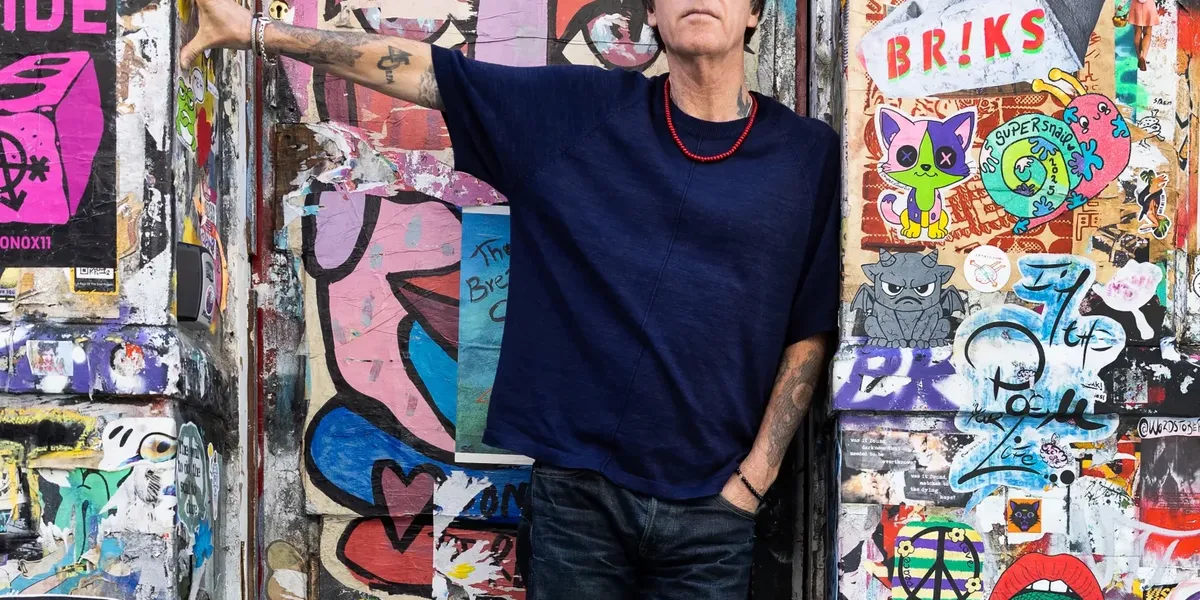

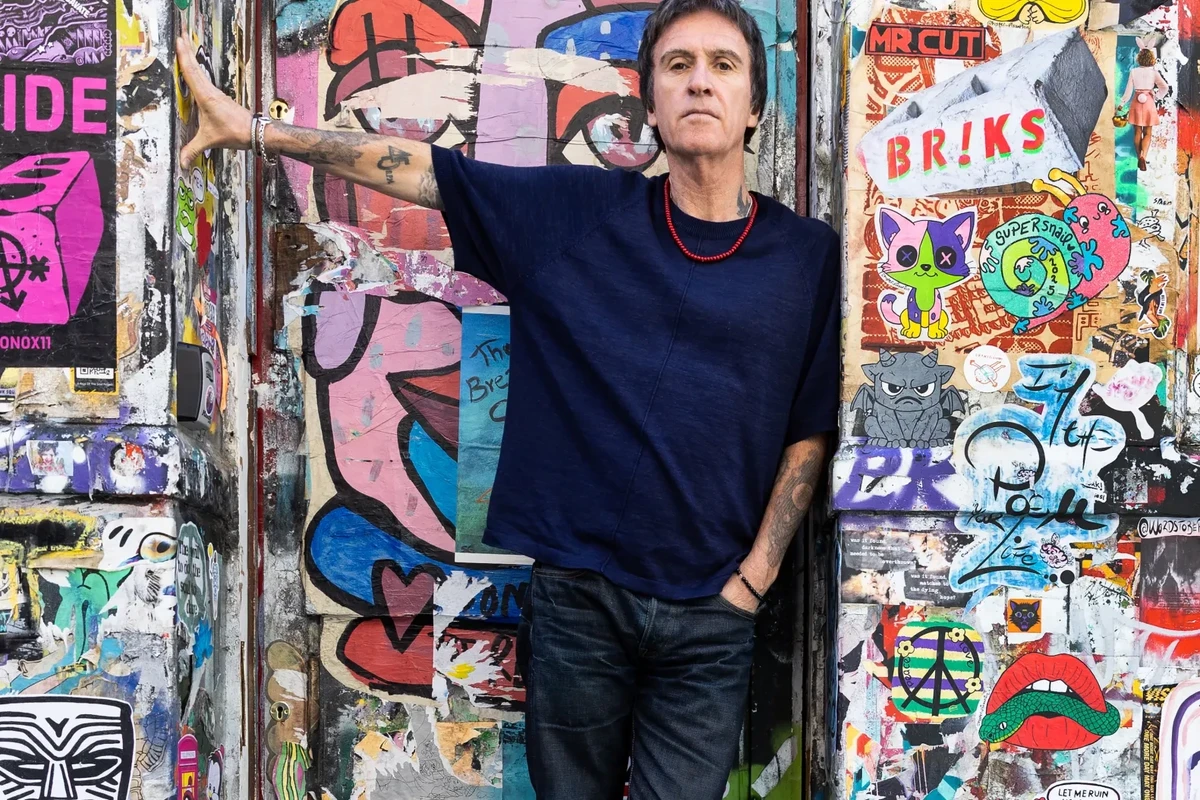
The Smiths guitarist will release his fifth solo album, The Age of Everything, in October
Johnny Marr
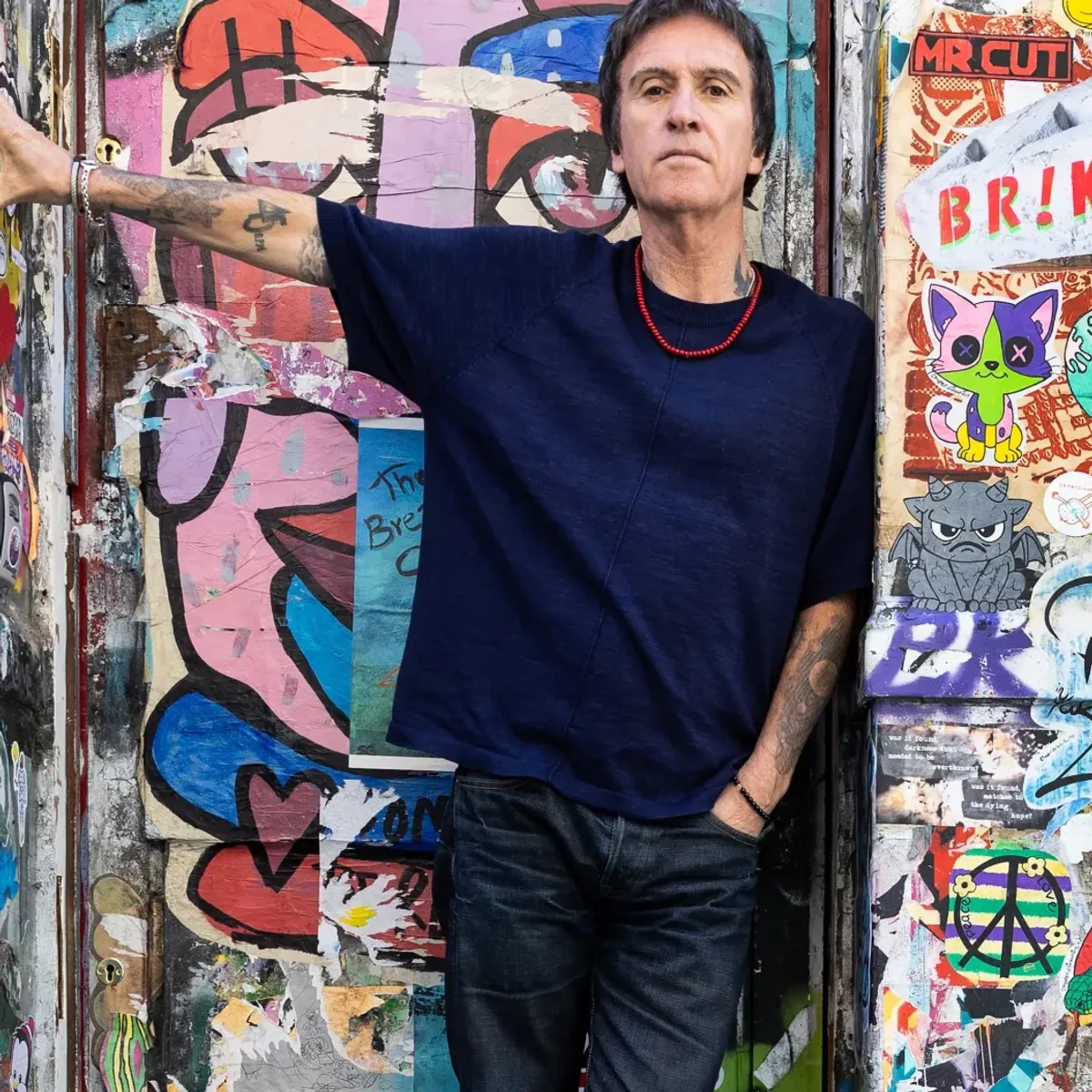
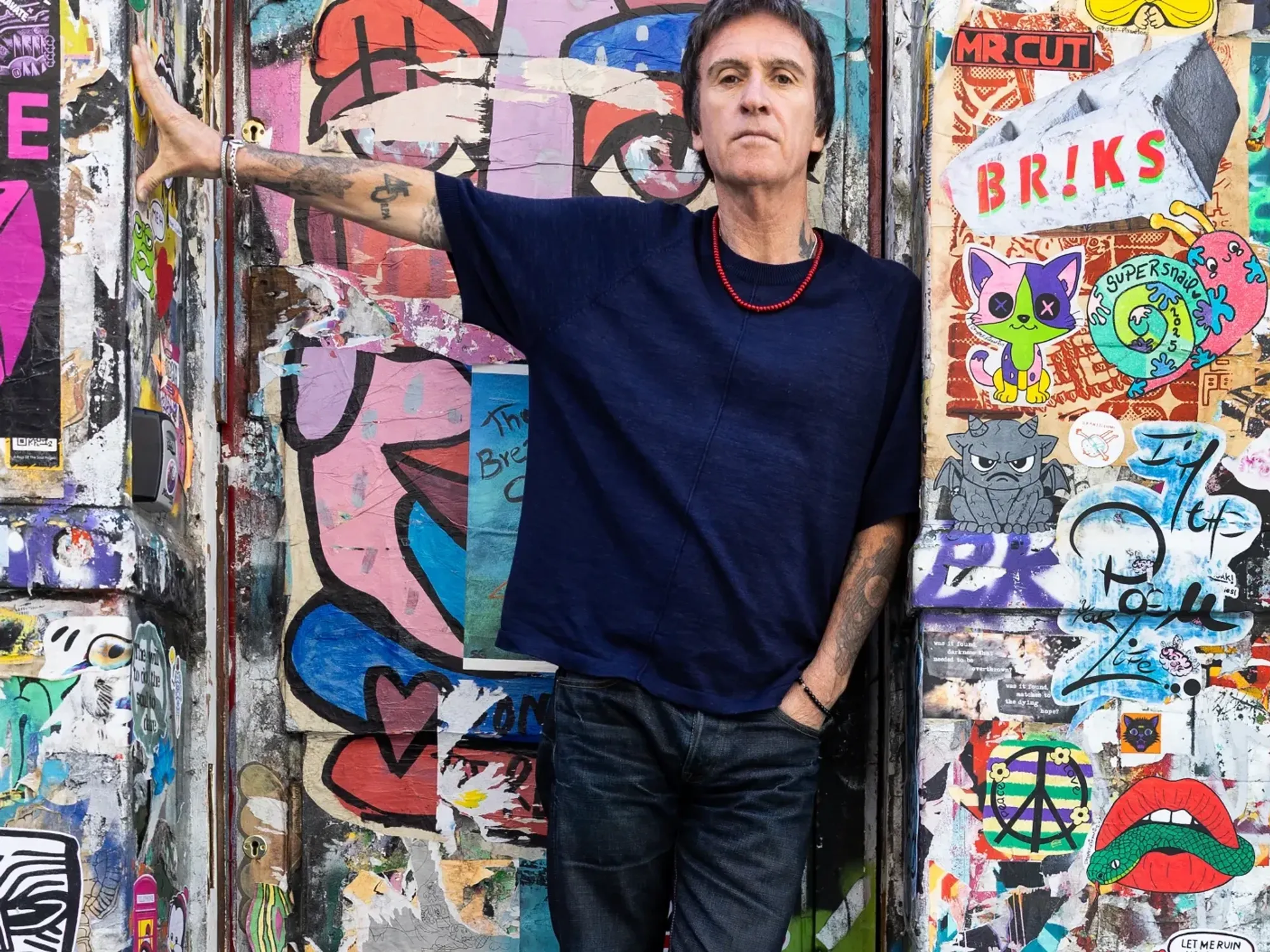
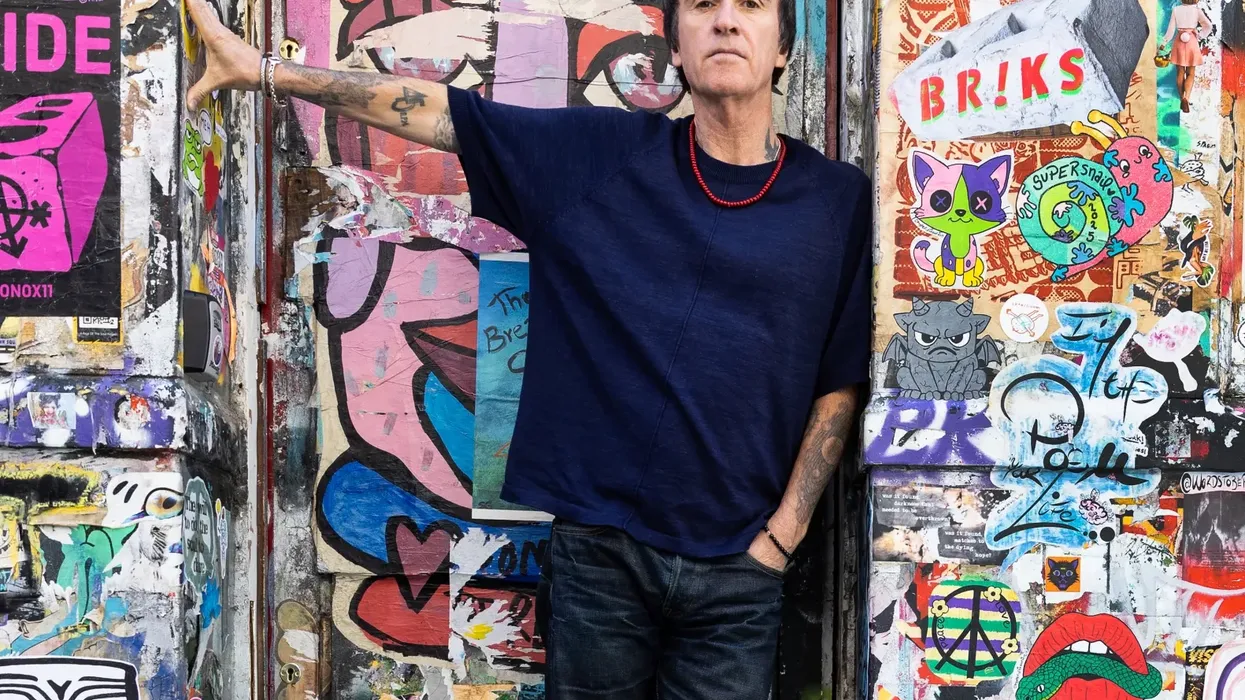
Johnny Marr released a new single, “It’s Time.†The uplifting rock number is the third song to emerge from the Smiths guitarist’s forthcoming LP, The Age of Everything, out Oct. 2 via BMG.
“’It’s Time’ is my way of singing about some worldly issues but finding defiance in idealism,†Marr said in a statement. “I wanted a lyric that matched the exuberance of the music but is actually about resisting cynicism and corruption: ‘Everybody ain’t making it, change the weather and breaking it. Mobilize to know the truth. Open eyes to know the truth.’ I guess it’s about the assholes with dodgy views.â€
The music video for “It’s Time†was filmed earlier this year at the biggest headlining show of Marr’s solo career, held at Manchester’s Castlefield Bowl.
The Age of Everything, Marr’s fifth full-length studio album, features 10 tracks. It was written in London, developed live on the road across the East Coast of the U.S., and recorded in Manchester. The musician has so far shared “Spin†and “Ophelia.â€
“This is the record that’s been the most cathartic,†Marr shared when the album was announced. “The title came to me early in the process and became an inescapable idea. It seemed to sum up the way I think a lot of people are feeling. It’s all encompassing, but it’s not necessarily a negative statement. There’s a sense of overwhelm in the culture brought about by technology, but looking at it with a different light, there could also be a sense of possibility.â€
Along with the album, Marr will released an illustrated, enhanced, and reformatted anniversary edition of his autobiography, Set the Boy Free in Oct. 22 via Thames & Hudson. The book features previously-unseen archival photography, a new introduction, a personal eulogy for Johnny’s friend and the Smiths’ bassist Andy Rourke, and a foreword by Noel Gallagher.
BigXthaPlug
BigXthaPlug was arrested Friday in Texas on drug and weapons charges, forcing the rising country rapper to miss a scheduled performance at a Winnipeg music festival.
The Dallas rapper born Xavier Landum was pulled over by the Allen Police Department and booked into the Collin County Jail on Friday on charges of driving while intoxicated, marijuana possession of less than 2 ounces, and unlawful possession of a firearm, Dallas’ KDFW reports.
Landum’s arrest comes exactly one year after the rapper was arrested for marijuana possession and unlawful possession of a firearm on August 21, 2025 in Dallas; he was out on bail on those charges when he was arrested Friday.
BigXthaPlug was scheduled to perform Friday night at Winnipeg, Manitoba’s Country Rising Festival, but he was forced to cancel the performance; organizers said they understood fans’ “disappointment and frustration†by the rapper’s absence due to a “personal emergency.â€
Despite the arrest, BigXthaPlug is still slated to perform Saturday night at the Iowa State Fair Grandstand. Organizers there told KCCI Des Moines, “We are aware of reports regarding BigXthaPlug. We are in communication with his agent and at this time, we have been told he will still be performing.â€
Rolling Stone profiled BigXthaPlug earlier this year for our Future of Music issue; a friend of Jelly Roll and Shaboozey, the rapper became a sensation with his country-rap LP I Hope You’re Happy, his first step towards what Rolling Stone called his “Texas-size ambition.â€
“You can’t be one of the best artists in the world and have only done one genre,†BigXthaPlug said at the time. “Beyoncé, a GOAT, a queen. She’s done pop, country. Lil Wayne: rock, pop. Snoop Dogg did songs with Katy Perry and shit. All these people are greats, from Eminem to Dr. Dre to Ice Cube. Everybody has stepped out of that lane.â€
Last night, Los Angeles rapper the Game released his latest album, The Documentary III, a sprawling 24-track epic in which the highly opinionated West Coast rap staple lets a few things off his chest. Featuring appearances from Lil Wayne, Snoop Dogg, Ye, YG, Black Thought, Larry June and others, the album also finds Game seemingly airing out some long-simmering feelings about none other than Kendrick Lamar. Most notably, he links up with Kendrick’s most famous nemesis, Drake, on the track “No Brakes.†(Drake ominously offers the hook, but no bars, alas.)
The apparent animosity has been bubbling for some time. Game and Kendrick were once publicly aligned: In 2011, Game joined Snoop Dogg and other West Coast veterans for a ceremonial passing of the torch to Kendrick. Things haven’t gone so smoothly since. Recently, TDE’s general orbit has appeared on podcasts and in interviews suggesting a hint of tension between the two going back to before any of Drake and Kendrick’s public beef.
That all came into view during Game’s July Verzuz battle with YG, where he performed his 2015 Drake collaboration “100†and paused to shout out the Toronto rapper. “I don’t give a fuck how a nigga feel about it,†he told the Los Angeles crowd. YG, of course, was in attendance at Kendrick’s now-infamous Pop Out concert, apparently something of a veritable enemies list in Drake’s eyes. He’s also more generally aligned himself with the West Coast allegiances that played a role in Kendrick’s feud with Drake. Game, for his part, seemed to bristle at the suggestion that being from Los Angeles requires him to fall in line behind Kendrick and turn on an artist he considers a friend.
The Documentary III arrives amid something of a renewed period of activity for Game. Earlier this year, he released Gangsta Grillz: E.M.N.T. — The Credits, an expanded edition of his DJ Drama and Mike & Keys project Every Movie Needs a Trailer. This new project marks his first proper studio album since 2022’s Drillmatic — Heart vs. Mind and his first entry in the Documentary series since 2015.
For now, fans can only wonder if Game’s shots, and especially his conspicuous Drake cameo, are enough to wake Kendrick, who, for his part, has so far declined to publicly engage with the speculation surrounding his relationship to much of anything.
Cameron Whitcomb at the 2025 CCMA Awards
The 2026 Canadian Country Music Association Awards have announced a second wave of performers that should give the Saskatoon ceremony even more flair.
Tenille Townes, Nate Haller, High Valley, The Strumbellas and Thelma & James have been added to the September 19 lineup, joining a previously announced group that includes Dean Brody, James Barker Band, The Reklaws, Owen Riegling, Tenille Arts, Hunter Brothers, Kalsey Kulyk and Jess Moskaluke.
Tenille Townes’ performance is particularly meaningful, as the Alberta singer-songwriter heads into the awards with five nominations. She’s had a stellar year and is competing for Female Artist of the Year and Album of the Year. Fans will also be waiting to see if she’ll join fellow performer and nominee Nate Haller to perform their duet ‘’Backfire’’.
Haller is one of Canadian country’s fastest-rising stars, with over 40 million global streams. He is nominated in three categories.
Thelma & James arrive with an equally impressive nomination haul. The duo also picked up five nominations. High Valley, meanwhile, returns to the CCMA stage as a veteran presence.
Also joining the celebration is The Strumbellas, the Toronto-area group that has spent more than a decade moving between folk, rock and roots music, making them one of the most unique and popular voices in Canadian country.
With the ceremony still weeks away, the CCMA Awards have yet to reveal who will host Canada's country music community gathering in Saskatoon.
The 44th annual CCMA Awards take place September 19 at SaskTel Centre and will air on CTV.
Twenty years after Loose turned Nelly Furtado into one of the biggest pop stars in the world, the Canadian singer is opening the vault.
Furtado will release Loose (20th Anniversary Deluxe Edition) on September 4, bringing the landmark 2006 album back with previously unreleased recordings, session tracks, new versions of familiar songs and even a secret demo. The expanded edition will arrive digitally with a whopping 28 tracks, alongside a 2LP colour-vinyl release. Today, she shares a reimagination of her hit ''Maneater'', this one dubbed a 'Ritual version'.
When Loose arrived in June 2006, Furtado was already established as an international star, with hits like "I’m Like a Bird". Working closely with Timbaland, she moved away from the folk-pop identity associated with her earlier records and into something that would change the face of pop, combining hip-hop, R&B, electro, Latin music, house and dance-pop.
Loose produced three of Furtado's signature songs: "Promiscuous," "Maneater" and "Say It Right." The album reached No. 1 on the Billboard 200 and ultimately sold more than 12 million copies worldwide. The new edition leans into that spirit of reinvention. Four tracks have been reimagined with Grammy-nominated pianist and composer Adam Tendler, stripping the songs down to piano and voice. The recordings were made as improvisational, one-take performances.
After a lengthy period away from the spotlight, she returned with 7 in 2024, her first studio album in seven years. She subsequently announced in October 2025 that she was stepping away from live performance for the foreseeable future, saying she wanted to concentrate on personal and creative pursuits better suited to the next stage of her life. That decision, however, did not mean abandoning music. Furtado made clear that songwriting remained central to her identity.
In 2026, she was also inducted into the Canadian Music Hall of Fame at the Juno Awards, where Drake introduced her in a tribute that highlighted the remarkable range of her career.
Loose (20th Anniversary Deluxe Edition) is out September 4th via Universal Music Canada.
Mick Jagger onstage at the Rolling Stones' 1976 Knebworth Festival.
The second season of Laverne & Shirley had just gone into production when Cindy “Shirley†Williams came down with viral pneumonia, forcing producers of the hit ABC sitcom to shut down production for two weeks. “You can bet Cindy received posies from The Fonz since she’s been hospitalized,†reads a report by Shirley Eder that ran in the Colorado Springs Gazette-Telegraph on July 22, 1976, conflating the fantasy world of the Happy Days extended universe with reality in a very odd way. “I don’t know about a romance, but they have been good friends for years.â€
With that important update out of the way, Eder turned her attention to the music world. “The Rolling Stones will headline the Knebworth Fair August 21, and 100,000 fans are expected to attend this medieval festival 40 miles from London,†she writes. “The whole fair will be under the Stones’s direction this year – including historical sideshows from acrobats to jousting matches.â€
That’s the extent of Rolling Stones info in Eder’s entertainment column, which goes on to note that Norwegian actress Liv Ullman brought Shirley MacLaine “three pounds of imported caviar†while visiting her backstage at New York’s Palace Theater, and new footage was being shot for the 1974 movie Earthquake in preparation for a three-hour TV broadcast, but there was much she didn’t mention.
Most significantly, Keith Richards lost his ten-day-old son Tara due to SIDS on June 6. Just a few weeks before the tragedy, the guitarist was detained by police in London following a car crash where they discovered cocaine in his vehicle. “Since then, the London Daily Mirror has reported the Stones as the unknowing couriers of a drug syndicate,†read a July 15, 1976, report in Rolling Stone. “Under headlines reading ‘Drug Smuggling Shock for the Stones’ and ‘Cocaine Hidden in Pop Star’s Bentley,’ news stories told of police suspicion that cocaine and cannabis had been hidden in clothing, jewelry and equipment carried by the ‘unsuspecting’ Stones and their entourage during their 9-country, 36-day tour.â€
Richards somehow had the fortitude to continue a grueling European tour in the middle of all this chaos and sorrow, but a stadium run through America at the end of the summer was simply too much to ask. He was in desperate need of downtime to process the loss of Tara and deal with his growing drug problem.
But the band decided to go forward with their plan to stage a massive concert in Knebworth, England, on Aug. 21, with special guests 10cc, Lynyrd Skynyrd, Todd Rundgren, and Hot Tuna. “It may be the most memorable rock festival ever staged in Britain,†read an Aug. 19 report in the Belfast Telegraph that seems to be discounting the 1969 and 1970 incarnations of Isle of Wight. “The Stones seem certain to go on making records and they are currently asking for a large sum of money to put their signature on a recording contract, but they may have finally decided it is time to fade away from festivals and concerts after 13 years of gigging. Says Jagger (33): ‘I would hate to think I would still be singing ‘Satisfaction’ when I’m forty.'â€
The ludicrous notion that the Stones were going to call it quits after the Knebworth show was all over the U.K. press, likely spread by promoters hoping to move tickets. “Some people close to the group say that, because of the magnitude of the 12-hour event, it could be the Stones’ Swan Song,†read an Aug. 21 article in the Leicester Mercury. “The stage was still being built in the early hours of the morning – a day surrounded by polythene lips in the shape of the now familiar emblem – a gaping mouth. In front of the stage is a hundred-yards-long catwalk which Mick Jagger will use during a two-and-a-half-hour concert – possibly his longest ever.â€
“[The stage] is understood to have cost about £100,000 to build,†the article continues. “The 12 hour long pop concert at the stately home will be staged in an arena capable of holding up to 200,000 pop fans. Thousands of fans – who pay about £4.50 for the concert – were already camped outside in tents, wigwams, and make-shift overnight homes early today. People already camping by the site for the concert – which starts at 11:00 am – were urged not to light cooking fires because of the danger of grass fire.â€
As the Stones learned the hard way seven years earlier, grass fires weren’t the only possible dangers at an enormous festival. But unlike Altamont, Knebworth was organized over several months as opposed to a matter of days. And the festival grounds held events in 1974 (Allman Brothers/Doobie Brothers/Van Morrison/Tim Buckley) and 1975 (Pink Floyd/Captain Beefheart/Monty Python/Steve Miller Band) that provided them with a framework.
That doesn’t mean everything was easy. “The British Army will come to the rescue of the Rolling Stones Knebworth Festival on August 21,†an Aug. 2 article in the Press-Telegram read, “by agreeing to install 400 portable toilets on the grounds of the Knebworth estate.â€
The morning of the event, an ominous item appeared in The Daily Telegraph that surely sent the Stones’ camp into a panic: “Hundreds of Hells’s Angels are expected to descend onto site. Police can call on neighboring [police] forces if there is trouble, and all leave in the county has been cancelled.â€
Unlike Altamont, the Hell’s Angels were unwelcome visitors this time rather than an unofficial security force. And a combined unit of public and private officers was brought onto the grounds to maintain order and avoid any chance of a repeat of 1969, though they apparently were unconcerned about drug use. “There was a carnival atmosphere and the usual wafts of marijuana smoke, but police said they had made no arrests by early evening,†read a report the Monroe Morning World filed midway through the show. “Marijuana, hashish, and pills were sold openly at the site, but organizations set up to deal with drug users on bad trips said there had not been much demand for their services.â€
The Stones were supposed to take the stage around 9 p.m., but technical issues throughout the day delayed their set by over two hours. During the downtime, the middle portion of Pink Floyd’s “Echoes†played on a loop as rumors spread the Stones might cancel. But all was forgiven when they took the stage and burst into the song that Jagger didn’t want to still be playing at 40, but was happy to sing at 33.
It was their first live rendition of “Satisfaction†since 1972, and an early sign this was going to be a very different show than the one they brought around North America and Europe earlier in the year, even though they were once again joined by pianist/singer Billy Preston and percussionist Ollie Brown.
The surprises continued with their first cover of Chuck Berry’s “Around and Around†since 1966, their first cover of Willie Dixon’s “The Little Red Rooster†since 1965, and their first “Let’s Spend the Night Together†since 1967. They were technically supporting Black and Blue with this tour, but only played four songs (“Fool to Cry,†“Hand of Fate,†“Hey Negrita,†and “Hot Stuffâ€) from it to make room for standards like “You Can’t Always Get What You Want,†“Tumbling Dice,†“Wild Horses,†and “Happy.â€
Near the end, Jagger handed over the mic to Preston so he could play his recent solo hits “Nothing From Nothing†and “Outa-Space,†before wrapping up the night with fierce renditions of “Midnight Rambler,†“It’s Only Rock ‘n’ Roll (But I Like It),†“Brown Sugar,†“Rip This Joint,†“Jumpin’ Jack Flash,†and “Street Fighting Man.†They played 28 songs across two-and-a-half hours, one of the longest shows of their entire career, wrapping up after 2 a.m.
The Sunday Telegraph sent an older writer, Ronald Payne, to report from the scene like an anthropologist. “Had even a good regiment of infantry been forced to wait hours in the sun in such conditions there would have been a mutiny,†Payne writes. “But they sat, the big battalions of pop in their unisex uniforms of blue jeans and T-shirts, apparently happy. Up the hillside there ever pours in reinforcements, clutching cans of beer and occasionally flags…There is something about it all of a children’s crusade, the young people look so innocent and take their pleasure so gravely. Yet over them loomed the music, which I fail to comprehend, of such a high decibel count as to make the roar of Concorde seem like the whirring of a clockwork toy.â€
(It’s fortunate the music was so loud, since there were somewhere in the ballpark of 150,000 to 250,000 attendees — estimates vary wildly — and only two screens with nothing close to the fidelity we’re accustomed to at shows today, even if they were state-of-the-art by 1976 standards.)
In The Guardian, writer Robin Denselow compared the event to the Republican National Convention, which nominated Gerald Ford for his first proper term as president just a couple days earlier. “Even with the wildest stretch of the imaginations, it’s difficult to equate Jagger howling through ‘Street Fighting Man’ with Betty Ford’s victory waltz across the platform to the strains of ‘I Could Have Danced All Night,'†Denselow writes. “But in terms of style, both were vast-scale marketing exercises that drew enormous audiences, and both star attractions used old-fashioned showbiz techniques to win the lumps in the throat, wet eyes, and applause.â€
Once the show was finally over, the group was happy to admit they had no plans to actually stop touring. “We are planning a tour of South America at the moment for next year,†bassist Bill Wyman told the press. “Before that we are going to the south of France to rest. If possible we should like to come back here again some time next year for concerts.â€
The future didn’t unfold quite as Wyman envisioned. The Stones somehow didn’t hit South America until 1995, a couple years after Wyman quit the band. And there was no European tour in 1977. The only dates they played that year were the infamous pair of shows at Toronto’s El Mocambo, where they billed themselves as the Cockroaches.
The band spent the rest of 1977 dealing with the fallout from a second Keith drug bust, this time a much more serious incident where he was caught with heroin in Canada and faced the possibility of serious jail time, and beginning the recording of Some Girls. (With typical Stones luck, the judge was merciful and ordered Keith to play a benefit concert for the blind, when he could have locked him up for seven years.)
Today, Knebworth remains the site of the biggest concerts on the U.K. summer calendar. And while nothing has been even remotely confirmed, there are persistent rumors that Oasis might return in 2027 for a repeat of their legendary 1996 two-night stand.
And despite all the speculation that the Stones were going to call it quits after their 1976 Knebworth show, they remain an active band 50 years later. But they haven’t played in two years, and Keith has indicated he has no desire to tour again. The idea of residencies has floated around. If they stage one in England, expect it to take place at Wembley or Twickenham Stadium. Their fans no longer want to schlep out to Knebworth and deal with festival “seating,†which means no seats at all.
If the Stones ever want to revisit Knebworth, their best bet is to officially release the surviving audio and professionally shot film from 1976, about 95 minutes in total. Sadly, it appears that there’s about an hour missing from the footage that may simply not exist. That’s not too shocking since it was a chaotic day, but at least they got through it without the Hell’s Angels beating anyone to death. From that perspective alone, it was a tremendous success.